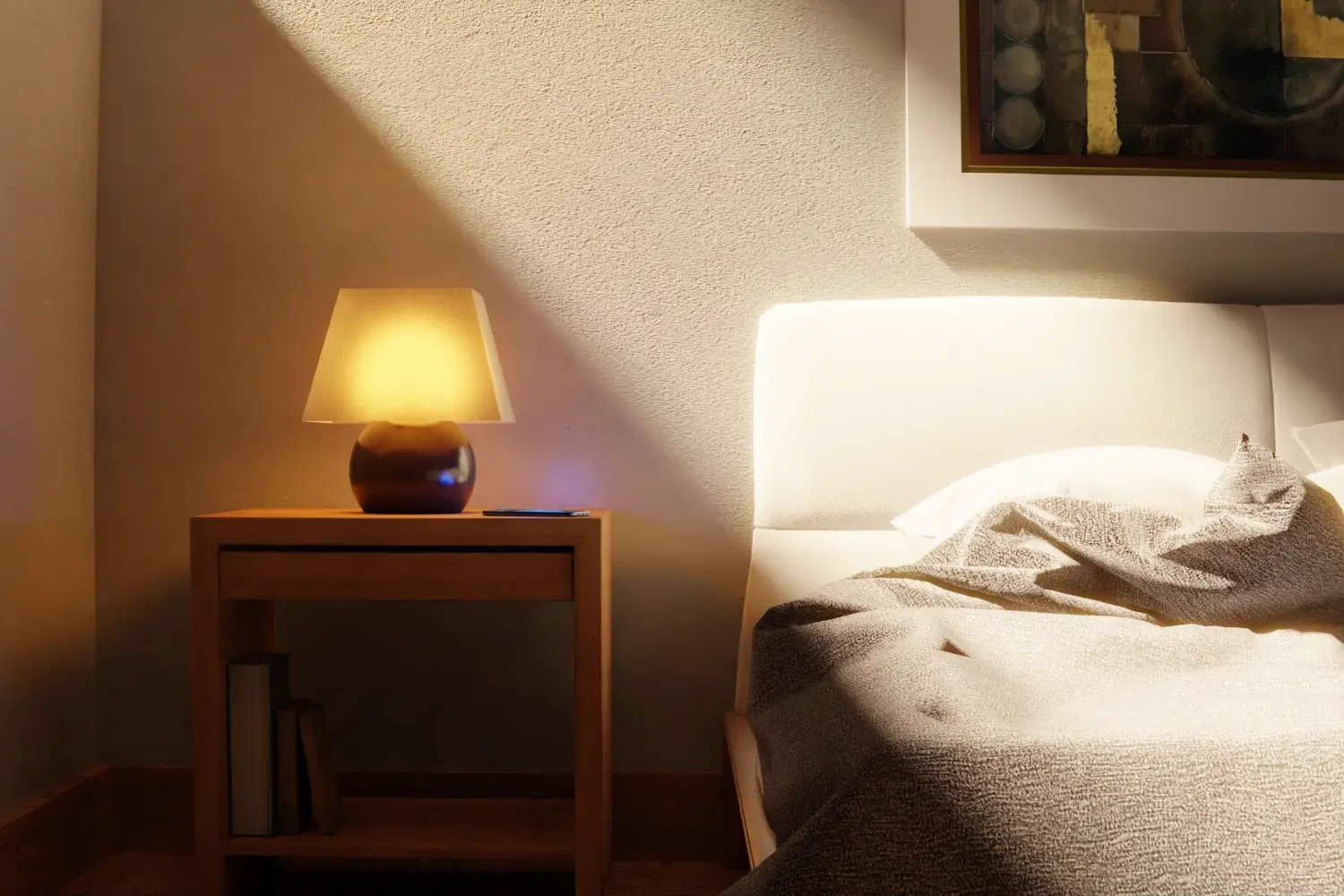
The 3-Layer Bedroom Lighting System Designers Use
Design a bedroom lighting plan with ambient, task, and accent layers for sleep, dressing, and reading. Fixture types, Kelvin ranges, and dimmers — no electrician required.
Design a bedroom lighting plan with ambient, task, and accent layers for sleep, dressing, and reading. Fixture types, Kelvin ranges, and dimmers — no electrician required.
Learn the room-specific sequence for pattern mixing: start with a large-scale pattern, add a small-scale coordinate, finish with texture. Adjust order for kitchens, bedrooms, and more. Beginner-friendly rules.
Pros ignore the 'one antique per room' rule. Learn the focal-point method that makes vintage pieces the star and modern items the frame — so the contrast reads as intentional, not accidental.
The exact inch-by-inch clearances between sofa, coffee table, and walkways that keep a living room open. Fix these 7 distances to avoid a cramped room.
Red wine, pet urine, coffee, paint, and mud test wool versus nylon beyond the label. See which fiber survives real spills with the right cleaning steps.
Stop guessing. This designer framework sequences mount type, rod height, and hem length for a polished result. Measure once and skip the too-short mistakes.
Stop guessing paint sheen. Use this three-question framework to match finish to abuse, moisture, and lighting for a flawless result every time.
An accent wall can make a small room feel larger or tighter—find out which depends on the room's focal point and shape, not the color you pick.
Inside mount blinds on out-of-square windows leak light and bind. Outside mount fixes both. See the scenarios that decide which mount you actually need.
See which option—integrated LED or replaceable socket—costs less over a decade in kitchens, bathrooms, and living rooms. The cheaper upfront choice often isn't.