The Hidden Cost of Picking the Wrong Blind Mount for Your Windows
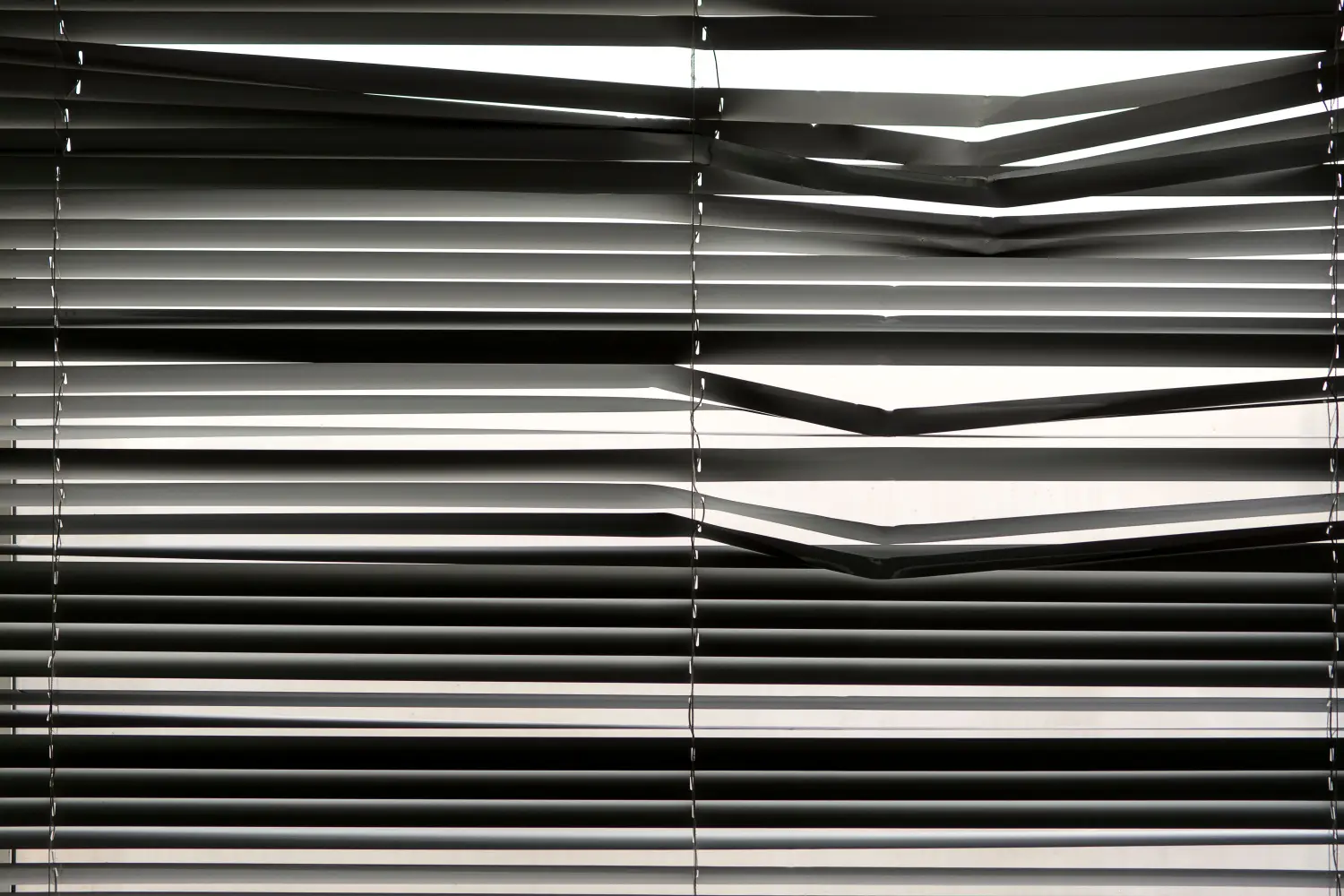
Inside mount blinds look tidy, but they carry a catch: windows that aren’t perfectly square will leak light and bind. That’s the hidden cost nobody talks about. Mounting outside the window frame eliminates both problems because the hardware anchors to a flat wall instead of a crooked opening.
What Your Window’s Shape Demands From the Mount
| When you struggle with … | The smarter mount is | Because it … |
|---|---|---|
| Light leakage around the edges (bedroom, nursery) | Outside mount | Covers the full window opening — no open gaps. |
| Window frames noticeably out of square (more than ⅛" off) | Outside mount | Attaches to flat wall surface, bypassing frame distortions. |
| A clean, recessed look that sits inside the molding | Inside mount | Tucks blinds into the frame for a built-in feel. |
| Very shallow window depth (under 1½") | Outside mount | Brackets mount on the wall; zero depth requirement. |
| Blinds that snag or scrape during operation | Outside mount | Removes any friction against an uneven frame. |
When Block-Out Darkness Is the Only Option
Total darkness can’t be compromised in a nursery or media room. Inside mount blinds, even installed perfectly square, leave a hairline gap around the edges. In an out-of-square frame, that hairline widens into a wedge of light. Outside mount solves it cleanly: the blind extends past the trim on all sides, sealing off every path for light.
The trade-off is visual projection. The blind sits proud of the wall instead of nested inside. For a room where darkness is the higher priority, that’s a fair and simple swap.
When the Window Frame Is Visibly Crooked
Old houses settle. Some windows were never built square. Inside mount relies on a rectangular cavity; when it’s not one, the headrail twists to engage the brackets, the slats hang unevenly, and one side starts dragging before the other. Light gaps appear where the blind can’t sit flush.
Outside mount ignores the frame entirely. The brackets go on the wall, the blind hangs plumb, and operation stays smooth. The cost is that the blind covers some wall and may hide decorative trim. If the out-of-square measure exceeds ⅛", that cost is worth it. Fix the problem, don’t fight the frame.
When Smooth Operation Isn’t Open to Debate
A blind that sticks or grates isn’t just annoying — it wears out faster. Inside mount puts the mechanism against the frame. Any warp, paint ridge, or tilt in the opening creates friction. Outside mount clears all that. The headrail fastens to a stable wall, so cords and wands move freely.
The trade-off is the recessed look. If the window gets opened and closed daily, function matters more than form. Outside mount wins that trade decisively.
Factors That Hardly Change the Decision
Some things people lose sleep over don’t shift the outcome in any real way.
Material performance. Aluminum, faux wood, or vinyl — the blind material behaves exactly the same whether it’s mounted inside or out. Finish matching. Both mounts use identical color and texture options, so coordinating with trim or walls isn’t limited. Installation time. Drilling into drywall instead of a wood frame may take two extra minutes. Not a deciding factor. Price difference. Outside mount bracket sets might cost $2–$5 more per blind. That’s not a decision driver.
Stop weighing these. They won’t point you one way or the other.
Requirements That Remove Choice
Some conditions leave no room for debate.
Depth. Inside mount needs at least 1½" of clear frame depth, sometimes more for flush fit. Measure from the front of the frame back to the glass. Less than that, inside mount is out. Outside mount doesn’t care about depth.
Wall clearance. Outside mount brackets need 2–3" of bare wall on each side to grab solid backing. If the window is wedged between walls or cabinets, outside mount may not fit. Inside mount then becomes the only option — imperfections and all.
Decorative trim worth keeping. Inside mount preserves elaborate casing or mullions, but if the frame isn’t square, light gaps and rough operation still show up. Outside mount will cover that trim. Decide which you can tolerate: a gap or lost trim visibility.
A Few Dollars More Won’t Tilt the Scale
Outside mount hardware can run slightly higher — brackets with standoffs, slightly wider blinds. That difference rarely exceeds $10 a window. Focus on measuring and squaring the installation, not price. The decision lives or dies on the window’s physical condition.
Questions People Actually Ask
Can I shim an inside mount to fix light gaps?
Shimming can level the headrail a small amount, but it won’t correct non-parallel sides. The blind may still twist or bind, and the light gap often just shifts to another edge. If the out-of-square is under ⅛", shimming might work. Beyond that, switch to outside mount.
Do outside mount blinds look bulky?
They project about 1½–2" from the wall. In rooms with deep sills or layered curtains, that projection vanishes. On a bare wall, it’s more visible. If controlling light outweighs a recessed look, the bulk is a minor trade.
How do I measure for outside mount when the window isn’t square?
Find the widest point of the trim and add 2–3" on each side for overlap. For height, measure from the top of the trim to the sill (or desired drop), then add at least 2" for bracket clearance. Mark brackets using a level, not the frame.
What’s the absolute minimum depth for inside mount hardware?
Standard brackets demand 1½"; shallow brackets may allow 1¼". Below that, outside mount is the only path. Always verify the blind’s specifications.
When window frames aren’t square, outside mount solves the persistent problems inside mount creates. The single question to settle before choosing: Can I tolerate a sliver of light and a sticky operation every day?

Clara Bennett
After five years of transforming my 1920s bungalow room by room, I’ve refinished floors, hung blinds in bay windows, and spent more time choosing light bulbs than I’d like to admit. I learned paint sheens by painting my kitchen ceiling three times, and I found out the hard way that a rug too small makes a room feel unfinished. I believe every home can be both functional and beautiful, no matter the budget.
Related posts
The Blind Selection Method Design Pros Use Room by Room
Learn the systems-level framework designers apply to choose blinds room by room—matching material, slat size, and mount type to each room's light, privacy, and maintenance needs.
5 Measuring Mistakes That Leave New Blinds Looking Wrong
First-time blind buyer? Avoid the five most common measuring errors that cause inside mount blinds to show gaps, rub against frames, or not fit at all. Get a clean fit without a pro.

Finally, a Blind Cleaning Routine That Actually Sticks
Stop dreading blind cleaning. This material-specific routine uses wipes, dusters, and conditioners to keep vinyl, aluminum, and wood blinds clean with minimal effort.
Why Bigger Blind Slats Aren’t Always the Better Choice
1-inch, 2-inch, or 2.5-inch blind slats? See how visual weight, light gaps, and cleaning change the answer for kitchens, picture windows, and living rooms.