Why Bigger Blind Slats Aren’t Always the Better Choice
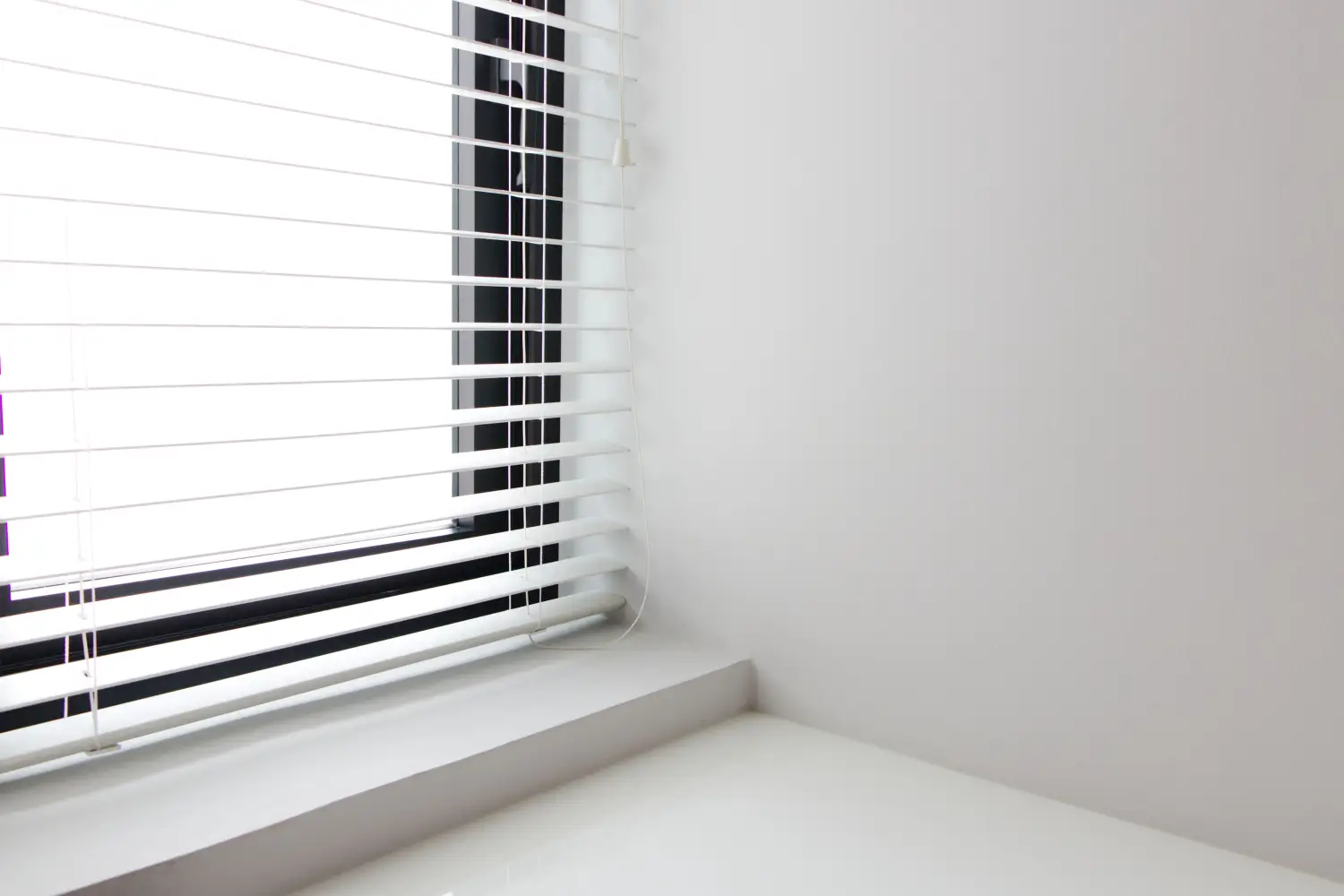
Bigger blind slats aren’t always the better choice because the right size depends on how a window functions, not on a trend. Weighing 1-inch, 2-inch, and 2.5-inch slats by visual weight, light gaps, and cleaning frequency shows that each size solves a different problem. The key is matching the slat to the window’s job—whether it’s a greasy sink window that needs to vanish or a picture window built to display a view.
Slat Sizes by Window Role: Quick Verdict
| Scenario | Winner | Why (in one line) |
|---|---|---|
| Kitchen sink or bathroom window | 1-inch | Less visual bulk and easier to lift out of the way for cleaning. |
| Picture window with an open view | 2.5-inch | Fewer slats mean less obstruction when raised, maximizing the view. |
| Living room or bedroom window | 2-inch | Balanced look that doesn’t dominate the window but still feels substantial. |
When the Window Must Blend Away: Kitchen Sink and Bathroom Windows
A window above a kitchen sink gets splattered. It is not a feature; it’s a tool that should interfere as little as possible. 1-inch slats win here because they carry almost no visual weight—the narrow lines recede, so the window feels like a light source, not a design element competing with dirty dishes.
Light gaps operate differently at this scale. With many thin openings, the incoming light diffuses into a softer glow, which is useful in bathrooms where bright glare off tile can be punishing. Privacy holds up just as well as wider slats when tilted; overlap doesn’t depend on width.
Cleaning is where the analysis turns counterintuitive. The obvious objection is that 1-inch blinds have more slats, so more work. But in a kitchen, the real enemy is aerosolized grease. A lightweight 1-inch blind can be raised in a second, giving full access to wipe the window and the slats in one go. Heavier 2.5-inch blinds don’t lift as easily, and their broad slats act as shelves for film buildup that’s hard to reach without a step stool. You do sacrifice on cordless lifting ease—smaller blinds stack higher, so you’ll pull more cord—but the trade-off is a blind that cooperates with frequent, fast cleanups rather than resisting them.
When the Window Is a Focal Point: Picture Windows
The whole point of a picture window is the view. 2.5-inch slats become the logical choice because they interrupt that view less when open. Visually, wide slats create broad, calm bands that suit a large expanse of glass. Narrow slats on a six-foot window read as a skittering pattern, pulling focus away from the landscape.
When slats are tilted open, 2.5-inch gaps form fewer, wider stripes that the eye merges into the scene more comfortably than the fine slivers of a 1-inch blind. Closed, the larger surface area blocks light more effectively—less chance of a pinhole-like leak if the slats don’t seat perfectly. The trade-off you accept is stack depth. 2.5-inch slats bunch into a chunky mass when raised, so a shallow window casing may not hide them. That means the blind could protrude or block the top portion of the glass. If the window depth is marginal, this size becomes a problem.
When Balance Is Everything: Living Room and Bedroom Windows
Most windows fall into a middle category—double-hung units in bedrooms or living rooms that aren’t a statement piece but also aren’t hidden. 2-inch slats fill this role efficiently. They have enough presence to look like an intentional choice, yet don’t distract. Light gaps hit the middle ground: more open area than 2.5-inch slats, but structured enough that the view doesn’t break into a blur of tiny lines.
Cleaning frequency here is moderate, and 2-inch slats avoid both extremes—nowhere near as many slats to wipe as 1-inch, and each slat isn’t so wide that dust becomes an obvious patch. The sacrifice is that they don’t entirely vanish like 1-inch blinds can, and they lack the dramatic simplicity of 2.5-inch slats on a colossal window. But for everyday use, that’s exactly the compromise that works.
Where Slat Size Makes Little Difference
Several factors that buyers obsess over barely shift across these three sizes.
- Privacy when tilted closed: All sizes, angled correctly, block direct sightlines equally. Overlap is what matters, and that’s a function of tilt angle, not slat width.
- Insulation: The insulating air gap between blind and window depends on material, not slat width. Wood and faux wood outperform aluminum, but a 1-inch wood slat insulates nearly as well as a 2.5-inch one. Move on from this comparison.
- Durability: No slat size is inherently sturdier in typical residential use. If a door-mounted blind takes abuse, all sizes will eventually fail at the cord mechanism first, not the slat.
Deal-Breakers That Rule Out a Slat Size
Some constraints leave no room for debate.
- Window depth: 2.5-inch slats need about 2 to 2.5 inches of depth when bundled. Shallow casings force the blind to extend past the frame or rub the glass. 1-inch and 2-inch avoid this.
- Window width: Below 24 inches, a 2.5-inch slat looks disproportionately chunky, throwing off the window’s proportions. 1-inch is the safer proportional fit.
- Inside mount stack: If the blind lives inside the frame and you raise it frequently for full light, 1-inch blinds stack much smaller than 2.5-inch, which can still eat a quarter of the glass even when fully open.
- Cleaning environment: Above a stove or inside a steamy shower stall, 2.5-inch slats actively trap moisture and cooking grime on their broad faces and are unwieldy to clean in place. 1-inch slats can be wiped while mounted without a struggle.
How Price Changes the Equation
Larger slats usually cost more—2.5-inch faux wood running 30–40% above 1-inch vinyl. In a budget-constrained remodel, that gap can decide the choice before design gets a say. 1-inch blinds outfit a whole house for noticeably less, but they risk looking flimsy on large windows. 2-inch blinds keep the look deliberate without a steep price jump. Price doesn’t override the practical verdicts above unless the project is a short-term rental or a first home where replacements are planned. In that case, 1-inch everywhere—even on picture windows—makes sense because the savings outweigh the aesthetic mismatch.
Frequently Asked Questions
Do bigger slats make a room look larger?
Not meaningfully. Fewer lines can reduce visual noise on a window, but the effect on room size is negligible compared to paint color and furniture placement. On small windows, wide slats often emphasize how small the window is, making it look squat.
Are 2.5-inch slats harder to clean than 1-inch?
The effort roughly evens out. You wipe fewer slats but each one is wider and shows dust more. 1-inch blinds can often be vacuumed with a brush attachment without tilting; 2.5-inch usually need hand wiping because the vacuum can’t reach the center of the broad surface effectively.
Which size lets in the most light when open?
When fully raised, all sizes expose equal glass. When slats are tilted, 1-inch blinds transmit a finer, more diffuse light pattern, while 2.5-inch gaps produce stronger, broader beams. Total light volume is comparable; the difference is in how the light is distributed.
Can I mix slat sizes in the same room?
Absolutely. A 1-inch blind on a kitchen window next to a 2.5-inch blind on a picture window works if the finish matches. The contrast signals that each window has a distinct purpose, which reads as intentional rather than a mix-up.
The most common scenario—standard living and bedroom windows—lands on 2-inch slats as the practical all-rounder. The question to ask yourself is simply this: should this window melt into the wall or claim its own presence?

Clara Bennett
After five years of transforming my 1920s bungalow room by room, I’ve refinished floors, hung blinds in bay windows, and spent more time choosing light bulbs than I’d like to admit. I learned paint sheens by painting my kitchen ceiling three times, and I found out the hard way that a rug too small makes a room feel unfinished. I believe every home can be both functional and beautiful, no matter the budget.
Related posts
The Blind Selection Method Design Pros Use Room by Room
Learn the systems-level framework designers apply to choose blinds room by room—matching material, slat size, and mount type to each room's light, privacy, and maintenance needs.

The Hidden Cost of Picking the Wrong Blind Mount for Your Windows
Inside mount blinds on out-of-square windows leak light and bind. Outside mount fixes both. See the scenarios that decide which mount you actually need.

5 Measuring Mistakes That Leave New Blinds Looking Wrong
First-time blind buyer? Avoid the five most common measuring errors that cause inside mount blinds to show gaps, rub against frames, or not fit at all. Get a clean fit without a pro.

Finally, a Blind Cleaning Routine That Actually Sticks
Stop dreading blind cleaning. This material-specific routine uses wipes, dusters, and conditioners to keep vinyl, aluminum, and wood blinds clean with minimal effort.