The Blind Selection Method Design Pros Use Room by Room
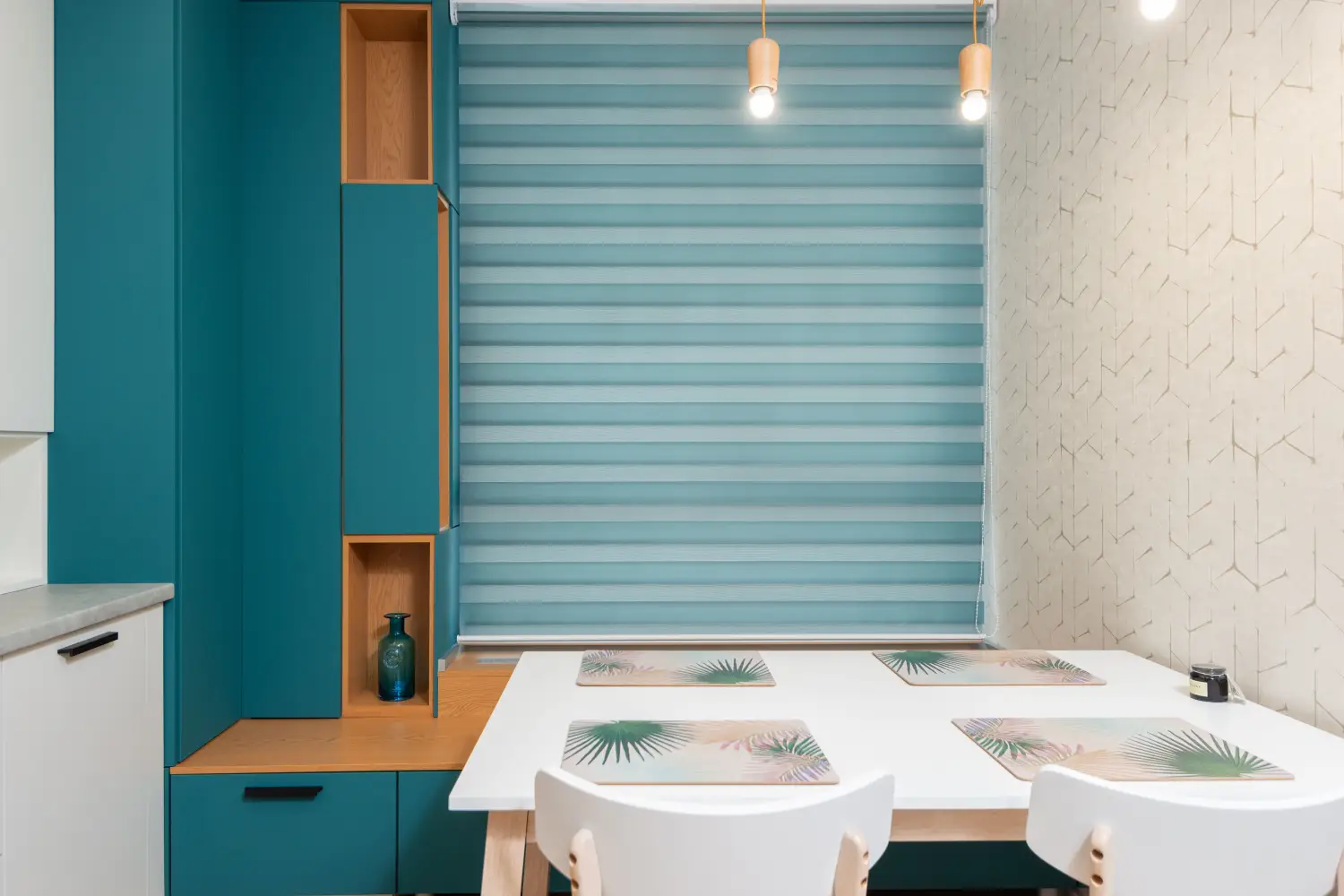
Design professionals don't browse blind catalogs to make decisions. The blind selection method pros use room by room is a systems-level framework: align material, slat width, and mount type with each room's specific light-control, privacy, and maintenance demands. This article walks through the full decision tree for a new home so the blinds you choose actually solve the problems each space presents.
The Three Variables That Shape Every Blind Decision
Blind performance rests on three levers. Understanding them as a system—not a checklist—prevents mismatched choices.
Material: The Core of Durability and Maintenance
Material dictates how a blind ages under moisture, heat, and cleaning. Real wood delivers weight and warmth but warps wherever humidity fluctuates. Faux wood withstands moisture and wipes clean easily; dark finishes in direct sun can bow slightly, though it's rare. Aluminum handles steam and spray without any degradation, but its industrial feel makes it wrong for a formal living room. Vinyl holds up in damp conditions yet may yellow after prolonged UV exposure. Fabric shades—roller, cellular—offer softness and insulation but impose cleaning constraints: many are spot-clean only, which limits their use in kitchens and bathrooms.
Slat Width: Precision Light Control and View
Slat size determines how finely you adjust light and privacy, and how much dust settles. ½-inch slats give near-surgical tilt control, ideal for street-facing windows where you want light but not visibility, yet they multiply the number of horizontal surfaces that collect dust. 2-inch slats are the standard for wood and faux wood: cleaner lines, easier wiping, and respectable light modulation. 2½-inch slats open the view between slats, suit large windows, and reduce cord clutter. The width that's best is the one that balances the room's need for outward sight and inward privacy against the practical chore of cleaning.
Mount Type: How the Blind Sits in the Window
Inside mount braces into the frame, producing a trim appearance and sealing side light if the frame depth is sufficient. It demands a minimum depth, typically 1½ to 2 inches. Outside mount attaches above or to the trim, enlarging the window's visual footprint and hiding imperfect frames, but it leaves potential light and sightline gaps at the edges. Mount type also changes the cleaning routine: inside-mount blinds sit flush, making dusting around them simpler; outside mounts create ledges that catch dust.
Diagnosing a Room's Demands: Light, Privacy, and Cleaning Priority Matrix
Start by ranking the room's functional requirements, not its style.
Assess three conditions:
- Light control: How often is the room used during bright sun hours? Does it need blackout for sleep or just glare reduction for screens?
- Privacy: What can a neighbor or pedestrian see? Ground-floor windows adjacent to a sidewalk demand full obscurity; second-story ones may only need light diffusion.
- Maintenance: What will land on the blind—cooking grease, steam, dust, toddler fingerprints? Rooms with high splatter or moisture need materials that can survive regular wiping without staining or degrading.
Assign a priority order. For a kitchen, maintenance comes first, then privacy, then light. For a bedroom, light-blocking and privacy tie for the top spot, with maintenance a distant third. This rank order determines how you weigh the three variables when trade-offs arise.
Matching Materials to Room Conditions
With the priority stack defined, the material options narrow sharply.
- High-humidity, splash-prone rooms (kitchens, bathrooms, laundry rooms): Aluminum and faux wood are the safe picks. Aluminum ignores moisture and cleans with a damp cloth. Faux wood adds thickness for better light blockage and has no grain to trap grime. Vinyl is an acceptable budget alternative where steam is constant.
- Living areas with intense sun (south- and west-facing living rooms, sunrooms): Faux wood in light tones or real wood with a UV-cured finish resists heat distortion. Dark vinyl will absorb heat and can deform. Cellular shades in light colors provide insulation without warping but trap heat if installed within a sun-baked frame.
- Bedrooms and nurseries that need darkness: Blackout roller shades or room-darkening cellular shades with full side channels are the most effective. Faux wood blinds with de-routed slats can layer under blackout curtains for adjustable control.
- Spaces where aesthetics dominate (dining rooms, formal living rooms): Real wood blinds or woven wood shades inject texture and depth. They are acceptable only in climate-stable rooms where moisture and cleaning are minimal demands.
Adjusting Slat Size for Light and Privacy by Room
Material and slat width together control the functional outcome.
- Street-facing windows and ground-floor bathrooms: Use ½-inch or 1-inch slats. The fine tilt angles allow light entry while breaking the sight line from outside. Dusting effort increases, but these rooms typically don't accumulate heavy dust loads.
- Large picture windows or sliding glass doors: 2½-inch slats or vertical blinds. Fewer lines mean less visual obstruction and simpler cleaning behind the blinds.
- Bedrooms and media rooms: 2-inch or 2½-inch slats in faux wood with minimal light-rout holes. They block more light when closed and still tilt for daytime privacy.
- Home offices: 1-inch or 2-inch slats. A 2-inch slat tilted upward can bounce daylight to the ceiling, reducing screen glare without blocking the view entirely.
The Mount Decision: When Inside Mount Wins, When Outside Is Necessary
Mount type is rarely a purely aesthetic choice; window depth and light-sealing requirements force the decision.
- Inside mount: The default when the window has at least 1½ inches of depth. It minimizes side light leakage and integrates cleanly with trim. For bedrooms, inside mounting a blackout shade with edge gaps filled by side channels yields the darkest result.
- Outside mount: Required for shallow frames or when you want to visually enlarge a small window. An outside mount placed well above the frame and extended past the sides can make a cramped bathroom window feel generous. The trade-off is harder light control at the edges; specify a wider blind and add side channels to reduce it.
- Ceiling mount: A variant of outside mount for sliding doors and floor-to-ceiling glass. It achieves full coverage without interfering with the door track.
Room-by-Room Application of the Full System
The method is applied per window. Below is how the three variables come together for typical rooms.
Kitchens and Bathrooms
Priority stack: maintenance, privacy, light control. Material: aluminum or faux wood. Slat width: 1-inch for fine control but 2-inch faux wood is easier to wipe. Mount: inside mount where depth allows; outside mount must leave air circulation to prevent moisture trap. Real wood and fabric shades are excluded.
Living Rooms and Dining Rooms
Priority stack: light/view control, aesthetics, maintenance. Material: real wood, woven wood, or premium faux wood. Slat width: 2-inch or 2½-inch to preserve outward views. Mount: inside mount honors the trim; outside mount enlarges undersized windows. Consider a UV-blocking roller shade behind slats to protect furniture.
Bedrooms and Nurseries
Priority stack: light blockage, privacy, then aesthetics and maintenance. Material: blackout cellular or roller shades, faux wood with blackout liners. Slat width: 2-inch with de-routed holes. Mount: inside mount with minimal gaps, or outside mount with full side channels. Cordless operation is mandatory for child safety.
Home Offices
Priority stack: glare control, privacy, low maintenance. Material: aluminum or faux wood. Slat width: 2-inch to direct light upward. Mount: inside mount for clean lines. A top-down/bottom-up shade offers the most flexibility for monitor placement.
Quick Reference Table: Blind Selection Method by Room
| Room | Top Priority | Recommended Material | Slat Width | Mount Type | Notes |
|---|---|---|---|---|---|
| Kitchen | Maintenance, moisture resistance | Aluminum, faux wood | 1–2 inches | Inside mount | Avoid fabrics; wipeable only. |
| Bathroom | Privacy, moisture resistance | Aluminum, vinyl, faux wood | ½–1 inch | Inside mount (if depth allows) | Cordless for safety; no wood. |
| Living Room | Light control, view, aesthetics | Real wood, faux wood, woven wood | 2–2½ inches | Inside mount preferred | Add UV liner for sun-facing windows. |
| Bedroom | Total darkness, privacy | Blackout cellular, faux wood with liner | 2 inches (de-routed) | Inside mount or outside with side channels | Cordless and top-down for flexibility. |
| Home Office | Glare control, privacy | Aluminum, faux wood, fabric solar shades | 1–2 inches | Inside mount | Bottom-up option useful. |
| Dining Room | Ambiance, aesthetics | Real wood, woven wood | 2–2½ inches | Inside mount | Low maintenance if rarely used. |
Key Takeaways
- The blind selection method pros use is a functional ranking system: light, privacy, and maintenance demands dictate material, slat width, and mount type—not the other way around.
- Three variables interact; changing one alters the performance of the others. Choose them as a set.
- High-moisture or high-grime rooms force material selection toward aluminum, faux wood, or vinyl; real wood has no place there.
- Slat width is a lever that trades privacy precision against dust accumulation and outward view.
- Inside mount is the highest-performing default for light seal; outside mount solves depth and proportion problems at the cost of edge gaps.
- Bedrooms require a blackout-first approach: material, slat rout reduction, and mount must all serve darkness.
- Maintenance realism prevents early replacement. If a room will be splattered, wiped, or steamed, choose the easiest material to clean.
Frequently Asked Questions
What is the blind selection method design pros use room by room?
It's a framework that begins with the room's demands—light, privacy, maintenance—then selects material, slat width, and mount type to meet those demands. Style enters only after function is solved.
Can I use the same blind type throughout my whole house?
You can, but you'll compromise somewhere. Faux wood with varied slat widths and mounts can cover most rooms, but a bathroom on a ground floor needs different spec than a second-story home office. Applying the framework per window prevents weak links.
Are real wood blinds worth the maintenance risk?
Only in dry, low-use rooms. They warp in humidity and demand regular dusting. The payoff is texture that faux wood doesn't replicate. Weigh that against the room's actual exposure before committing.
How do I decide between inside and outside mount?
Measure the window depth. 1.5 inches or more, inside mount wins on light control and cleanliness. Less than that, outside mount is necessary. Even with adequate depth, outside mount can be a deliberate choice to enlarge a small window.
What's the biggest mistake people make when choosing blinds room by room?
Selecting a material or color first. That sequence guarantees mismatches. The room's daily demands must drive the specs; aesthetics come last.
Do I need blackout blinds in a nursery?
Yes, unless the window receives no direct sunlight. Babies sleep better in darkness, and blackout shades with cordless operation and no exposed strings are the only safe, effective solution for that space.
The Single Next Step After Mapping Your Rooms
Start with the room that presents the hardest constraints—often a sun-drenched living room or a master bedroom. Write its priority stack, then specify a material, slat width, and mount type that satisfy it. Check your logic against the table, and order a single window first to test fit and function before scaling the decision across the home.

Clara Bennett
After five years of transforming my 1920s bungalow room by room, I’ve refinished floors, hung blinds in bay windows, and spent more time choosing light bulbs than I’d like to admit. I learned paint sheens by painting my kitchen ceiling three times, and I found out the hard way that a rug too small makes a room feel unfinished. I believe every home can be both functional and beautiful, no matter the budget.
Related posts

The Hidden Cost of Picking the Wrong Blind Mount for Your Windows
Inside mount blinds on out-of-square windows leak light and bind. Outside mount fixes both. See the scenarios that decide which mount you actually need.

5 Measuring Mistakes That Leave New Blinds Looking Wrong
First-time blind buyer? Avoid the five most common measuring errors that cause inside mount blinds to show gaps, rub against frames, or not fit at all. Get a clean fit without a pro.

Finally, a Blind Cleaning Routine That Actually Sticks
Stop dreading blind cleaning. This material-specific routine uses wipes, dusters, and conditioners to keep vinyl, aluminum, and wood blinds clean with minimal effort.
Why Bigger Blind Slats Aren’t Always the Better Choice
1-inch, 2-inch, or 2.5-inch blind slats? See how visual weight, light gaps, and cleaning change the answer for kitchens, picture windows, and living rooms.