The 3-Layer Bedroom Lighting System Designers Use
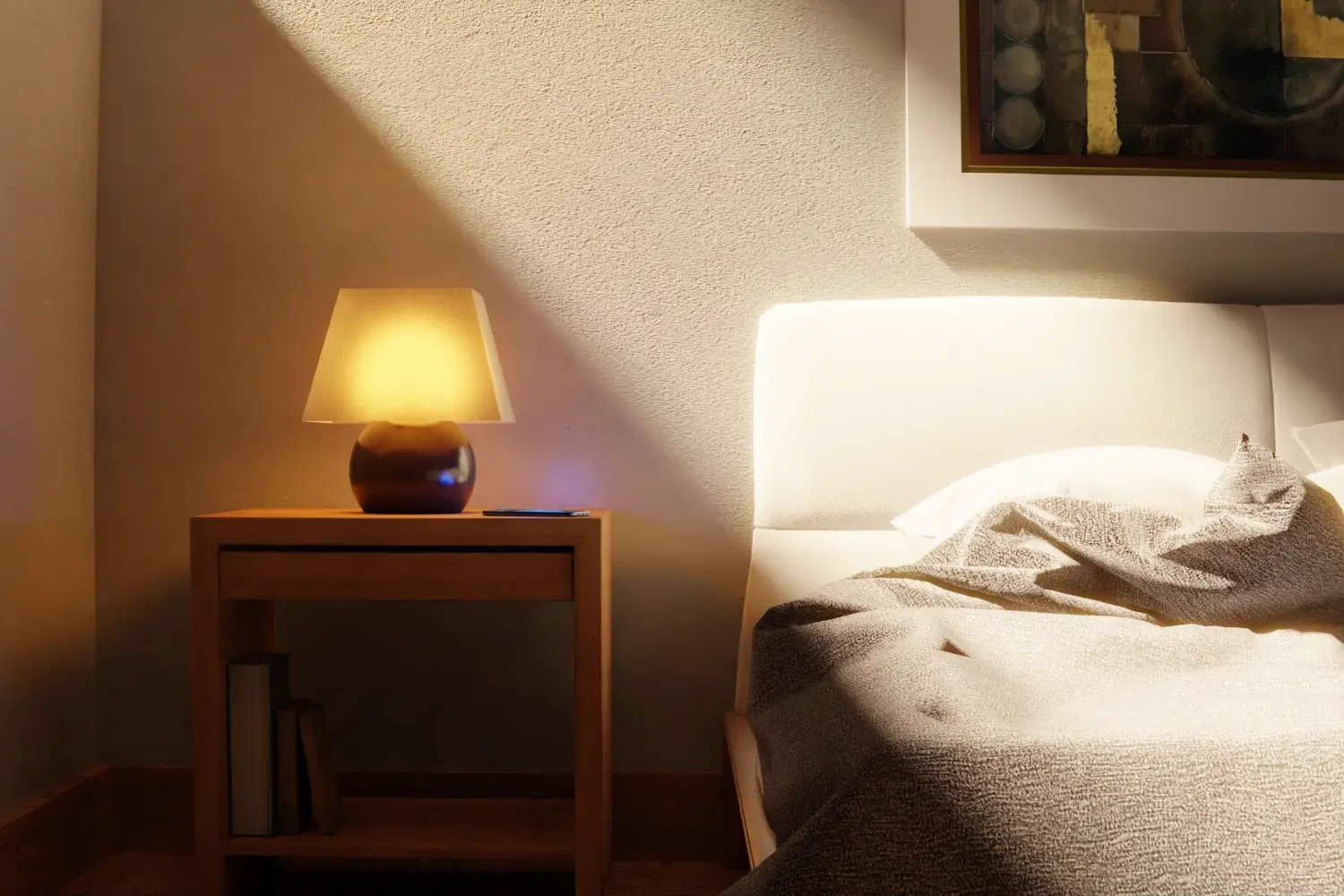
A bedroom that feels calm and complete after dark is never the result of one ceiling fixture. It’s layered light — the kind that lets you wind down, see clearly when you need to, and still appreciate the room’s character. This guide walks through the ambient-task-accent system designers rely on, and shows exactly which fixtures, Kelvin temperatures, and dimmer tricks turn it into a plan you can execute today without calling an electrician.
Ambient, Task, and Accent: The Three Layers That Shape a Bedroom
The system breaks light into three purposes, each with its own job.
Ambient light fills the room with a soft, even wash. In a bedroom, that often means a ceiling-mounted fixture or a ring of recessed lights — but the key is that it is never harsh. Ambient light sets the foundation, not the final mood.
Task light focuses where you need to see detail: at the dresser, inside a closet, or on a book. A table lamp pulled low over a magazine or a pair of vanity bars flanking a mirror are both task lighting. It is directional and deliberate.
Accent light directs attention to texture, shape, or a quiet corner. A warm glow behind the headboard, a picture light on a favorite print, or a slim LED strip tracing a baseboard — accent light adds depth without calling attention to itself as a fixture.
When all three layers coexist, the room reads as intentional. A single bright ceiling light, however powerful, cannot create that gentle variation.
Sleep, Dress, and Read: How Bedroom Zones Decide Your Layer Mix
Treat the bedroom as three zones, each with different lighting needs.
The Sleep Zone: Soft Ambient with Barely-There Accent
This is where the atmosphere matters most. Ambient light around the bed should be dimmable and visibly warm — overhead recessed lights on a dimmer, or a semi-flush fixture with a 2700K bulb. Accent light enters softly: wall sconces washing the wall beside the bed, or an LED strip tucked behind the headboard, both on their own dimmers so the glow can retreat to almost nothing as evening deepens.
The Dressing Zone: Bright Task Light Without Harshness
Dressing calls for shadow-free illumination. Inside a closet, motion-sensor LED bars are practical and flicker-free. A dresser area needs side light, not a single overhead spot that casts unflattering shadows on the face. Vanity strips or a pair of eye-level sconces beside the mirror produce the most accurate and even light. Color temperature can step up slightly here, but never into the clinical blue range.
The Reading Zone: Focused Light You Can Aim
For reading in bed, an adjustable task lamp directs light exactly onto the page, avoiding glare for a partner. Swing-arm wall lamps free up nightstand space and keep the beam low. A table lamp with an opaque shade that pushes light downward is the simplest plug-in solution, provided the bulb is dimmable.
Fixture Choices That Bring Each Layer to Life in Each Zone
The right fixture for each layer prevents both dead spots and harsh glare.
Sleep zone ambient: 4-inch recessed lights with wide-beam (100°) trims placed 2–3 feet from the wall keep the ceiling free of harsh hot spots. A semi-flush mount with a fabric drum shade works well where recessed installation is not an option.
Sleep zone accent: Wall sconces with uplight or downlight shades, mounted 60–66 inches from the floor, create a calm vertical wash. LED tape strips behind the headboard, rated about 200–300 lumens per foot, deliver the gentlest glow.
Dressing zone task: A linear LED fixture above the mirror or on each side. If there is no existing wiring, a plug-in vanity light bar that sits on a dresser or mounts to the wall with a cord cover becomes a no-electrician fix.
Closet task: Battery-operated, motion-sensing LED bars that stick to the underside of shelves light up only when you reach for clothing.
Reading zone task: Plug-in swing-arm wall lamps or table lamps with a narrow, opaque shade. A 60–75° beam spread and a bulb delivering 400–600 lumens at the reading surface keeps the light contained.
Overall accent: Small picture lights above framed art, or a slim LED profile along a tray ceiling or low baseboard, define the edges of the room without dominating it.
The Kelvin Numbers Behind a Restful Bedroom
Color temperature — the warmth or coolness of light — shapes mood more than any fixture finish. For a bedroom, remember this: warmer light invites rest, while cooler light triggers alertness that belongs elsewhere.
- Ambient in sleep zone: 2700K. This is soft white, warm enough to recall incandescent without tipping amber.
- Task in dressing zone: 3000–3500K. The extra coolness helps see color accurately but stays below the threshold that feels sterile.
- Task in reading zone: 2700–3000K. A tunable smart bulb is ideal here — set it to 3000K for afternoon reading, then shift toward 2200K as bedtime approaches.
- Accent anywhere: 2200–2700K. Accent light above 2700K starts reading as bright rather than cozy; keep it very warm so it whispers rather than shouts.
Never use bulbs above 4000K in a bedroom. That blue-heavy light suppresses melatonin and turns a sanctuary into an office after dark.
Getting Dimmer Control Without an Electrician
Dimmers are not a luxury; they are the tool that lets you shift the room’s mood from morning brightness to nighttime calm. Adding them does not require rewiring.
- For plug-in lamps: A tabletop plug-in dimmer — a small rotary or slide unit that sits between the lamp cord and the wall outlet — works with most dimmable LED bulbs. It costs very little and installs in seconds.
- For hardwired fixtures with standard bulbs: Swap the bulb for a smart LED bulb with built-in dimming. Control it from a phone app or voice assistant without touching a switch.
- For hardwired fixtures where the switch is accessible: If you are comfortable turning off power at the breaker and following a basic guide, replace the existing toggle with a smart dimmer switch. Many modern models work without a neutral wire, helpful in older homes. When in doubt, stick with the smart bulb path — it is completely reversible and safe.
- Check compatibility: Confirm the bulb and dimmer are rated to work together. Even dimmable LEDs can flicker or buzz with an incompatible dimmer.
A Zone-by-Zone Cheat Sheet for Your Bedroom Lighting Plan
Use the table below to assemble a list of what you need for each area.
| Zone | Layer | Fixture Type | Kelvin | Dimmer Solution |
|---|---|---|---|---|
| Sleep | Ambient | 4" recessed or semi-flush | 2700K | Wall dimmer or smart bulb |
| Sleep | Accent | Wall sconces or LED tape behind headboard | 2200–2700K | Smart plug-in dimmer or separate smart bulb |
| Dressing | Task | Vanity bar, side sconces, or mirror-light | 3000–3500K | Switch dimmer or smart dimmer plug |
| Closet | Task | Motion-sensor LED bar | 3000K | Not needed — automatic |
| Reading | Task | Swing-arm wall lamp or adjustable table lamp | 2700–3000K (tunable) | Smart bulb with circadian preset |
| Accent general | Accent | Picture light, floor-level LED strip | 2200–2700K | Smart plug-in dimmer |
Key Takeaways
- A single ceiling light cannot serve the three distinct bedroom functions; layer ambient, task, and accent light instead.
- Divide the room into sleep, dressing, and reading zones to determine which layer dominates where.
- Keep ambient and accent below 3000K; reserve 3000–3500K only for task light in the dressing area.
- Dimming is non-negotiable for sleep-zone ambient and accent, and it’s easy to add with smart bulbs or plug-in dimmers.
- No electrician is needed for most bedroom lighting upgrades — the majority of solutions are plug-in or stick-on.
Making Your Bedroom Lighting Plan Your Own
Layered lighting is not about buying everything at once. Start with the change that will transform evenings most: dimmable ambient light in the sleep zone. That single upgrade shifts how the room feels after dark, instantly. Add a reading task light next, then shape the dressing area. Accent comes last, after the practical layers are settled, because its role is to refine the atmosphere, not to hold the room together. Small, reversible steps protect both budget and the pleasure of getting it right.

Clara Bennett
After five years of transforming my 1920s bungalow room by room, I’ve refinished floors, hung blinds in bay windows, and spent more time choosing light bulbs than I’d like to admit. I learned paint sheens by painting my kitchen ceiling three times, and I found out the hard way that a rug too small makes a room feel unfinished. I believe every home can be both functional and beautiful, no matter the budget.
Related posts

Your First Bedroom Design: A Foolproof Step-by-Step Plan
Design your first bedroom without costly mistakes. Follow a sequential plan: function, layout, lighting, then color. A beginner’s guide that ends decision paralysis.
You Don't Need More Closets: Bedroom Storage That Works
Learn a 4-zone audit that reclaims vertical, under-bed, and multi-use storage without buying new furniture. Start with the one zone you're ignoring the most.
3 Clearance Rules That Fix Awkward Bedroom Layouts
Learn the three critical furniture clearances—bed-to-wall, walkway, and dresser access—with precise minimums to make any bedroom functional from day one.
The Overlooked Element Behind Bedroom Color Choices
Discover how to layer wall color, textiles, and lighting temperature into a circadian-friendly palette that supports alert mornings and calm evenings.

Are Your Bedroom Windows Quietly Undermining Your Sleep?
If light or temperature swings mess with your sleep, your window coverings likely need a reset. Learn the opacity-mounting-safety decision tree that works.