Why Accent Walls Often Shrink Small Rooms (And When They Don’t)
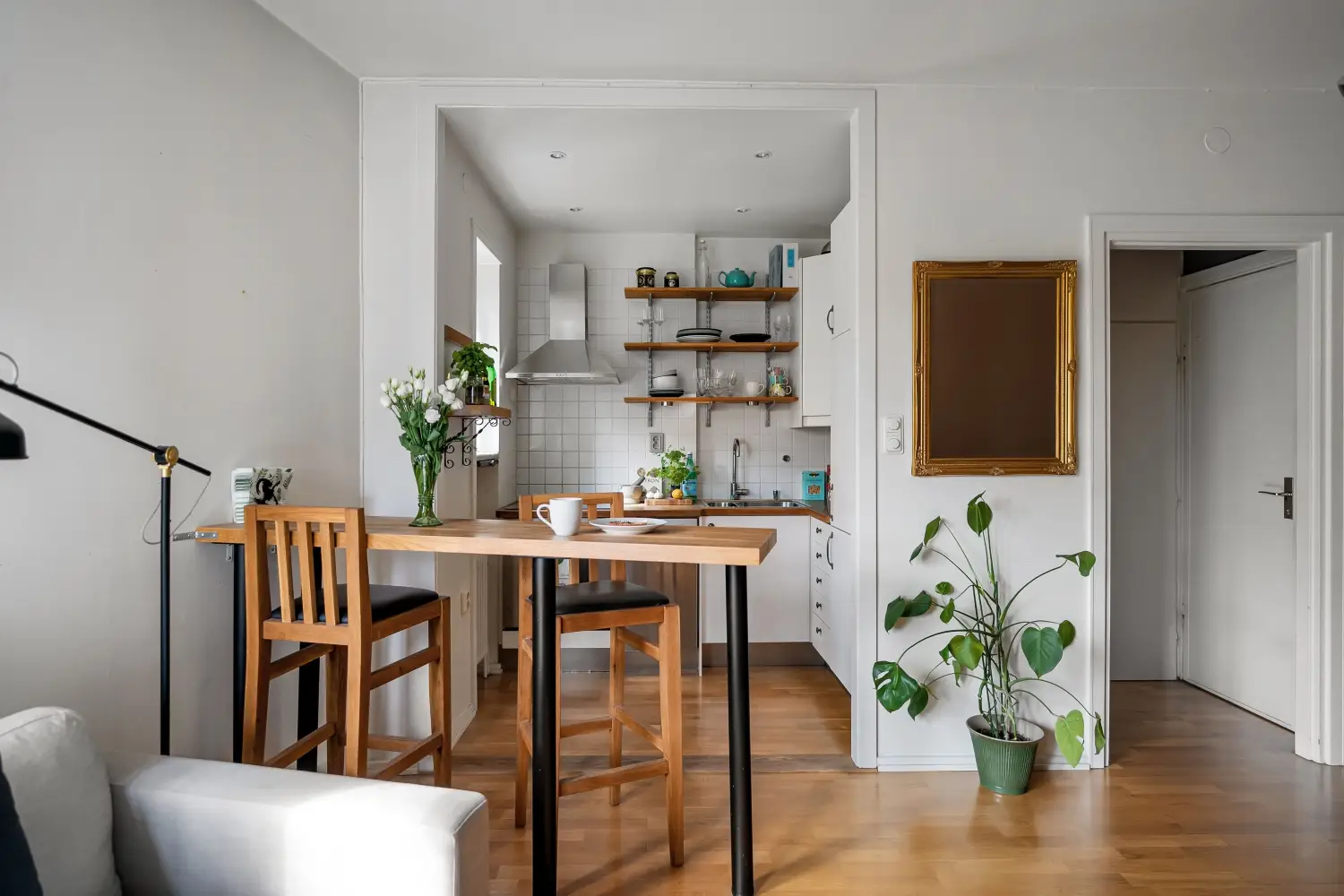
Accent walls shrink a small room when they interrupt the path the eye naturally wants to take. They expand it when they land exactly where the gaze already settles. The color isn't the culprit — the placement is. If you drop a bold hue on a wall that has no business being the star, the room fractures into smaller, disconnected pieces immediately.
So this guide doesn't bother with whether navy is better than charcoal. It focuses on the two things you can't change: the room's built-in focal point and its actual shape. An accent wall is a bet. The odds of winning that bet depend entirely on whether you're reinforcing the room's natural anchor or betting against it. That's the calculation worth making.
At-a-Glance Verdicts by Room Condition
| Main Condition | Winner | One-Line Reason |
|---|---|---|
| A single, strong focal point (a centered bed, a large window, a fireplace) | Accent wall — placed on that focal wall | Deepens the anchoring view; the room reads as unified and intentional. |
| Multiple competing focal points (TV unit, bed, door, window on different walls) | No accent wall | Adding a dominant color to one surface fractures attention; the room feels jumbled and smaller. |
| A long, narrow room (hallway, galley layout) | Accent wall on the far short end | Pulls the eye forward and stretches perceived width; the side walls recede. |
| A square or nearly square room with weak identity | Accent wall on one wall, ideally with an architectural detail | Gives the box a front and back; breaks the uniform cube that otherwise feels claustrophobic. |
| A room where the only available wall for paint is a long side wall in a narrow space | No accent wall, or paint a built-in element instead | Drawing a bold line down the length exaggerates the tunnel effect; it's the fastest route to a smaller-feeling room. |
Scenario: The Room Already Has a Clear Anchor
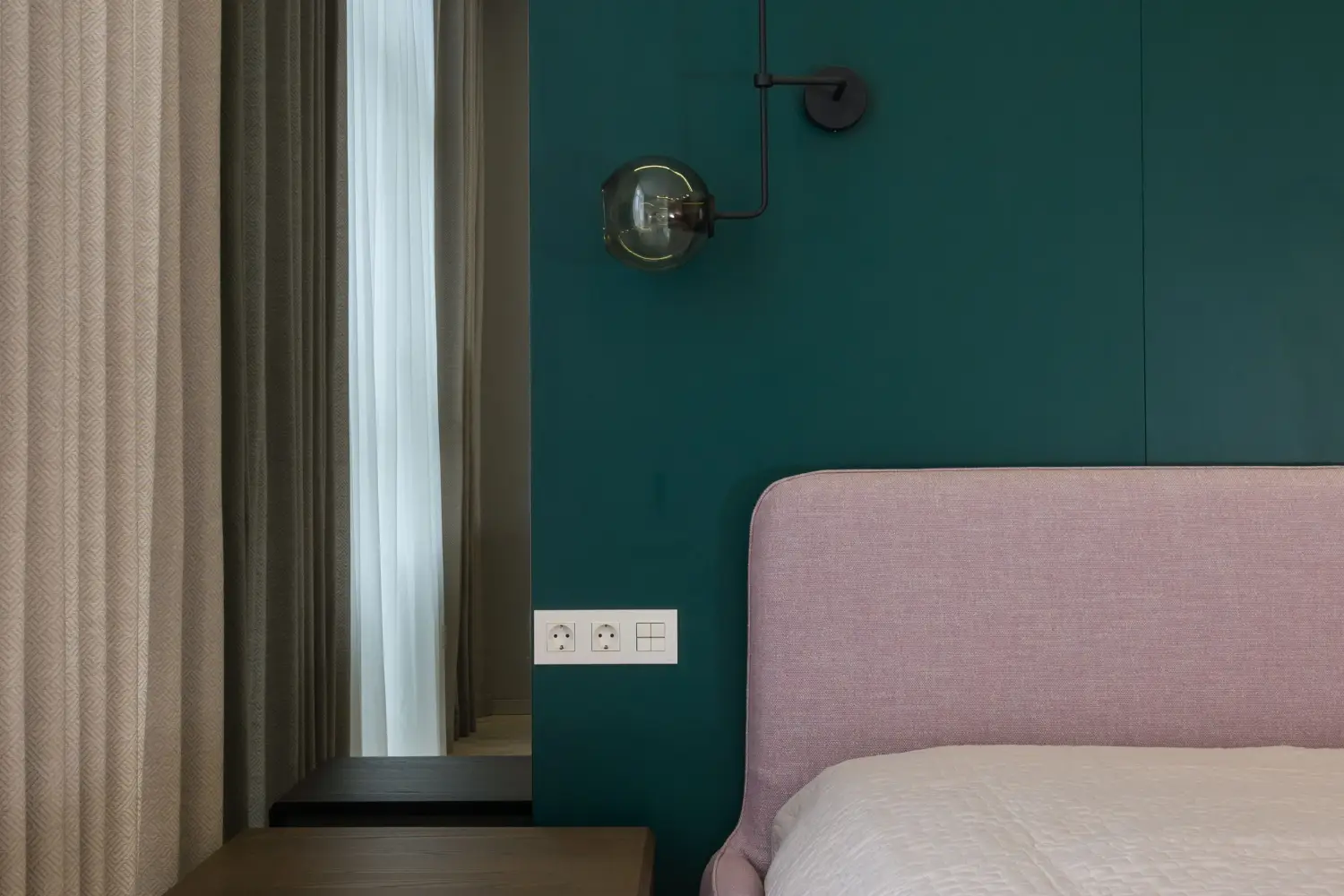
When a small bedroom centers on a bed with a headboard wall, or a living room draws the eye to a fireplace or picture window, that wall is already doing the heavy lifting. In these cases, an accent wall on that same surface wins — and skipping it is a missed opportunity.
Why it works: the natural focal point gives you an invitation. Painting that wall a deeper or more saturated color builds a sense of depth. The wall visually recedes, which makes the room feel like it extends beyond that plane. It also frames the key furniture, which makes the entire layout read as purposeful. The remaining walls stay light, and the contrast reinforces the room's geometry without cutting it up.
What you give up by choosing this route: flexibility. Once that wall is the accent, rearranging the room means either living with a mismatched focal point or repainting. And if the focal wall has large windows or a door taking up most of its surface, the color reads as a thin border, not a wash of depth — the effect collapses.
Scenario: There's No Single Visual Winner
Rooms where the bed sits on one wall, the TV on another, and a closet door on a third have no dominant focal point. Here, an accent wall often backfires. Choosing any one wall to highlight forces the eye to stop there, but the room's practical use pulls attention in too many directions. The result is a chopped visual experience — one bold patch floating in a space that refuses to surrender to it.
Winner: no accent wall. Instead, rely on a single, harmonious wall color for all four surfaces. That continuity lets the eye move freely, which is what makes a small room feel larger than its footprint.
The trade-off: you lose the dramatic punch an accent wall can deliver. In exchange, you gain a quiet, expansive calm — a room where nothing competes for dominance and the space feels wider than its dimensions.
Scenario: The Room Is Long and Narrow
A narrow galley kitchen, a shotgun hallway, or a bedroom shaped like a corridor can feel oppressive even if the square footage is decent. In these rooms, the wrong accent wall placement shrinks the space perceptually — and the wrong wall is nearly always the long side wall.
Painting one of the long walls a strong accent color creates a dark corridor on one side, which emphasizes the length and narrowness. The winner, surprisingly, is an accent wall on the short end wall farthest from the entrance. This pulls the gaze down the length, giving the room a clear visual destination. The brain registers the distance as depth, not as a treadmill, and the side walls appear wider in comparison. Lighter treatment on the long walls further supports the illusion.
What's sacrificed: the short end wall often has an entry door or window, limiting the paintable area. And if the room is so narrow that walking past the side walls feels claustrophobic, an accent wall won't fix the squeeze — the real solution may be lighting or mirror placement, not paint.
Scenario: A Boxy, Square Footprint Feels Tight
Square small rooms have no natural directional flow. All four walls are equal, which can make the space feel like a contained box — static and restrictive. An accent wall on a single plane breaks that equality. It creates a visual front and back, making the room read as a shaped volume rather than a cube.
The best candidate wall here is one that already has a distinguishing feature: a window, a headboard, a piece of art, or even a slight architectural bump-out. If no wall stands out, choose the one facing the entry. Painting it a noticeably different color — not just a nuance — introduces a third dimension, tricking the eye into reading depth where there was none.
What you give up: if the wrong wall is selected, you label the room as having a front, but the function may not support it. For example, painting the wall behind a sofa in a square living room that also contains a prominent media unit on another wall creates conflict, not clarity. And in extremely small squares (under 100 square feet), even a successful accent wall can still feel like the room is closing in if the contrast is too stark.
When Accent Wall and No Accent Wall Are Nearly Identical
There are aspects of this decision that don't move the needle enough to matter, and time is better spent elsewhere.
- Paint sheen — matte vs. eggshell on the accent wall doesn't meaningfully change whether the wall frames or fragments the space. Sheen adjusts light reflection but does not override the structural focal point.
- Minor undertone differences — a change from warm gray to cool gray on the accent wall while maintaining similar lightness won't rescue a bad wall choice or ruin a good one.
- Brand of paint — this is the wrong variable to compare. The chemistry matters for durability, not for spatial perception.
Stop deliberating over these factors if you haven't settled on which wall deserves the attention.
Hard Limits That Rule Out an Accent Wall Immediately
Some room conditions override every design principle. These aren't matters of taste; they're deal-breakers.
- No uninterrupted wall surface — if every wall is broken by a large window, a full-height door, a closet slider, or a built-in bookshelf, painting an accent wall leaves you with a thin perimeter stripe, not a plane of color. The effect is lost.
- Rental restrictions — if you can't paint, you can't paint. Temporary solutions like peel-and-stick wallpaper can approximate an accent wall, but they come with their own adhesion and removal caveats. If the lease forbids any wall treatment, the debate ends here.
- Sloped ceilings or dormer walls — when a wall isn't vertical or meets the ceiling at an irregular angle, painting it as an accent wall draws attention to the awkward geometry, which rarely helps a small room feel larger.
- A wall that you don't want to be remembered — in a room with dated paneling, exposed pipes, or an unattractive radiator, painting that wall a bold color ensures it becomes the room's defining feature. If you're not ready to embrace that, skip the accent.
Common Accent Wall Questions for Small Rooms
Can I put an accent wall on a wall with windows?
Yes, if the windows are centered and the window wall is the natural focal point. But if the windows take up most of the surface, the color will read as a narrow frame around the glass, not a full plane of depth. That strips the accent of its spatial power.
Does the accent wall always have to be the wall behind the bed or sofa?
No. The rule is to match the wall to the room's strongest focal point, not to a furniture convention. In a small living room where the main view is a large window, that window wall can be the accent, even if the sofa faces away from it. The goal is visual flow, not furniture-facing logic.
What's the safest accent wall color for a small room that I want to keep airy?
Choose a color that is only two or three shades deeper than the other walls, in the same color family. A soft charcoal on a focal wall surrounded by light warm grays creates depth without weight. The contrast feels architectural rather than heavy.
Will an accent wall help if the room gets little natural light?
Only if placed on the wall that receives what light there is. An accent wall on a shadowed surface will darken further and shrink the space perceptually. If the available light hits a side wall, keep that wall light and consider a subtle accent on a perpendicular wall — but test with large paint samples first.
The One Rule That Settles Most Small-Room Accent Wall Debates
The most common small-room scenario is a clear anchor — a bed, a fireplace, a window. In that case, the accent wall on the focal surface wins. Before you open a paint can, ask this: does the wall I'm about to paint already lead the room's visual story, or will it start a competing one? Answer that, and the risk of shrinking the space drops to nearly zero.

Clara Bennett
After five years of transforming my 1920s bungalow room by room, I’ve refinished floors, hung blinds in bay windows, and spent more time choosing light bulbs than I’d like to admit. I learned paint sheens by painting my kitchen ceiling three times, and I found out the hard way that a rug too small makes a room feel unfinished. I believe every home can be both functional and beautiful, no matter the budget.
Related posts
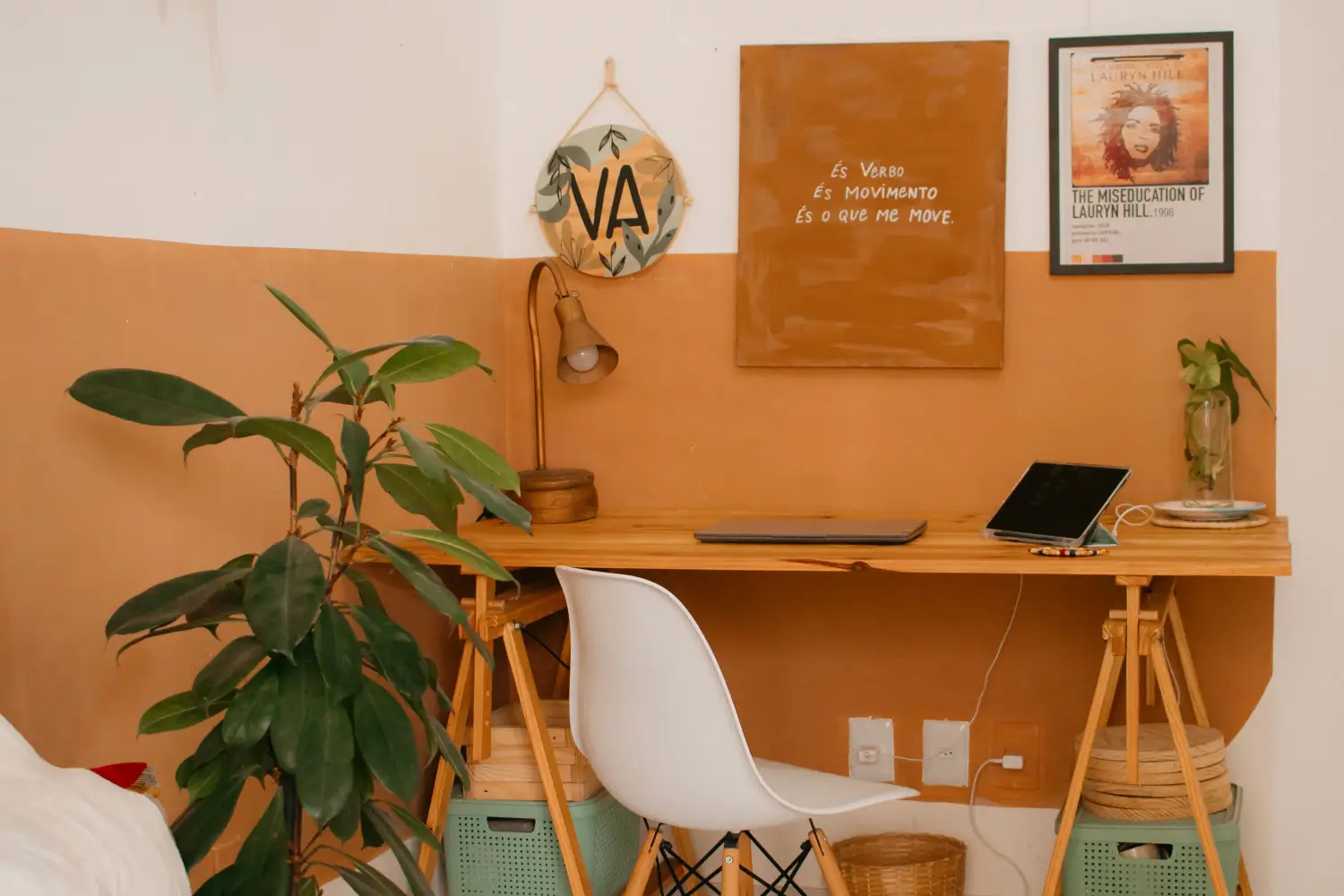
The Overlooked Factor That Makes Small Room Palettes Work
Small room palettes fail when color comes first. Use the Light-Forward 60‑30‑10 Protocol to map light, function, and spatial perception before picking a single swatch.
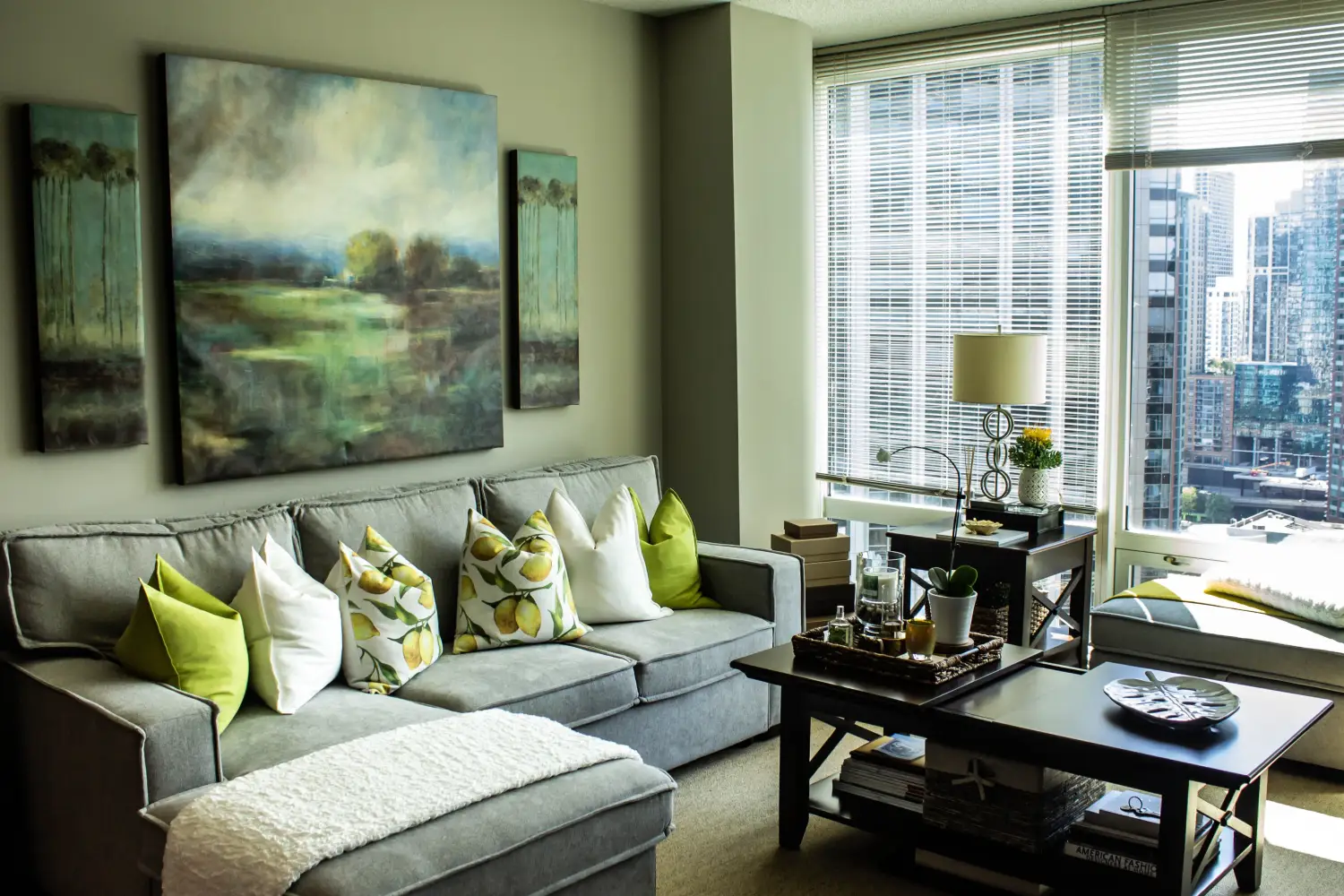
Mixing Warm and Cool in a Small Room? Avoid This Mistake
Blending warm and cool tones in a tiny room often backfires. Learn how to match temperature to your room's function and apply the 80/20 rule for depth without shrinking.
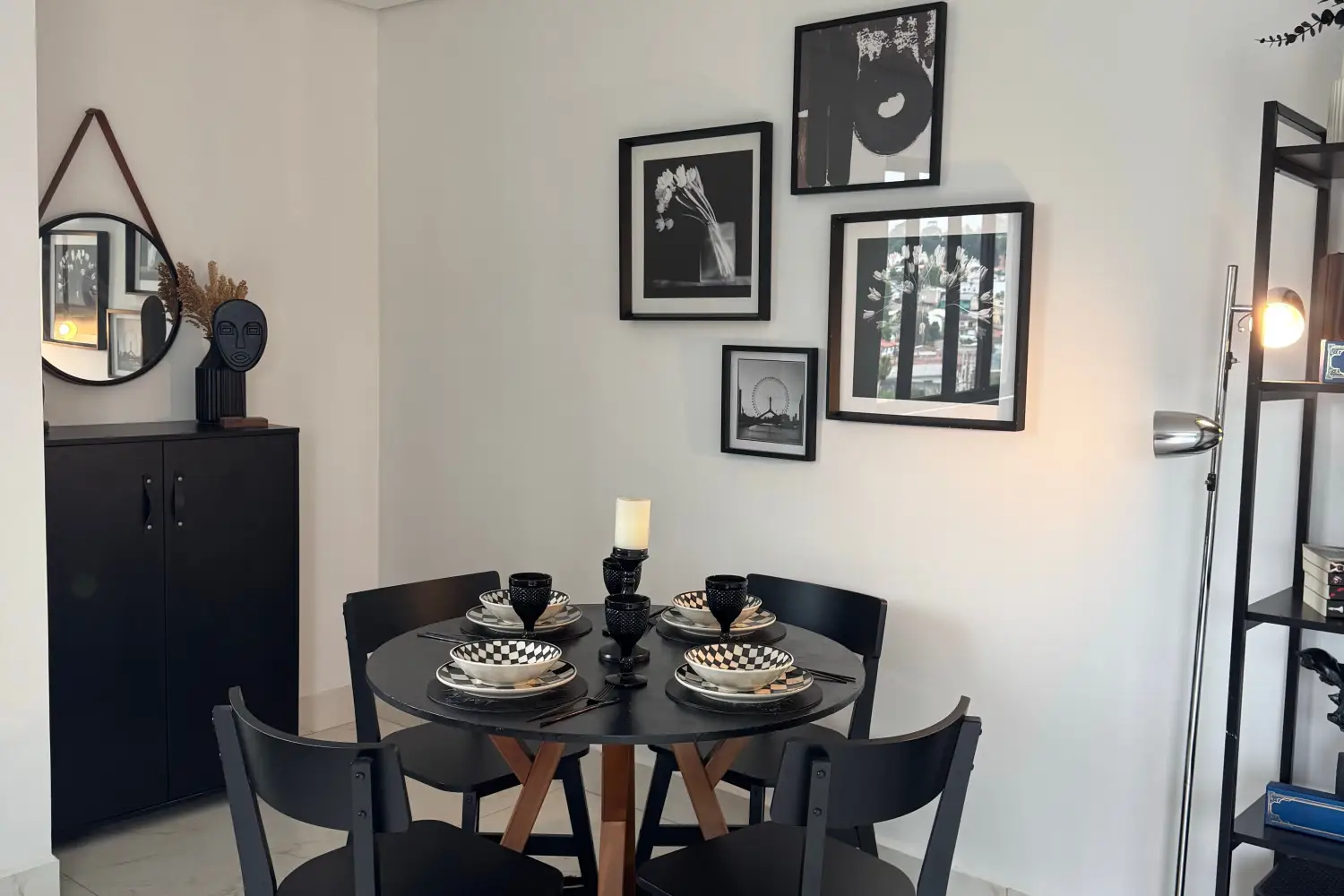
These Monochrome Palettes Actually Work in Small Rooms
Learn the value and sheen tricks that make monochrome small rooms feel spacious, light, and perfectly balanced—without ever looking flat.
5 Small Room Color Mistakes That Cut Your Space in Half
These paint mistakes can make a room feel half its size. From dark ceilings to glossy walls, learn the spatial consequences and exactly which surface to fix for instant breathing room.