5 Small Room Color Mistakes That Cut Your Space in Half
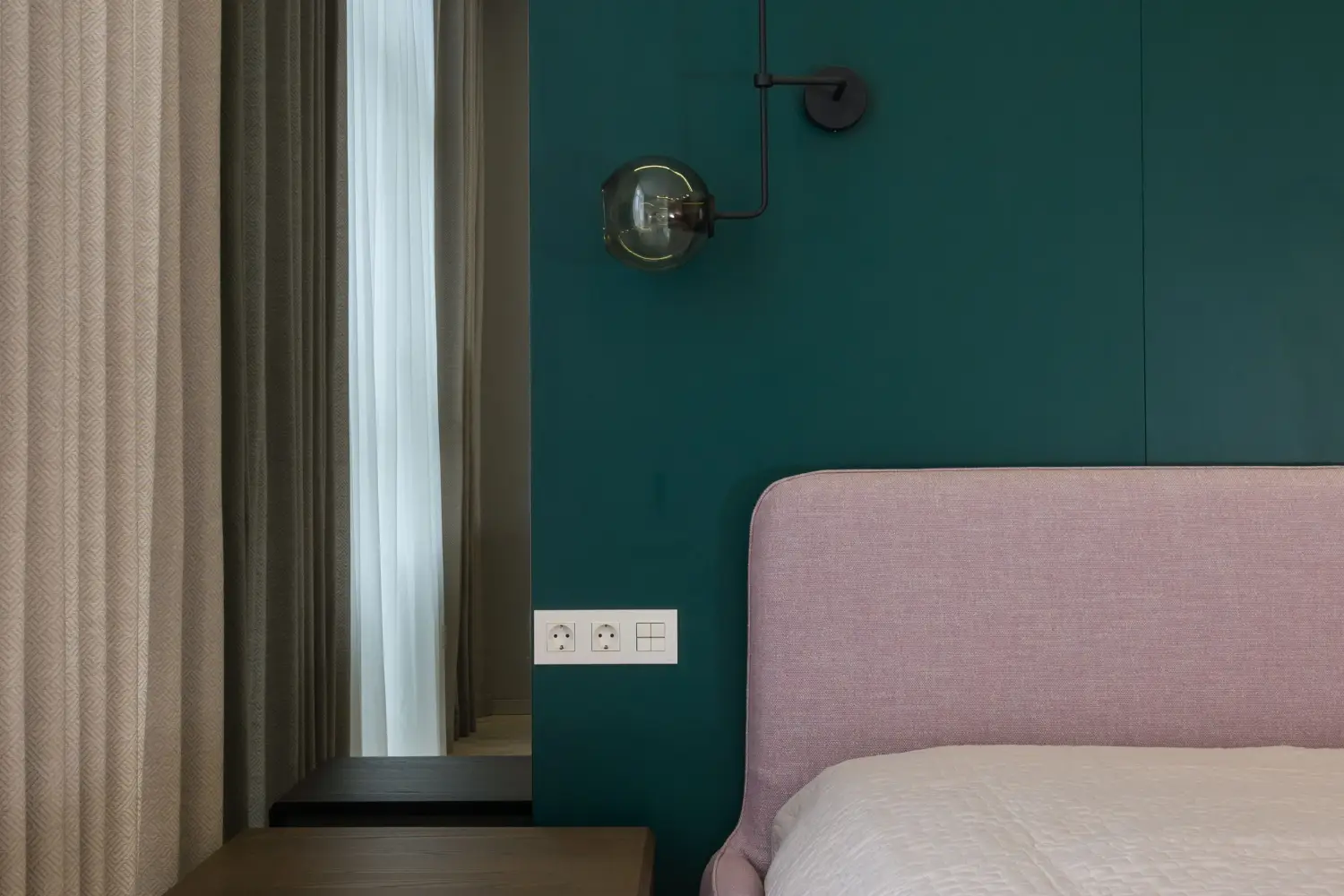
A room feels small because of paint, not just square footage. The wrong color choices compress the walls inward and eat up visual space. Fix these five mistakes and the room opens up — without touching the floor plan.
The Ceiling That Feels Like a Low Lid
A dark ceiling pulls the lid down. Even a medium grey ceiling over soft beige walls makes an 8-foot room feel like 7. The darker surface advances visually, and the eye reads it as closer, so vertical space vanishes fast.
The fix is simple: paint the ceiling the lightest color in the room. If the walls are already a mid-tone, go with a flat white and bump up the Light Reflectance Value by at least 20 points above the wall color. That one move lifts the ceiling and opens the room instantly — like throwing open a skylight. For extra height, a satin sheen on the ceiling bounces light upward without turning the surface into a glare factory.
The Accent Wall That Splits the Room in Two
A dark wall on the short end of a room slams a door in your peripheral vision. The eye hits that hard color stop and the room feels cut in half — depth shrinks by half, turning a hallway-like space into a cramped corridor.
Swap the dark color to the long wall instead. That widens the room. If a feature wall is the goal, limit the contrast to two or three shades deeper than the surrounding walls. A subtle sheen change (eggshell on the feature wall, matte on the others) creates a focal point without breaking the line of sight. Texture does the job where a stark color fails.
Gloss Where It Shouldn't Be
Semi-gloss on all four walls in a tight room turns it into a plastic box. The shine blasts light in every direction, flattening depth and making distances impossible to read. The room feels busy and half its real size because your brain can't find a clean boundary.
Keep gloss on trim and doors, where it belongs. Use eggshell or satin on the walls — those sheens reflect just enough light to keep the room alive without the glare. Test a patch under both daylight and lamp light before committing. Light bounces off sheen differently through the day, and even a small shift changes the perceived volume.
The Color That Drinks Every Last Drop of Light
A navy or charcoal on all four walls in a north-facing bedroom soaks up every lumen. The corners go black, the walls pull inward, and the room feels half its actual size. Low-LRV colors (below 20) absorb up to 90 percent of the light that hits them, killing the soft bounce that creates depth.
If the dark, moody look is non-negotiable, confine it to an accent wall or the lower half with wainscoting, and keep the rest of the room above LRV 30. A warm grey with an LRV around 40 holds the mood while reflecting enough light to keep the corners from vanishing. In a windowless bathroom, never drop below LRV 50 on all surfaces — use a warm mid-tone and lots of layered lighting instead.
Painting Every Surface the Same Flat Color
When ceiling, walls, and trim are the exact same color and sheen, the room flattens into a two-dimensional box. The eye gets no depth cue, no height reference, nothing. It reads like a closed container, not a room.
Break the monotone with tiny shifts. Paint the ceiling a lighter tint of the wall color — add white until you hit at least a 10-point LRV gap. Use a slightly different sheen on the ceiling, or make the trim a shade lighter or darker. In an all-white scheme, a warm white on walls and a cool white on the ceiling lifts the ceiling plane without adding a single extra color.
Which Fix Will Open Up Your Room Right Now
Stop the guesswork. Match the symptom to the fix.
- Room feels squat and low? The ceiling is the culprit. Lighten it and add a reflective sheen.
- Room feels like a narrow tunnel? The dark accent wall on the short end is the problem. Move it to the long wall or soften the contrast.
- Dim, north-facing box? The all-over dark color is swallowing the light. Bump up the LRV on most surfaces and reserve drama for a single wall.
- Room feels undefined, like a closed box? The monochrome trap is at work. Add a ceiling-to-wall LRV gap and watch height come back.
Most of the time, fixing just one surface changes everything. No full repaint needed.
Small Room Paint Questions That Keep Coming Up
Does painting a small room white always make it look bigger?
Not always. In a dim room, pure white can turn flat and grey, magnifying shadows and actually shrinking the space. Warm off-white or a tinted white with a hint of blue or greige works better, paired with a brighter, purer white ceiling. The contrast lifts the ceiling while the wall color adds dimension.
Can I use dark colors in a small room without making it feel cramped?
Yes, but the rule is strategy, not luck. Put dark color on the long wall to widen, or use it on the lower half with light upper walls. A dark ceiling can work in a tall room, but in a low-ceiling room it's a disaster. Always keep light bouncing from at least two opposing surfaces.
What is Light Reflectance Value and why does it matter for small rooms?
LRV is the percentage of light a color reflects. Pure white is near 100, the darkest black near 0. In small rooms, colors above 60 LRV keep things open; below 40, they start eating light. Check the paint chip — many brands list LRV — and keep a 20-point gap between ceiling and wall for instant vertical lift. In windowless spaces, keep the darkest surface above LRV 50 unless it's a tiny accent.
Fix the ceiling first. A bright, reflective ceiling does more to expand a small room than any other color trick. After that, control how the eye moves: place dark accents where they widen, not where they chop, and always keep enough LRV contrast to define boundaries without boxing them in.

Clara Bennett
After five years of transforming my 1920s bungalow room by room, I’ve refinished floors, hung blinds in bay windows, and spent more time choosing light bulbs than I’d like to admit. I learned paint sheens by painting my kitchen ceiling three times, and I found out the hard way that a rug too small makes a room feel unfinished. I believe every home can be both functional and beautiful, no matter the budget.
Related posts
The Overlooked Factor That Makes Small Room Palettes Work
Small room palettes fail when color comes first. Use the Light-Forward 60‑30‑10 Protocol to map light, function, and spatial perception before picking a single swatch.
Why Accent Walls Often Shrink Small Rooms (And When They Don’t)
An accent wall can make a small room feel larger or tighter—find out which depends on the room's focal point and shape, not the color you pick.
Mixing Warm and Cool in a Small Room? Avoid This Mistake
Blending warm and cool tones in a tiny room often backfires. Learn how to match temperature to your room's function and apply the 80/20 rule for depth without shrinking.
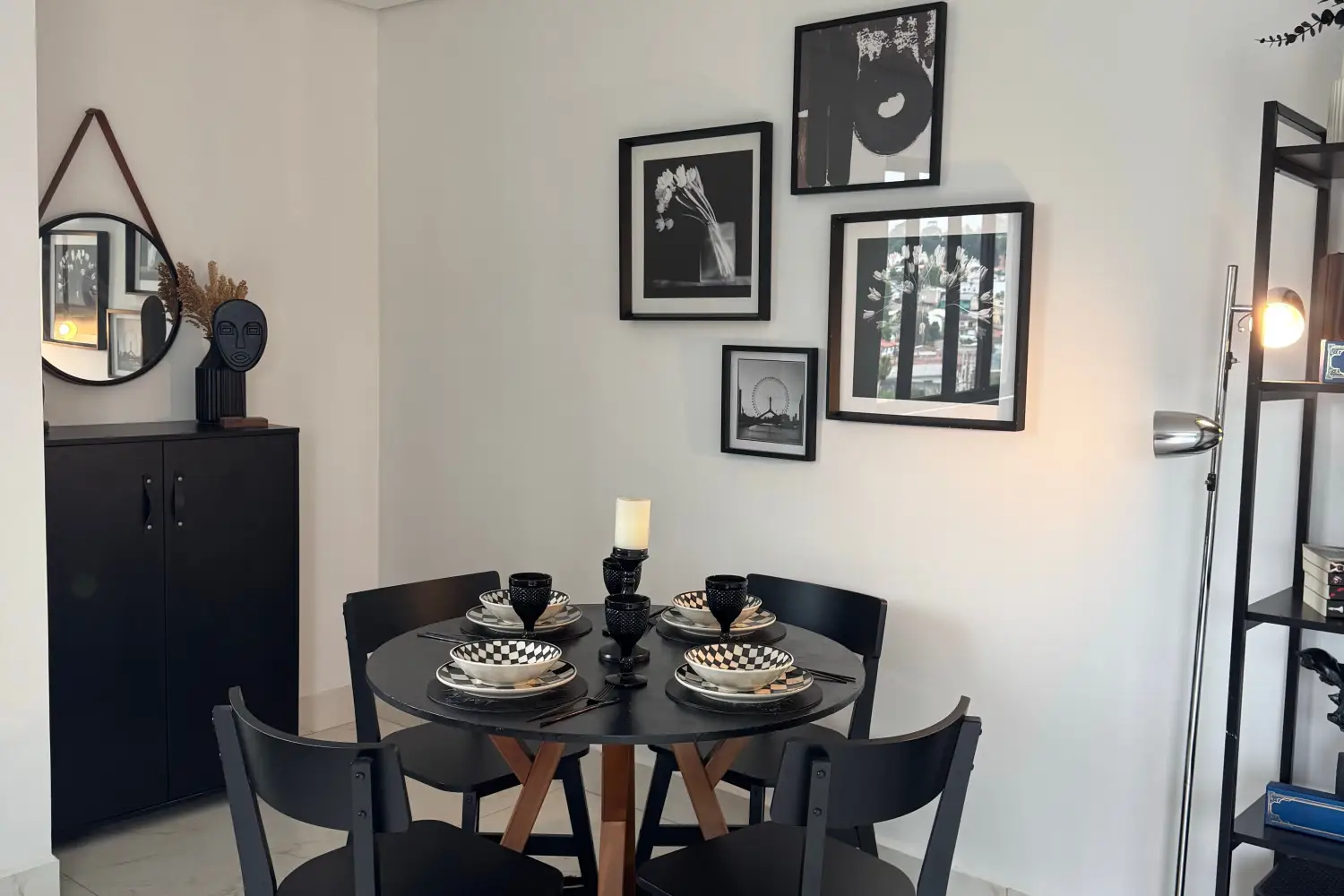
These Monochrome Palettes Actually Work in Small Rooms
Learn the value and sheen tricks that make monochrome small rooms feel spacious, light, and perfectly balanced—without ever looking flat.