LED vs. Socket Fixtures: 10-Year Cost Comparison
In kitchens and bathrooms, integrated LED fixtures beat socket fixtures on 10-year total cost, despite a higher sticker price. In a living room, the socket fixture still comes out ahead. The gap isn't about electricity — it's about how many times hardware fails or needs a bulb swap across a decade of daily use.
At a Glance: Room-by-Room Cost Winner
| Room | Winner | Why |
|---|---|---|
| Kitchen (high use) | Integrated LED fixture | Bulb and fixture replacements add up over 10,000+ hours |
| Bathroom (humid) | Integrated LED fixture | Moisture corrodes cheap socket fixtures in a few years |
| Living room (moderate use) | Socket fixture with LED bulbs | Low usage means few bulb changes, upfront savings stick |
High-Traffic Kitchens: Cost Breakdown
Kitchen lights run four hours per day, easily. That's 14,600 hours over 10 years — a crucible for cheap socket fixtures. Heat and airborne grease degrade exposed sockets and stress LED bulbs.
A typical integrated LED flush mount costs $70–$90 and needs no attention for the full decade. A basic socket ceiling fixture runs $20, plus $5 for an LED bulb. The socket route looks $50 cheaper upfront. But in a kitchen, that LED bulb often fails around the 13,000-hour mark — about year six — requiring another $5 bulb. By year seven, the socket itself is often tarnished or loose, forcing a full fixture replacement: $20 for the fixture, $5 for a bulb. Total hardware over 10 years: $55 for the socket path, $80 for the integrated. Add two trips to the hardware store and two ladder climbs, and the "savings" evaporate.
Both fixtures use roughly 10 watts, so the energy bill is identical. The only variable is how often you interact with the fixture after installation. In a kitchen, the integrated fixture eliminates that maintenance.
Steamy Bathrooms: Why Sealed Fixtures Pay Off
A bathroom light burns one to two hours daily — about 5,500 hours in a decade. Low hours, but high humidity. Steam corrodes exposed sockets quickly. In a damp environment, a cheap socket fixture can start flickering in three to five years and fail entirely by year six.
An enclosed, damp-rated integrated unit ($50–$70) has no socket to corrode. Sealed electronics block moisture. A standard open socket fixture ($18) with an LED bulb ($5) starts fine. When the socket rusts, the whole unit must go: another $18 fixture and $5 bulb. Even if the LED bulb didn't fail on its own, you're at $46 by the halfway mark, nearly matching the integrated fixture's one-time $60 cost. Often, the socket path ends up costing slightly more when you factor in the early fixture death.
Again, energy draw is equal. The decision turns on hardware survival. For a set-it-and-forget-it bathroom light, a sealed integrated fixture is the tighter long-term expense.
Living Rooms: Where Upfront Savings Stick
A living room is a socket fixture's ideal environment. Five hours of daily use (18,250 hours over 10 years) in dry, temperature-stable air. No grease, no steam. Cheap metal contacts last.
An integrated fixture runs $60–$80. A dual-bulb socket flush mount is $25, with two LED bulbs at $5 each — $35 total. Over a decade, the bulbs might need one replacement set around year seven or eight ($10). Hardware total: $45. The socket option undercuts integrated by $15–$35, and the fixture itself often outlasts the decade. No corrosion, no socket failure.
If lowest upfront spend is the goal and you're fine with one ladder trip in 10 years, the socket fixture is the rational choice here. The math doesn't invert in this room.
What You Can Stop Overthinking: Electricity, Looks, and Dimming
Several factors that buyers agonize over don't actually differentiate these two fixture types.
Electricity usage. When both fixtures use LED light sources, wattage is practically the same for a given brightness. A 10-watt integrated panel and a 10-watt screw-in LED bulb each cost about $17–$20 to run for a decade in a typical room. Move on.
Design and finish selection. Integrated LED fixtures now come in every finish and style that socket fixtures offer — brushed nickel, matte black, modern, traditional. Neither category limits your design choices.
Dimming. Most quality integrated and socket fixtures work with standard triac dimmers. Compatibility differences come down to the specific driver, not the fixture type. Test your dimmer with any fixture you buy, but don't pick a winner based on this.
When One Option Is Completely Off the Table
A cost comparison is useless if a fundamental requirement kills one path.
You cannot install a hardwired fixture. Renters or anyone unable to modify electrical must use socket fixtures — plug into an existing lamp, or screw a bulb into a pre-existing ceiling socket. Integrated fixtures require wiring into a junction box, which a landlord often prohibits.
You need a wet-location rating without hassle. Over a shower or on a covered porch, integrated LED fixtures are almost always wet-listed right out of the box. A socket fixture can also meet code with a damp-rated bulb, but the integrated unit removes the risk of getting the bulb rating wrong.
You refuse any bulb changes for the next decade. If ladder climbs in eight years are off the table, integrated fixtures are the only option that guarantees zero maintenance after install.
Fixture Prices That Change the Math
The previous verdicts assume entry-level to mid-range pricing. Move the price point, and some winners shift.
Budget integrated fixtures now start at $25, erasing the upfront gap entirely. At that price, the integrated option wins in all three rooms — kitchens, bathrooms, and living rooms alike. On the other end, a premium decorative socket fixture with an Edison-style LED bulb can cost $150–$300, pushing its 10-year total far higher than a similarly styled integrated fixture. The table above holds for typical mid-range purchases, but the smart move is to run the numbers with the specific fixtures you'd actually install.
Frequently Asked Questions
Can I replace the LED in an integrated fixture when it burns out?
No. The LED array is built into the housing and isn't field-replaceable. However, LED modules are rated for 50,000 hours or more, which equates to 15–20 years in a typical home. When it does dim, you'll likely be ready for a style change.
Do I need an electrician to install an integrated LED fixture?
Swapping an existing ceiling fixture that already has a junction box is a straightforward DIY job — identical to replacing any hardwired light. New construction or adding a fixture where no box exists typically requires an electrician, regardless of fixture type.
How often do LED bulbs really need to be replaced in a socket fixture?
Quality LED bulbs are rated for 15,000–25,000 hours. In a kitchen at four hours daily, that's 10–17 years. A bathroom might see a bulb last decades. But enclosed fixtures with poor heat dissipation or steam exposure can cut that lifespan in half. Budget for one or two bulb changes per decade in high-use rooms.
Is an integrated fixture harder to clean?
Generally, no. Most have smooth diffusers that wipe clean. Socket fixtures collect dust and dead insects around the bulb base and inside the shade, requiring more frequent attention. Neither is difficult, but integrated fixtures tend to stay cleaner longer.
Which One Should You Pick?
Kitchens and bathrooms — the hardest-working rooms for lighting — favor integrated LED fixtures on both 10-year cost and maintenance. The deciding question is simple: will you climb a ladder to change a bulb or fixture in the next decade? If the answer is no, integrated is the logical long-term investment.

Clara Bennett
After five years of transforming my 1920s bungalow room by room, I’ve refinished floors, hung blinds in bay windows, and spent more time choosing light bulbs than I’d like to admit. I learned paint sheens by painting my kitchen ceiling three times, and I found out the hard way that a rug too small makes a room feel unfinished. I believe every home can be both functional and beautiful, no matter the budget.
Related posts

Lighting Fixtures for First-Time Homeowners: Where to Start
Stop impulse-buying light fixtures. Use this room-function and layering framework to sequence whole-house lighting that works before it decorates.
Flush or Semi-Flush? How to Pick the Correct Ceiling Light
Flush or semi-flush ceiling light? Here’s the clearance formula that settles it: ceiling height minus fixture drop must leave at least 7 feet. Rely on the numbers, not guesswork.
Ceiling Fans with Lights: Stop Guessing Blade Span and Lumens
Stop guessing on ceiling fan size and brightness. Measure square footage, match blade span from our chart, then check lumens. Dark blades lower the ceiling feel.
The Lighting Layer Most Rooms Miss (and How to Fix It)
Most living rooms skip the eye-level lighting layer, causing TV glare and dark corners. Learn the 4-stage fix with four real budgets in a standard 8.5-foot room.
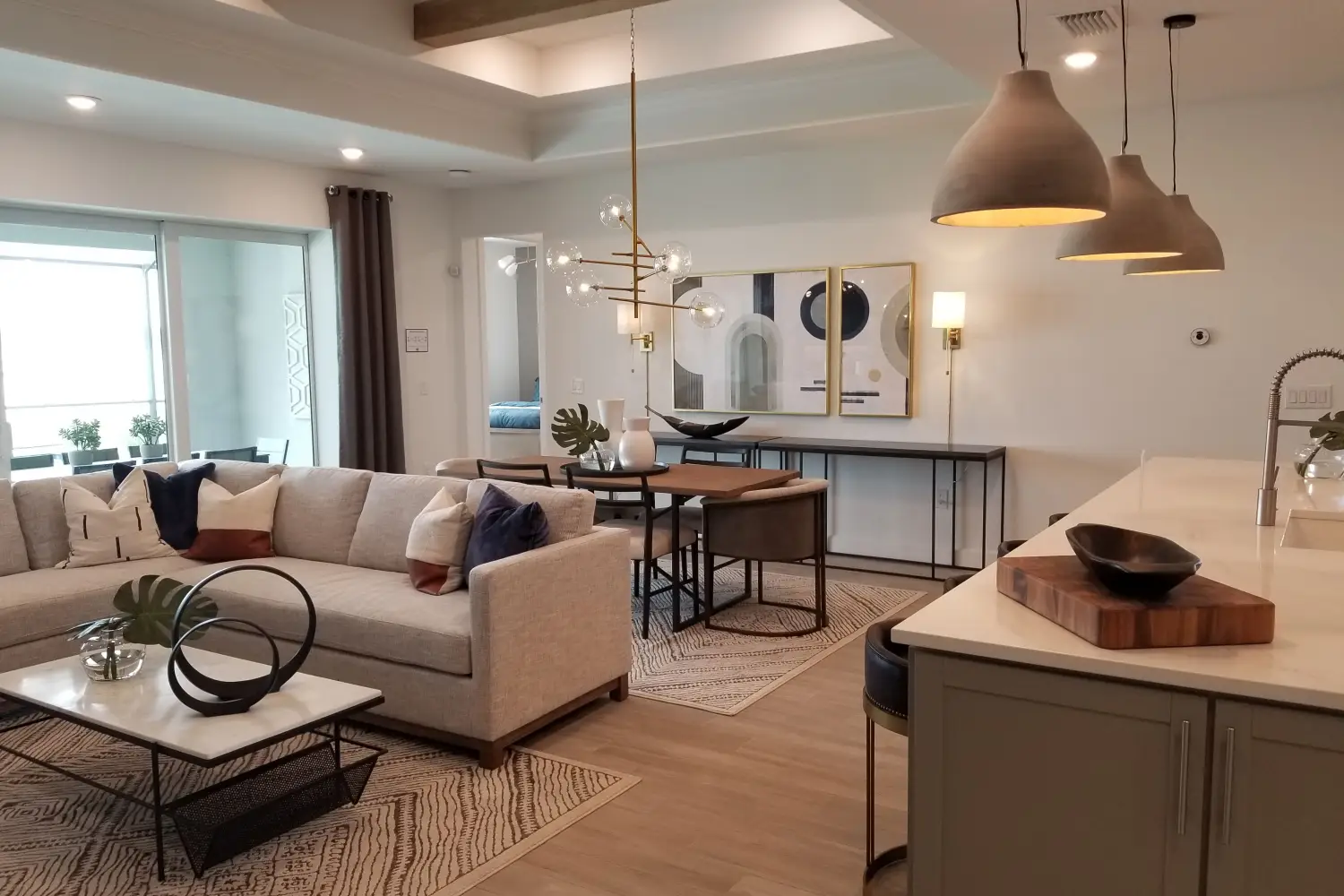
Chandelier or Pendant? Height Rules That Make or Break a Room
Exact hanging heights for dining tables and islands, and how visual weight makes one fixture win in open floor plans. Stop guessing and use the measurements that actually work.