Ceiling Fans with Lights: Stop Guessing Blade Span and Lumens
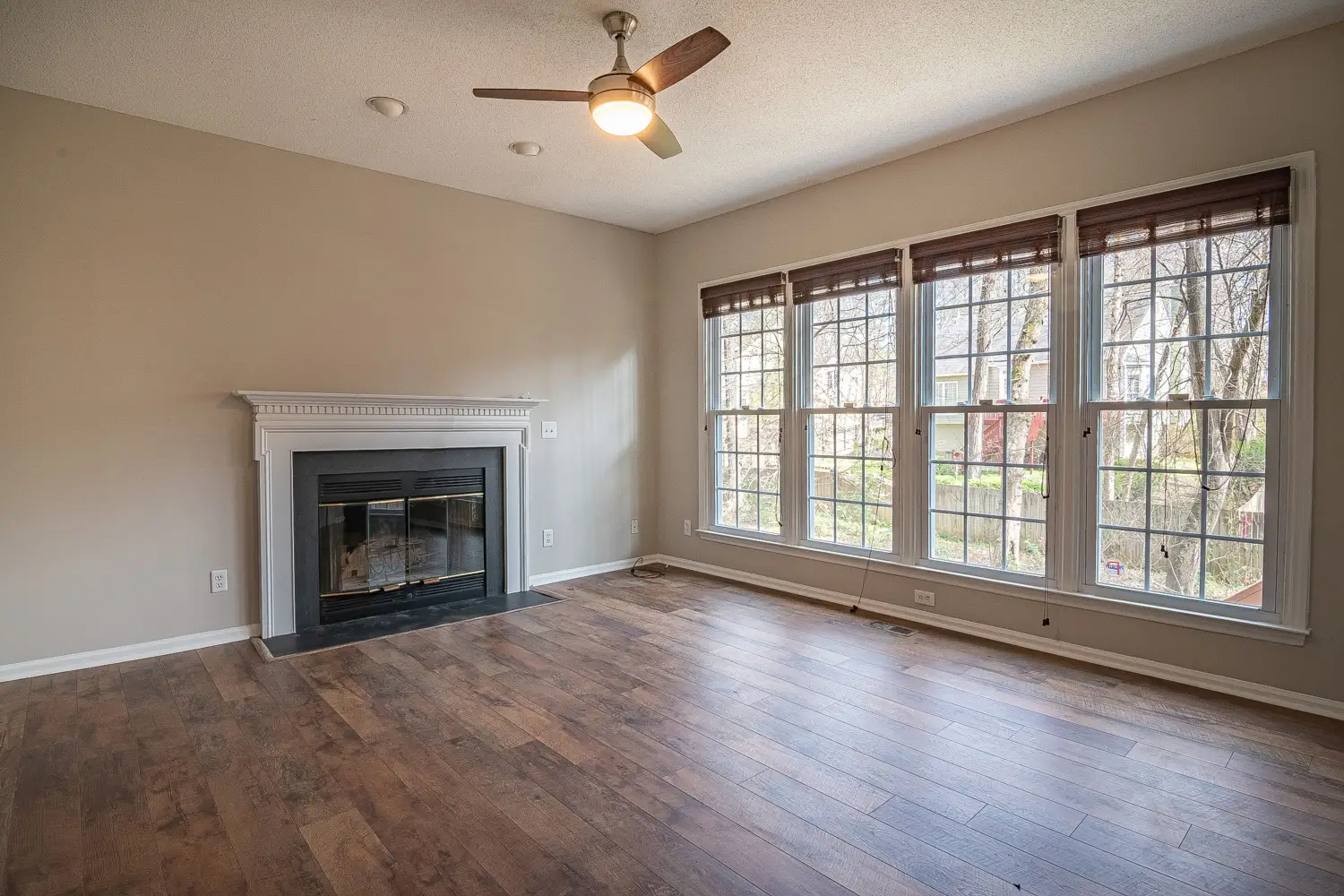
Guessing blade span and lumens on a ceiling fan with a light leads to returns and wasted time. The fix is a three-step sequence: measure the room’s square footage, pick a blade span from the chart, and check the light kit’s lumen output. Dark blades can make a ceiling feel lower — one more factor to account for before you click buy.
Start Here: Your Current Fan Situation
You have an empty room with just a ceiling box. You’re choosing from scratch. Follow the full measurement and sizing sequence without being limited by existing wiring or fixture location.
You’re replacing an old fan that’s too small or too noisy. Measure the room to confirm the right size — the old fan was likely chosen by guesswork — then upgrade the light output to modern standards.
You’re adding a fan where there’s only a light fixture now. Verify the electrical box is fan-rated first; then measure and size as usual. The wiring usually stays, but the box must handle the fan’s weight and vibration.
1. Measure the Room’s Square Footage First
Grab a tape measure. Measure length and width in feet. Multiply them. If the room is L‑shaped, split it into rectangles and add the areas. Write the number down. This floor area is the only foundation you’ll use for everything that follows — no guesswork, no memory.
You’re ready to move on when you have a single number like 156 ft².
2. Pick a Blade Span from the Chart (Dark Blades Caution)
| Room Size (sq ft) | Recommended Blade Span (inches) |
|---|---|
| Up to 75 | 29 – 36 |
| 76 – 144 | 36 – 42 |
| 145 – 225 | 44 – 50 |
| 226 – 400 | 50 – 54 |
| Over 400 | 60+ (or two fans) |
For rooms longer than twice their width, consider two smaller fans instead of one oversized unit — it evens out airflow better.
Dark blades visually compress the space. On an 8‑foot ceiling, they pull the eye down and can make the room feel shorter. Choose light‑colored blades or a low‑profile hugger mount that sits flush with the ceiling to keep the room feeling open.
You’re ready to move on when you have a blade‑span range (for example, 44–50 inches) and you know whether dark blades are a no‑go for your ceiling height.
3. Verify Lumens, Not Watts, on the Light Kit
Ignore any fan that doesn’t list lumens — watt equivalents don’t tell you enough. Multiply your room’s square footage by the recommended lumens per square foot:
| Room Type | Lumens per sq ft |
|---|---|
| Bedroom | 10 – 20 |
| Living room | 10 – 20 |
| Kitchen | 30 – 40 |
| Home office | 30 – 50 |
| Bathroom | 50 – 70 |
A 156 ft² bedroom needs 1,560–3,120 lumens. If the fixture takes standard bulbs, you can swap in brighter ones later, but with integrated LEDs the output is fixed — check the spec before you order.
You’re ready to move on when you know the minimum lumens needed and have ruled out any fan light kit that falls short.
You’ve Finished the Sequence When You Have These Four Numbers
- Your room’s exact square footage
- Your target blade span range (and whether you’ve flagged dark blades)
- Your minimum lumens for the space
- Confirmation that the electrical box can support a fan (if installing where there wasn’t one before)
Skip These Details Until You’ve Sized the Fan and Light
Motor type (DC vs AC). Irrelevant until you’ve locked in the right blade span and need to compare noise and energy use. Then look at CFM ratings, not horsepower or RPM.
Downrod length. Only matters for ceilings 9 feet or higher; flush mount works for standard 8‑ft. After you’ve picked a blade span, measure ceiling height and decide.
Remote control. Convenient, but it doesn’t affect sizing. Once you’ve found a fan with the right span and lumens, decide based on existing wiring whether you need a remote, pull chain, or wall switch.
Energy Star certification. Wait until you have a shortlist of right‑sized fans, then filter by efficiency if you want. An undersized or oversized fan wastes more energy than a non‑certified motor.
Quick Answers to Common Ceiling Fan Sizing Questions
What size ceiling fan for a 10x10 room?
100 sq ft, so a 36‑ to 42‑inch fan fits.
Can a ceiling fan be too big?
Yes. If the blade span is far outside the chart range, even on low the air movement can be uncomfortable. Stick to the chart.
How many lumens for a bedroom ceiling fan light?
Multiply 10–20 lumens per square foot: a 150‑sq‑ft bedroom needs 1,500–3,000 lumens. If the fan light is supplementary, you can go lower.
Do dark blades really make a room feel shorter?
They do on standard 8‑ft ceilings. Light‑colored blades visually disappear against a white ceiling.
What about sloped ceilings?
You’ll need an angled mount adapter. After sizing, pick a fan rated for the slope angle; blade span remains the same.
Once you have square footage, blade span, and lumens, every fan listing becomes a spec check, not a guess. Start by measuring the room where the fan will run the most.

Clara Bennett
After five years of transforming my 1920s bungalow room by room, I’ve refinished floors, hung blinds in bay windows, and spent more time choosing light bulbs than I’d like to admit. I learned paint sheens by painting my kitchen ceiling three times, and I found out the hard way that a rug too small makes a room feel unfinished. I believe every home can be both functional and beautiful, no matter the budget.
Related posts

Lighting Fixtures for First-Time Homeowners: Where to Start
Stop impulse-buying light fixtures. Use this room-function and layering framework to sequence whole-house lighting that works before it decorates.
Flush or Semi-Flush? How to Pick the Correct Ceiling Light
Flush or semi-flush ceiling light? Here’s the clearance formula that settles it: ceiling height minus fixture drop must leave at least 7 feet. Rely on the numbers, not guesswork.
LED vs. Socket Fixtures: 10-Year Cost Comparison
See which option—integrated LED or replaceable socket—costs less over a decade in kitchens, bathrooms, and living rooms. The cheaper upfront choice often isn't.
The Lighting Layer Most Rooms Miss (and How to Fix It)
Most living rooms skip the eye-level lighting layer, causing TV glare and dark corners. Learn the 4-stage fix with four real budgets in a standard 8.5-foot room.

Chandelier or Pendant? Height Rules That Make or Break a Room
Exact hanging heights for dining tables and islands, and how visual weight makes one fixture win in open floor plans. Stop guessing and use the measurements that actually work.