Flush or Semi-Flush? How to Pick the Correct Ceiling Light
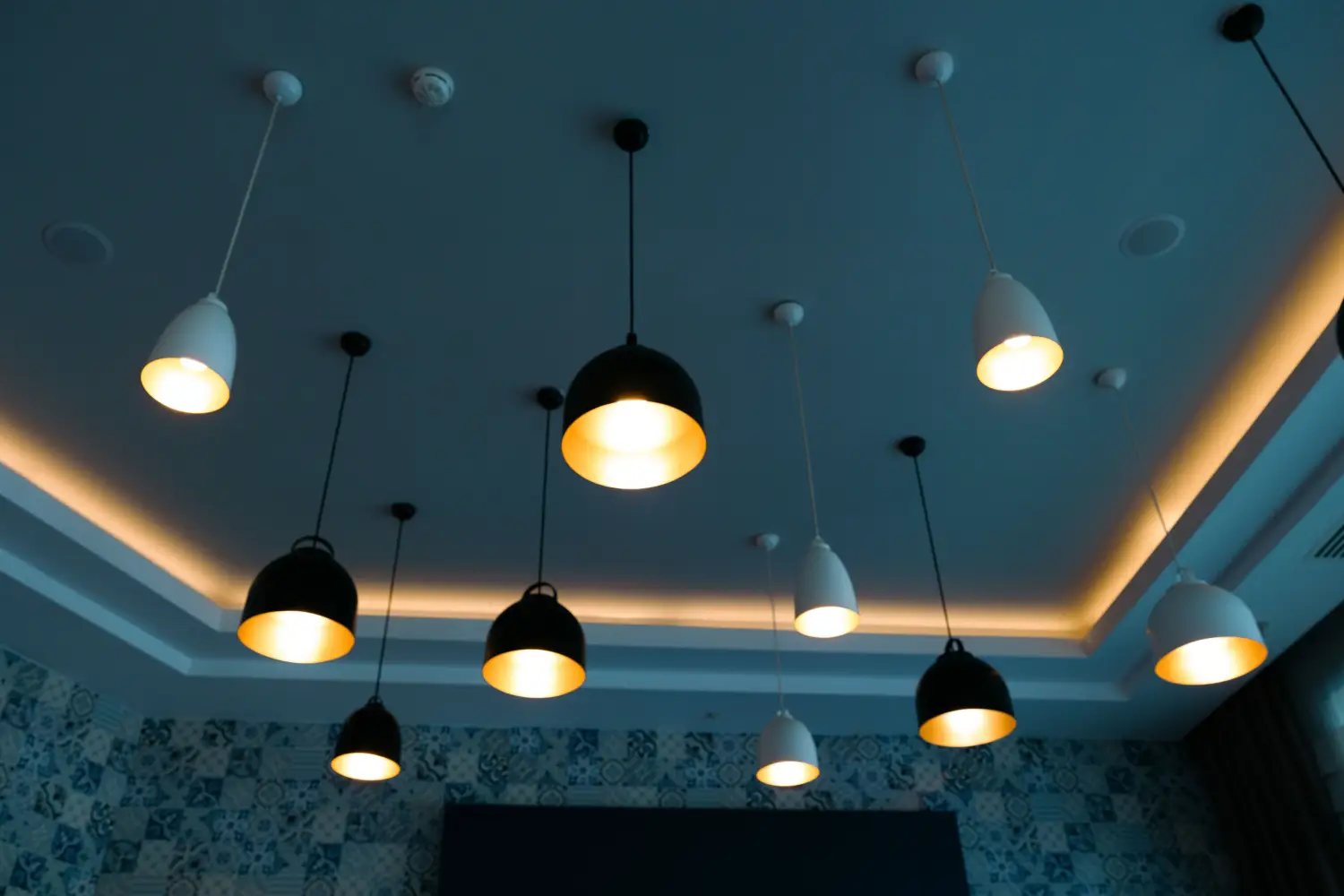
Picking a flush or semi-flush ceiling light begins with a tape measure, not a catalog. For the 8-foot ceilings found in most American homes, flush mounts are the right choice — they sit nearly flat, leaving the full 7 feet of headroom that keeps walkways safe and code-compliant. A semi-flush light needs at least 10 inches of drop, which works only when the ceiling is tall enough to take that gap without creating a head-bump risk.
This article turns that decision into a straightforward clearance calculation: Minimum Required Ceiling Height = Fixture Height + 84 inches (7 feet of headroom). A semi-flush fixture dropping 14 inches needs a ceiling at least 98 inches — 8 feet 2 inches — to stay safe and comfortable. Once that math is on the table, the choice between flush and semi-flush is a spatial equation, not a judgment call about style.
Flush Mount: The Right Call for 8-Foot Ceilings
For the 8-foot ceilings common in millions of homes, flush mount lights are the practical, low-risk answer. They install tight to the ceiling, leaving headroom untouched, and they work in any room type. Semi-flush lights only become a real option when the ceiling comfortably clears 9 feet, or in spots like stair landings where nobody walks directly beneath the fixture.
Flush vs. Semi-Flush Ceiling Mounts at a Glance
| Criterion | Flush Mount | Semi-Flush Mount |
|---|---|---|
| Clearance needed | 0 inches — no hanging drop | 6–20 inches of drop, requiring extra ceiling height |
| Ceiling height fit | 7 feet and up (ideal for 8-foot ceilings) | Needs at least 8 feet 6 inches for the smallest drops; 9 feet for typical designs |
| Visual profile | Hugs the ceiling; low-key, space-saving | Creates a visual gap; adds architectural interest |
| Price range | $30–$150 for standard designs | $50–$300 for decorative styles |
| Installation complexity | Lightweight, often replaced in 15 minutes | Can be heavier; may need a reinforced junction box |
| Best for | Hallways, closets, bathrooms, kitchens, any low ceiling | Dining areas, foyers, living spaces with higher ceilings |
Flush Mount Lights: Why Clearance Is a Non-Issue
Flush mount fixtures fasten directly to the ceiling canopy. There is no stem or chain to eat up vertical space. That zero-drop design eliminates the clearance problem before it begins. They are the default for any ceiling 8 feet or lower and a sensible choice for taller rooms where you want the light source to disappear.
Where flush mounts deliver
- Maximum headroom. Because nothing hangs down, a flush mount installs safely on a 7-foot basement ceiling — walk underneath without a thought.
- Clean, compact profiles. Modern LED panel flush mounts can be less than an inch thick. They don’t collect dust the way semi-flush arms do, and their simple shape never dominates the room.
- Efficient, even light. A frosted diffuser spreads light broadly. This uniform output is exactly what a closet, hallway, or pantry needs. No hot spots, no shadows.
- Simple installation. Most weigh under 5 pounds and mount to a standard ceiling box. Replacing one is often a 15-minute job that uses a screwdriver and wire nuts.
Where flush mounts come up short
- Fewer decorative options. The form is limited to low-profile drums, bowls, or panels. In a formal dining room, a flush mount can feel undersized or too plain next to a table that begs for a chandelier-scale fixture.
- Little upward light. Sitting tight to the ceiling means almost no light reaches the ceiling plane itself. In a room with tall ceilings, the upper walls can feel shadowy and disconnected.
- Scale problems on high ceilings. On a 10-foot ceiling, a typical 12-inch flush mount looks like a coin stuck overhead. The fixture’s visual weight shrinks, and the ceiling can seem unfinished.
Semi-Flush Mount Lights: The Gap That Changes Everything
A semi-flush mount hangs 6 to 20 inches below the ceiling on a short stem or decorative arms. That small separation turns a functional object into a visible design element. It also introduces a clearance requirement that must be checked against the room’s measured ceiling height before spending a dollar.
Where semi-flush mounts excel
- Architectural presence. Even a simple semi-flush with curved arms becomes a focal point. It reads as part of the room’s furniture arrangement, not just a utility.
- Better ambient light quality. The gap sends light upward onto the ceiling, softening shadows and making a room feel taller. This is particularly effective over a dining table, where hard downlight is the enemy of a comfortable meal.
- Style variety. Semi-flush designs span drum shades, multi-arm lanterns, sputnik styles, and mini chandeliers. For many period homes, a semi-flush is the smallest fixture that still matches historical trimwork and molding.
Where semi-flush mounts stumble
- Clearance math doesn’t negotiate. A 14-inch drop on an 8-foot ceiling leaves only 82 inches of clearance. Anyone over 5 feet 10 inches will hit the fixture. Even a 10-inch drop leaves 86 inches — rideable but tight in a high-traffic hallway.
- Dust and maintenance load. Exposed arms, finials, and shades collect dust quickly. Cleaning a many-armed semi-flush light can take 30 minutes if it’s ornate. That’s time you won’t spend on a smooth flush mount.
- Weight demands a solid box. A glass-and-metal semi-flush can weigh 12 to 18 pounds. A standard plastic ceiling box is not rated for that. Safely installing a heavier fixture often means swapping to a metal box rated for fixture support — a step that adds an hour and a trip to the hardware store.
Headroom, Proportion, Light, and Install: A Direct Comparison
The catalog doesn’t show you the clearance math. Here are the four factors that dictate which fixture belongs in your home.
1. Clearance: the number that decides everything
Every semi-flush product listing includes an “overall height” — the distance from the ceiling canopy to the bottom of the fixture. Subtract that number from your floor-to-ceiling measurement. If the result is under 84 inches, the fixture is too tall for that location. Period.
| Fixture Drop | Minimum Ceiling Height | Fits a Standard 8-foot Ceiling? |
|---|---|---|
| 6 inches | 90 inches (7′ 6″) | Yes, easily |
| 8 inches | 92 inches (7′ 8″) | Yes |
| 10 inches | 94 inches (7′ 10″) | Yes, but snug |
| 12 inches | 96 inches (8′ 0″) | Exactly — no room for error |
| 14 inches | 98 inches (8′ 2″) | No — head bump risk |
| 16 inches | 100 inches (8′ 4″) | No |
Flush mounts, dropping 0 to 2 inches, pass this test on any ceiling 7 feet or taller. If the room is walkable, a flush mount fits.
2. Visual proportion and the ceiling plane
Ceiling height dictates how a fixture reads in the room. On an 8-foot ceiling, a wide semi-flush fixture can feel heavy no matter how much clearance it technically has. A workable rule: the fixture’s width should be about one inch per foot of ceiling height. An 8-foot ceiling pairs best with a fixture 8 to 12 inches wide. Semi-flush fixtures frequently exceed that, making the ceiling feel lower by pulling the eye downward. Flush mounts, staying within the ceiling plane, don’t shrink the room the same way.
3. Light distribution: where the lumens go
Flush mounts push light straight down and slightly outward — efficient for hallways and closets where you want a defined path of brightness. Semi-flush fixtures with open tops direct a share of light up onto the ceiling, which softens the overall output and reduces harsh shadows. That’s why a semi-flush over a dining table creates a more flattering atmosphere. In a pantry or utility closet, the upward spill is wasted and does nothing for the tasks at hand.
4. Installation and real cost
Flush mounts win on simplicity. Most are single-box mounts that any homeowner who can connect three wires can swap out in minutes. Semi-flush fixtures are heavier, have more parts to assemble, and often require a ceiling box that is threaded for fixture support. Upgrading a plastic box to a metal one adds $30 to $50 in materials and easily an extra hour of labor. That cost is part of the decision, not an afterthought.
What You’ll Pay for Flush and Semi-Flush Lights
Entry-level flush mounts start around $25 for a basic glass bowl. Quality LED flush mounts with integrated drivers and selectable color temperature run $60 to $120. Designer flush mounts with hand-blown glass or solid brass can reach $300, but those are outliers.
Semi-flush mounts start higher. A simple metal-drum semi-flush costs $50 to $80; a decent fixture with glass shades and a modern finish ranges $120 to $250. Ornate designs with crystal accents top $300. In the practical mid-range, a semi-flush of comparable brand and build quality costs about 40% to 60% more than a flush mount for the same ceiling.
Room-by-Room Guidance
8-foot ceilings and under: flush mount only
Hallways, bathrooms, kitchens, and finished basements typically have 8-foot ceilings or lower. Flush mounts are the only option that won’t create a head-clearance problem. If you need more style, look for a flush mount with a decorative trim band or seeded glass — there are enough designs now that a trim upgrade can do the work without adding vertical inches.
9-foot ceilings: either can work, check the drop
A 9-foot ceiling (108 inches) supplies plenty of buffer. A semi-flush with a 12-inch drop leaves 96 inches of headroom, comfortable for nearly everyone. Choose flush if the room is compact and you want light that doesn’t intrude. Choose semi-flush if the space needs a visual anchor above the table or seating area.
10-foot ceilings and beyond: semi-flush finds its place
Above 10 feet, a flush mount starts to look too small, like a watch face on a broad wall. A semi-flush with a 14- to 18-inch drop scales correctly and improves light quality by bouncing off the ceiling. In a two-story foyer, a semi-flush may still feel undersized compared to a true pendant or chandelier, but for a standard-height dining room, a substantial semi-flush is the right scale.
Rooms with ceiling fans: mind the blade plane
Ceiling fan blades sit 10 to 12 inches below the ceiling. A semi-flush fixture with a similar drop will occupy the same airspace and can collide with blades. Flush mount fixtures (or fan-integrated light kits) avoid that interference entirely.
Questions That Come Up During Installation
How do I measure whether a semi-flush light will fit?
Measure floor to ceiling. Subtract the fixture’s overall height, which is listed in the product specifications. If the result is under 84 inches, the fixture is too tall. Also check the fixture’s width against the clearance to nearby cabinets, attic hatches, or bunk beds that occupy the same vertical column — width clearance matters just as much as height.
Does code require a minimum height under a ceiling light?
Most residential codes set a minimum ceiling height of 7 feet 6 inches for habitable rooms and 7 feet for hallways and bathrooms. That applies to the ceiling structure itself, but a hanging fixture that dips below that plane during everyday walking is effectively lowering the clearance and can be flagged at inspection. Keeping the bottom of any fixture at 84 inches or above aligns with the intent of those codes.
Can a flush mount produce enough light for a large living room?
Yes, if you check the lumen output. A large-diameter flush mount LED panel can output 3,000 lumens or more — equal to many semi-flush fixtures. The light is more directional and less ambient, so it works best when paired with table lamps and floor lighting to fill in the edges of the room.
Is bulb access harder on a semi-flush light?
Often, yes. Semi-flush fixtures with enclosed shades usually require retainer rings or finials to be removed before reaching the bulb, while many flush mounts have a twist-off globe. This is a minor but real annoyance if you’re still using replaceable bulbs. LED-integrated fixtures eliminate this task altogether.
Measure, Then Choose
The choice between flush and semi-flush isn’t about which fixture looks better on a showroom shelf — it’s about which one fits the room you actually have. For the vast number of American homes with 8-foot ceilings, a flush mount is the reliable, code-safe option that costs less and installs faster. A semi-flush fixture brings proportion and softer light to a taller room, but that only works after the clearance numbers clear. Run the calculation first, then buy the light — because no amount of style can fix a fixture you have to dodge every time you walk under it.

Clara Bennett
After five years of transforming my 1920s bungalow room by room, I’ve refinished floors, hung blinds in bay windows, and spent more time choosing light bulbs than I’d like to admit. I learned paint sheens by painting my kitchen ceiling three times, and I found out the hard way that a rug too small makes a room feel unfinished. I believe every home can be both functional and beautiful, no matter the budget.
Related posts

Lighting Fixtures for First-Time Homeowners: Where to Start
Stop impulse-buying light fixtures. Use this room-function and layering framework to sequence whole-house lighting that works before it decorates.
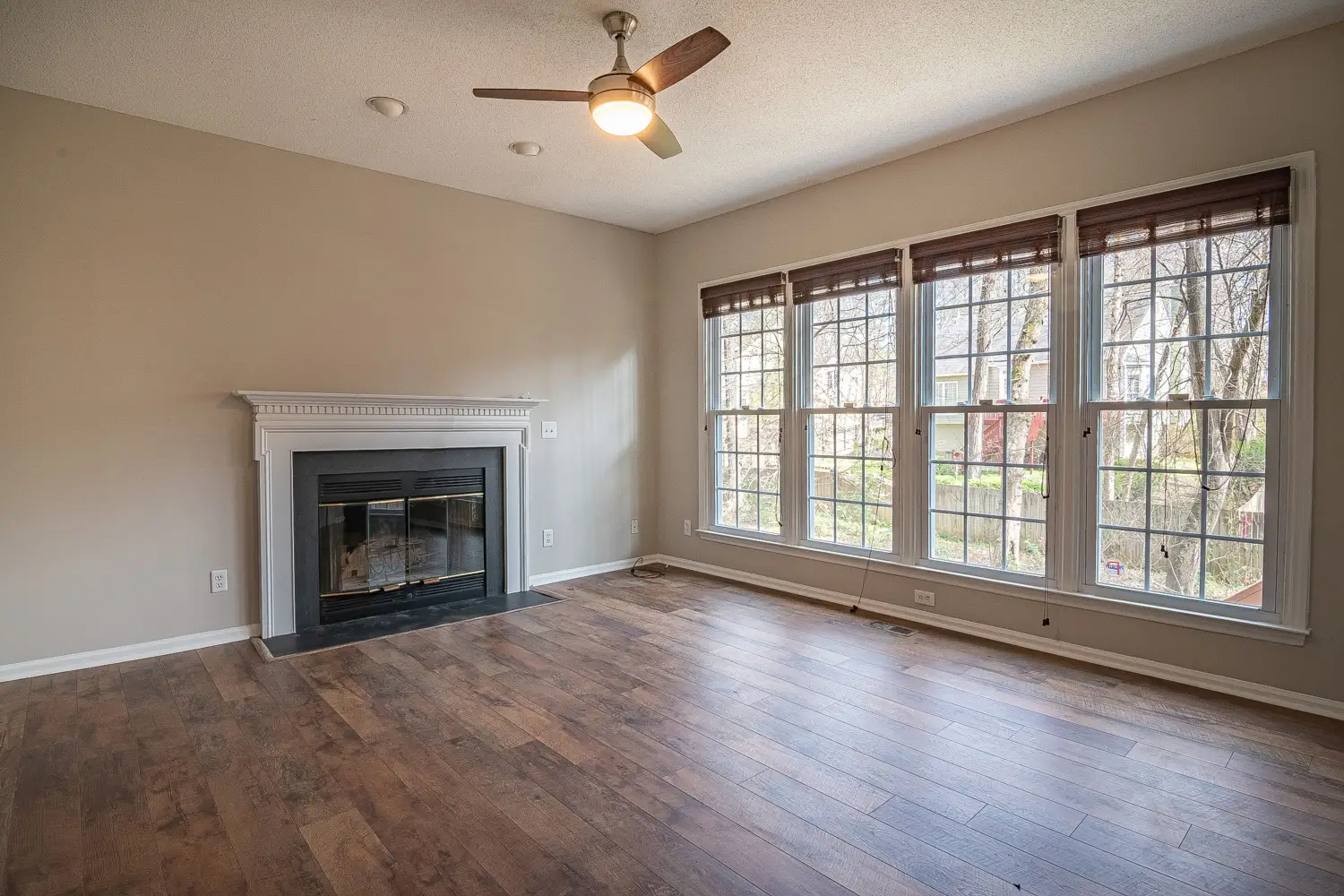
Ceiling Fans with Lights: Stop Guessing Blade Span and Lumens
Stop guessing on ceiling fan size and brightness. Measure square footage, match blade span from our chart, then check lumens. Dark blades lower the ceiling feel.
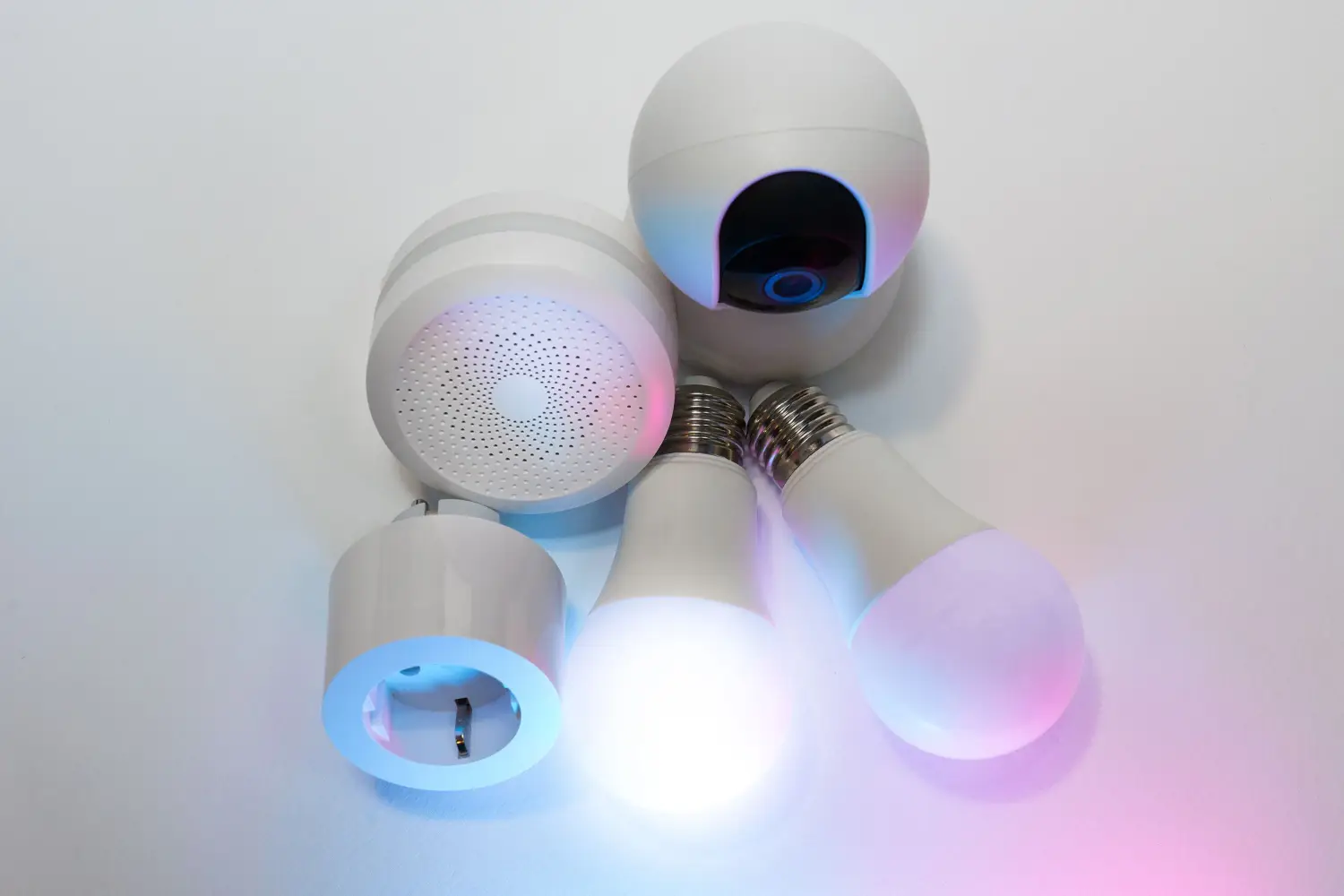
LED vs. Socket Fixtures: 10-Year Cost Comparison
See which option—integrated LED or replaceable socket—costs less over a decade in kitchens, bathrooms, and living rooms. The cheaper upfront choice often isn't.
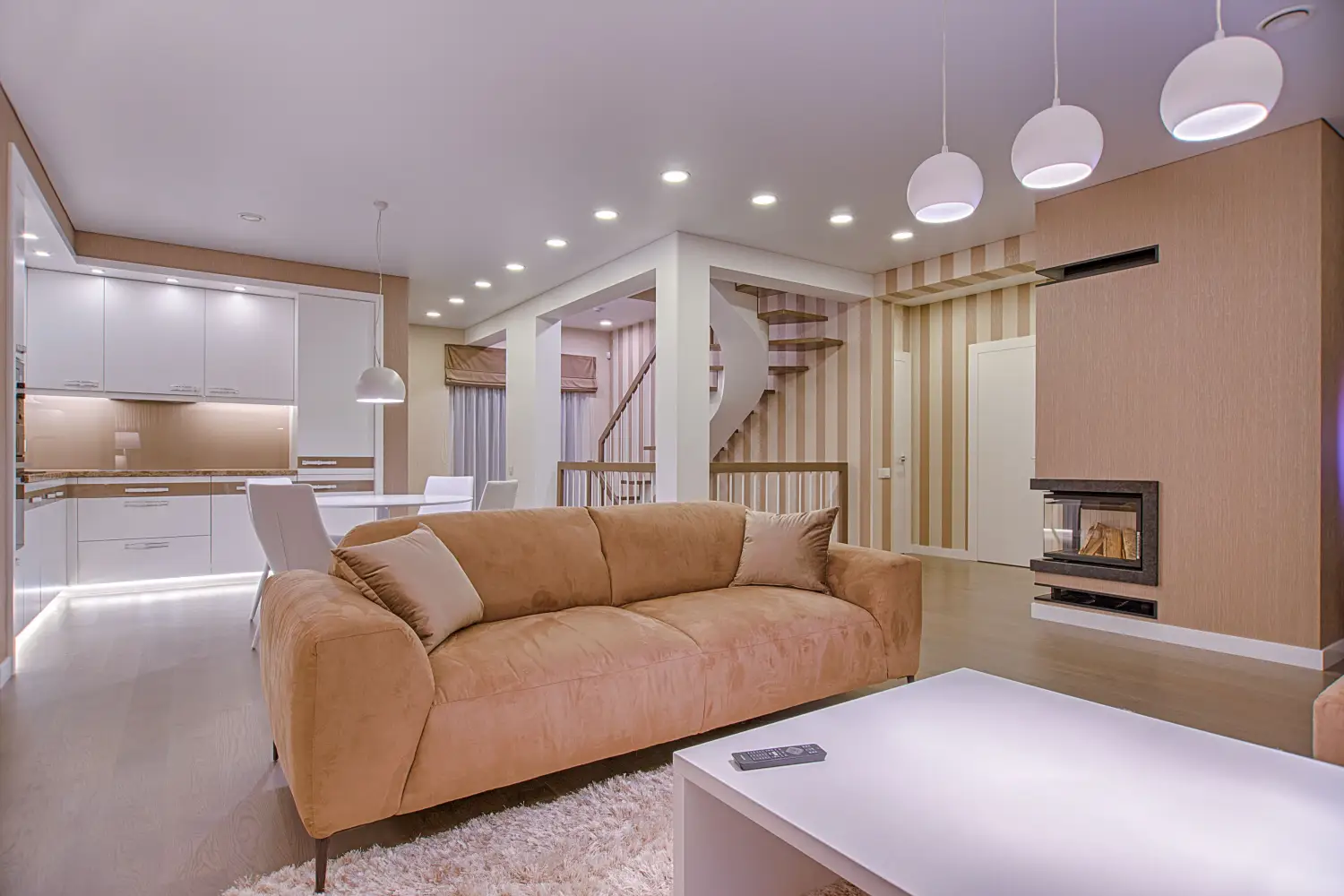
The Lighting Layer Most Rooms Miss (and How to Fix It)
Most living rooms skip the eye-level lighting layer, causing TV glare and dark corners. Learn the 4-stage fix with four real budgets in a standard 8.5-foot room.

Chandelier or Pendant? Height Rules That Make or Break a Room
Exact hanging heights for dining tables and islands, and how visual weight makes one fixture win in open floor plans. Stop guessing and use the measurements that actually work.