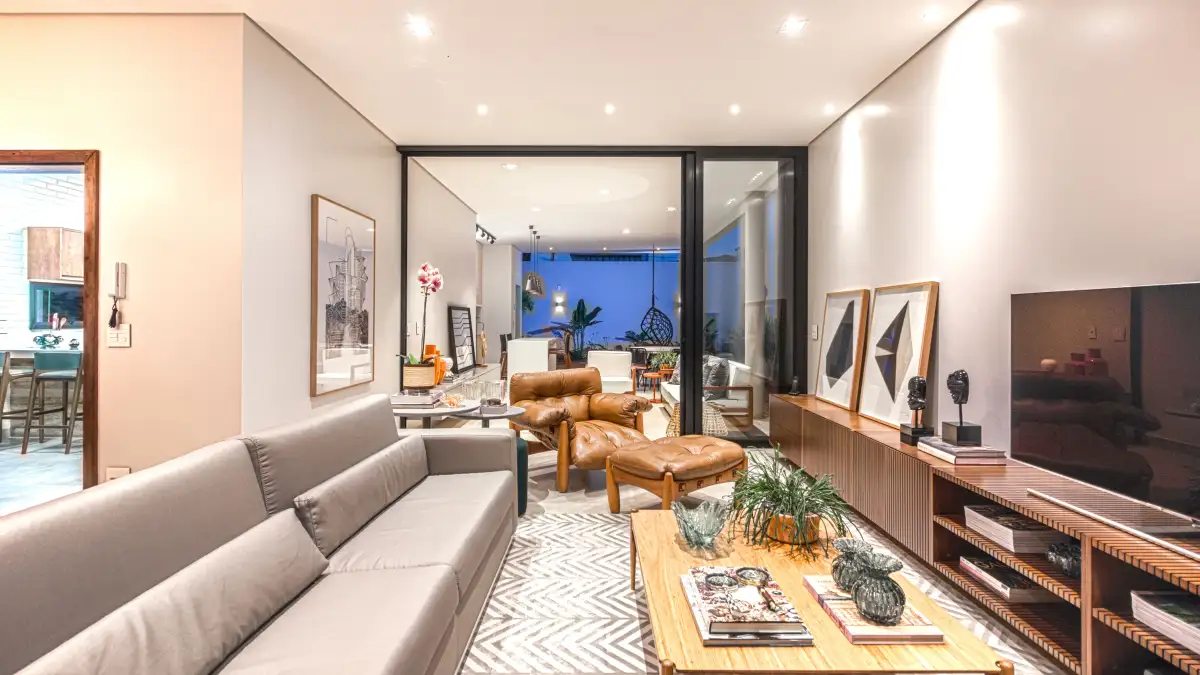
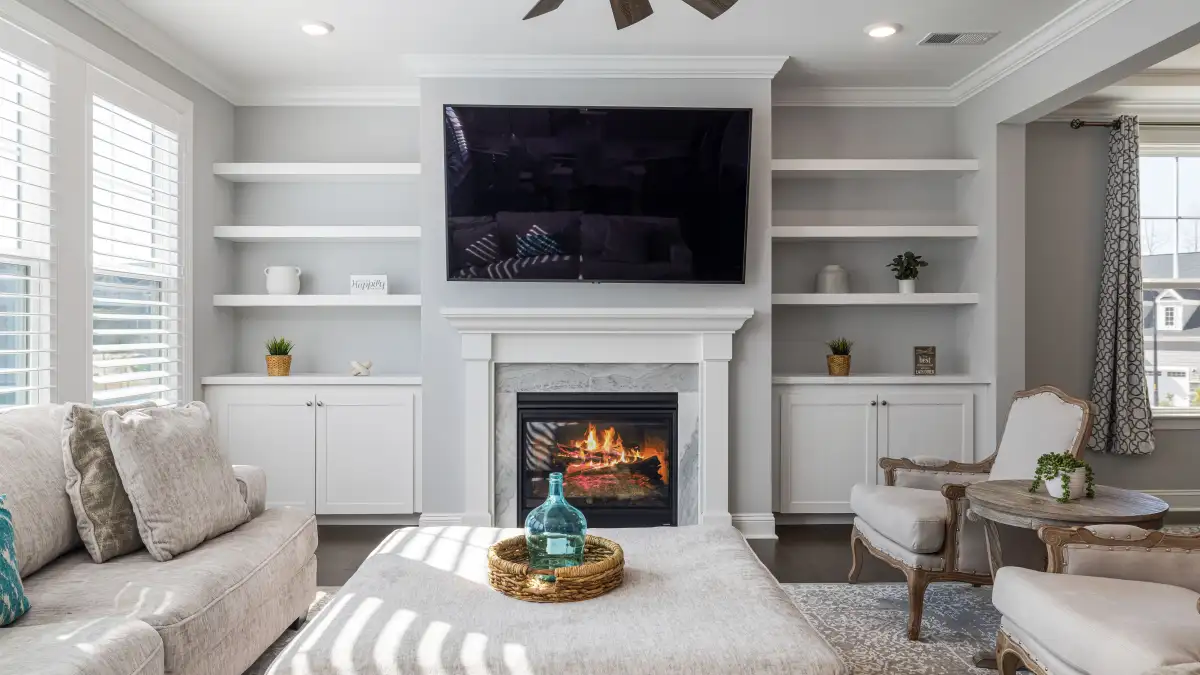
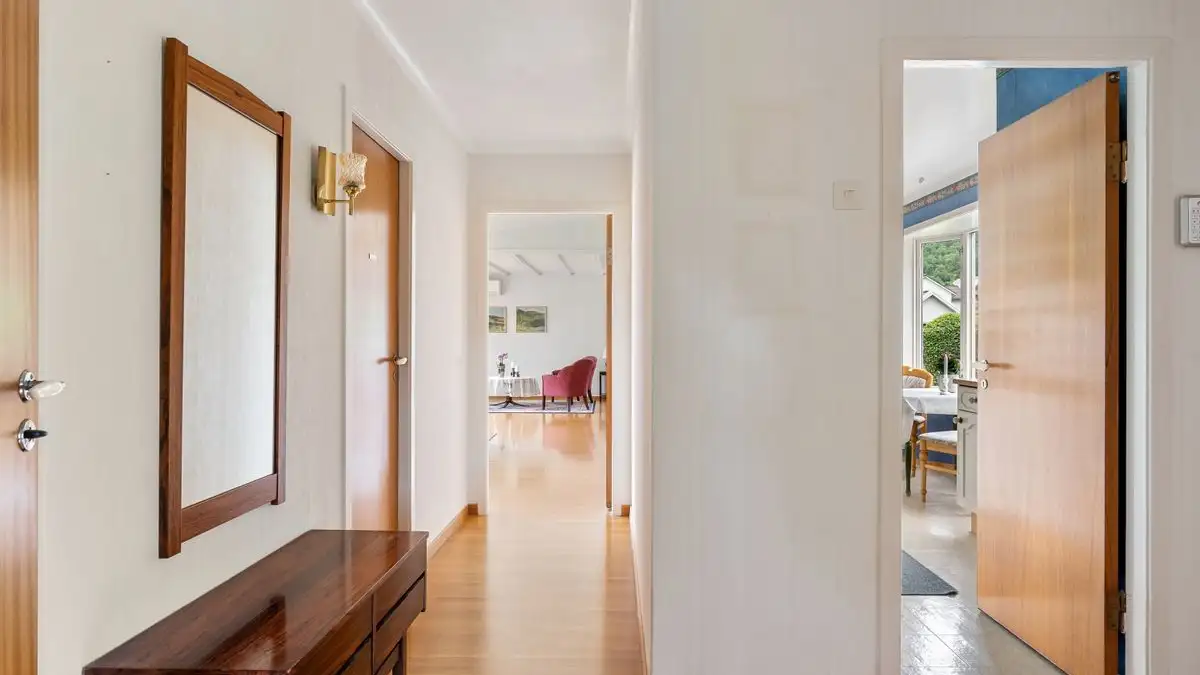
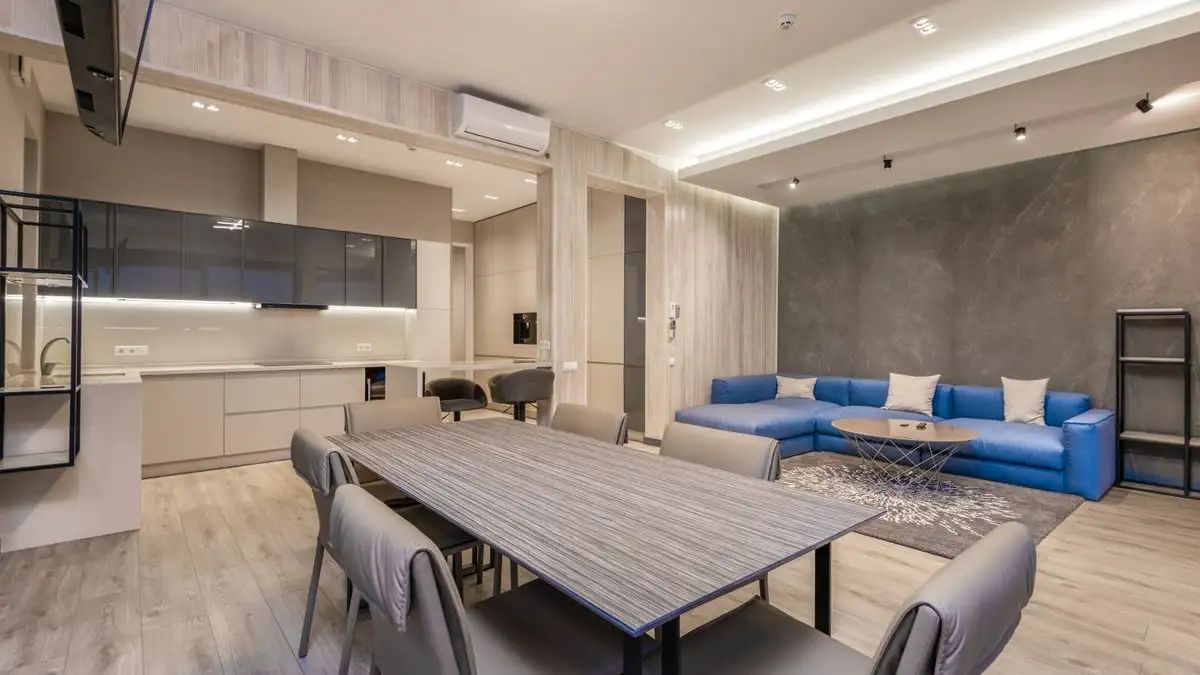
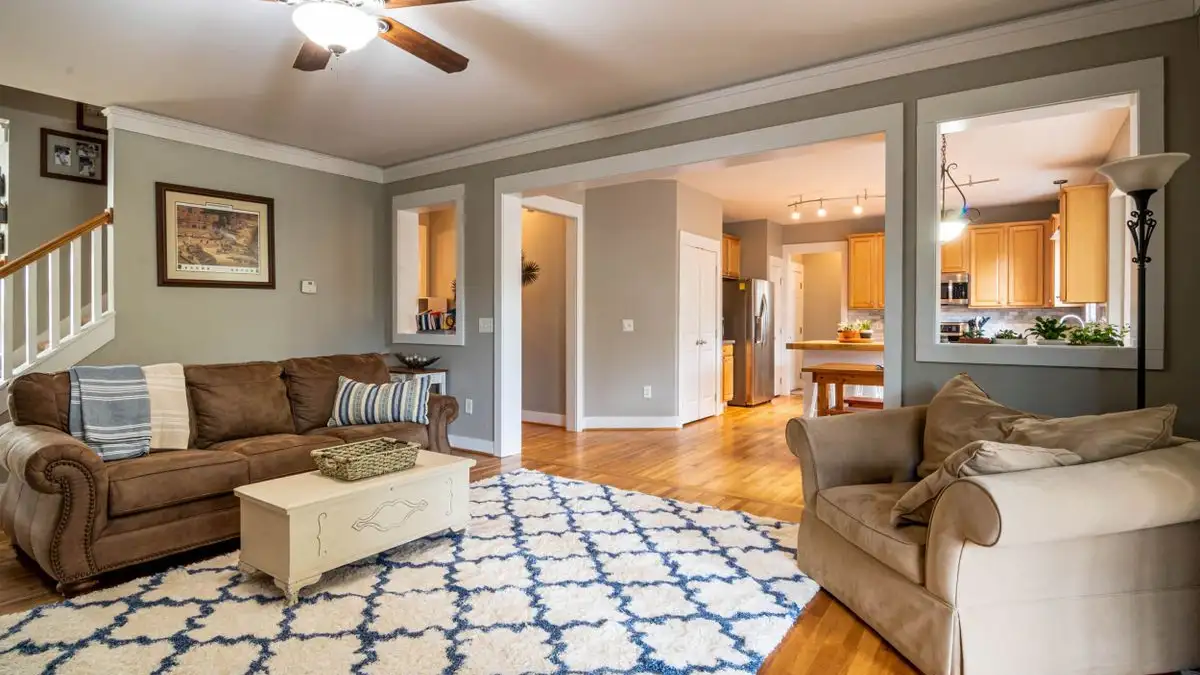
A lamp earns a place in a living room when it fills a gap in the seating zone: the end of the sofa where someone reads, the corner behind a chair the ceiling fixture never reaches, the wall that goes flat and dark above the sideboard. The check happens against the furniture layout, not against the fixture. Ambient light keeps the whole room usable at once, task light serves each individual seat, and accent light gives a wall or a tall piece enough separation to read as a surface instead of a shadow. Place by layer and by seating zone, and the lamp stops being an object in the corner and becomes the part of the room that was missing. Anything that does not answer one of those three jobs is decoration, and the room will still feel unresolved with it plugged in.
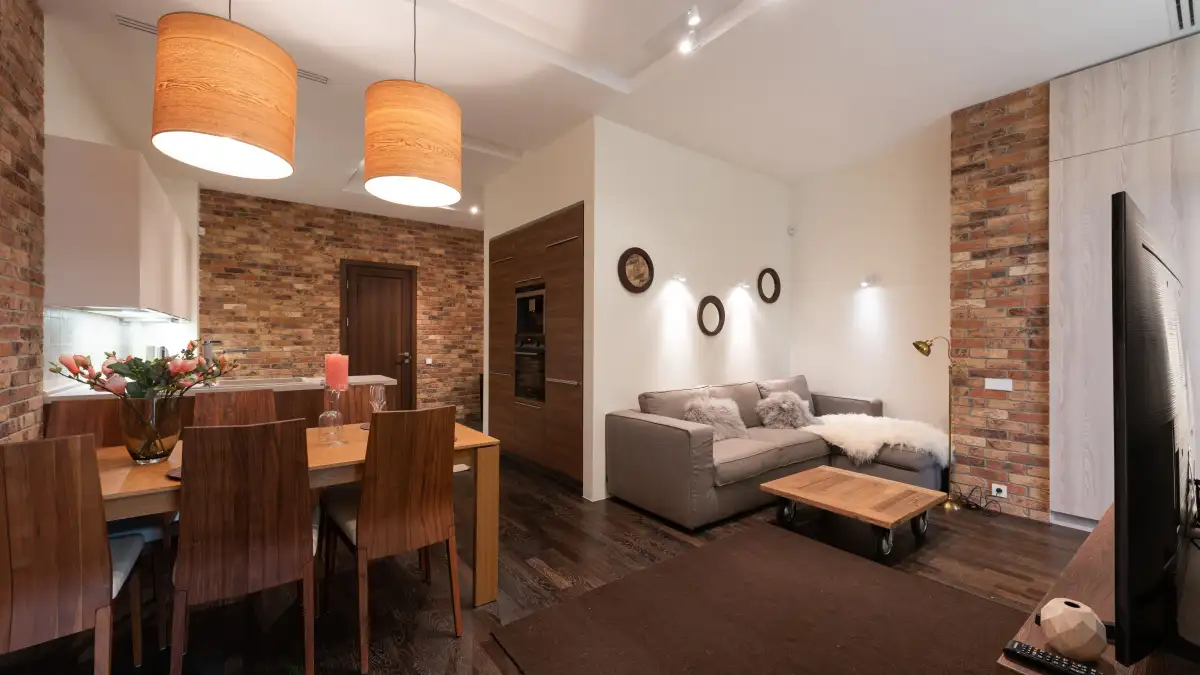
I do this in my own house whenever the light starts to bother me, and it always starts the same way. I stand in the doorway and look at where the chairs point. Not at the outlets, not at the ceiling. Where does the conversation circle sit? Which end of the sofa already has a side table? Where does someone set a mug down and reach for a book? That is the map. The placement falls out of it almost automatically.
Walk in with me and leave the overhead off for a minute. Two or three dull spots show up fast, usually a corner going black, a wall the ceiling light hits at the wrong angle, and a seat with no light near it at all. Those are the three layers talking. Once you can name which one is missing, you know what kind of lamp you are adding and where it belongs.
The seating zone decides where task light goes
Task light is the easiest layer to get wrong, because most people put one lamp at one end of the sofa and call it finished. Sit in the far seat and watch what happens. You are reading by the glow from six feet away, and your own shoulder throws a shadow across the page. So I sit down before I place anything. In a chair, that means the lamp goes just behind and slightly outside your shoulder, so the light comes over you instead of past you. The shade should be opaque enough that its lower edge cuts off the bulb at your seated eye level. If you can see the glowing bulb from the chair, you will feel it every time you look up, and that is the glare people blame on the lamp when it is really a height problem.
For a sofa, the rule is both ends, not one. A single task lamp on one side makes the room look lopsided and leaves one person reading in the dark for the rest of the evening. Each end gets its own source at roughly matched height, and the space between them stays deliberately soft. That contrast is what makes a room feel layered instead of flooded.
Floor lamps behind a reading chair follow the same logic. The bottom of the shade should clear the top of your head when you are sitting down. Too low and you get a halo around your own hair with your face in shadow. Too high and the light lands on the far wall instead of in your lap.
Ambient light is the layer the dimmer belongs to
The main overhead light has one job: make the whole room usable without making any single spot hard to look at. That is why a living room with one fixture in the middle of the ceiling never feels right. It lights the middle of the floor, where nobody sits, and leaves the perimeter, where all the furniture is, in the dim. Worse, one bright point at eye level becomes a reflection on every screen in the room. Laptops, phones, and a television all pick up a ceiling fixture like a mirror.
The fix is not a bigger fixture. It is accepting that the overhead is one layer of three and letting the lamps carry the perimeter. When the floor and table lamps are placed to fill the edges, the overhead can come down to a lower level and stop competing.
This is also the layer where a dimmer earns its keep. The same room has to work at 7 a.m., when you are hunting for a shoe, and at 10 p.m., when you want to sit without being interrogated by a light. Without a dimmer you end up killing the overhead entirely at night, and then the room is lit by islands of lamp light with dark gaps between them. Dim it instead, and the layers blend.
Color temperature belongs here too, because it undoes more otherwise-correct layouts than anything else. Somewhere around 2700K to 3000K reads warm and residential. Anything at 4000K and up starts to look like an office hallway, and in a seating area it makes skin and wood both look wrong. The trap is mixing them. Replace bulbs one at a time over a few years and you can end up with a 2700K table lamp, a 3000K floor lamp, and an old 4000K in the ceiling, all in the same sightline. Your eye reads that as broken even when you cannot say why. Pick one temperature for the room and hold it across every layer.
Accent light is what turns a wall into a surface
Accent light does something ambient and task light cannot: it gives the room depth by making a wall visible. A dark wall behind a sofa flattens everything; the furniture sits in front of a void. Put a low, warm wash of light against that wall and there is suddenly a room back there.
The placement rule is closeness. An accent source wants to be near the wall it is lighting, close enough that the beam grazes the surface instead of spilling into the middle of the room. A lamp standing three feet out is doing a different job: it lights the floor and leaves the wall dark, which is the opposite of what you wanted. Move it in toward the wall and aim it up or across, and you get that soft gradient that reads as architecture.
What to light is whatever has texture. Art, a stone fireplace surround, a bookcase, a paneled wall. Light rakes across texture and flattens smooth surfaces, so a plain painted wall gives you far less reward than a rough one.
What decides placement before taste does
Traffic paths come first. A lamp that sits in the line between the sofa and the doorway to the kitchen will get moved, and once it moves, the layer it was serving goes dark. Lamps belong outside the walking line: behind the seat, beside the chair, tucked into the corner the furniture already ignores.
Screens come second. If there is a television or a regular laptop spot, keep lamp shades out of the straight line between the eye and the screen. A glowing shade in your peripheral vision is worse than a dark corner, because it throws a reflection exactly where you are looking.
The whole layout also wants to read as a triangle of light rather than a row. Two task lamps at the ends of the seating plus one ambient or accent source filling the third point keep the room balanced from every angle you actually sit at. Three sources at the same height around the perimeter just read as a fence.
Where it depends
Not every room can carry all three layers, and pretending otherwise makes for bad advice. A small rental living room where the ceiling fixture is not going anywhere will not get a proper ambient layer, and that is fine. The answer there is to build up the task and accent layers with plug-in lamps and accept a slightly moodier room. An open floor plan with no dividing walls has almost nowhere for accent light to land, because there is no wall close enough to graze. In that case I would put the effort into the task layer and the color temperature instead of fighting for a wall wash that cannot work.
What I would not do in any of those cases is buy one large impressive lamp and hope it covers every job. It will not. A lamp is one layer. The room needs the other two to hold it up.