The Scale Rule That Makes Large Furniture Work in Living Rooms
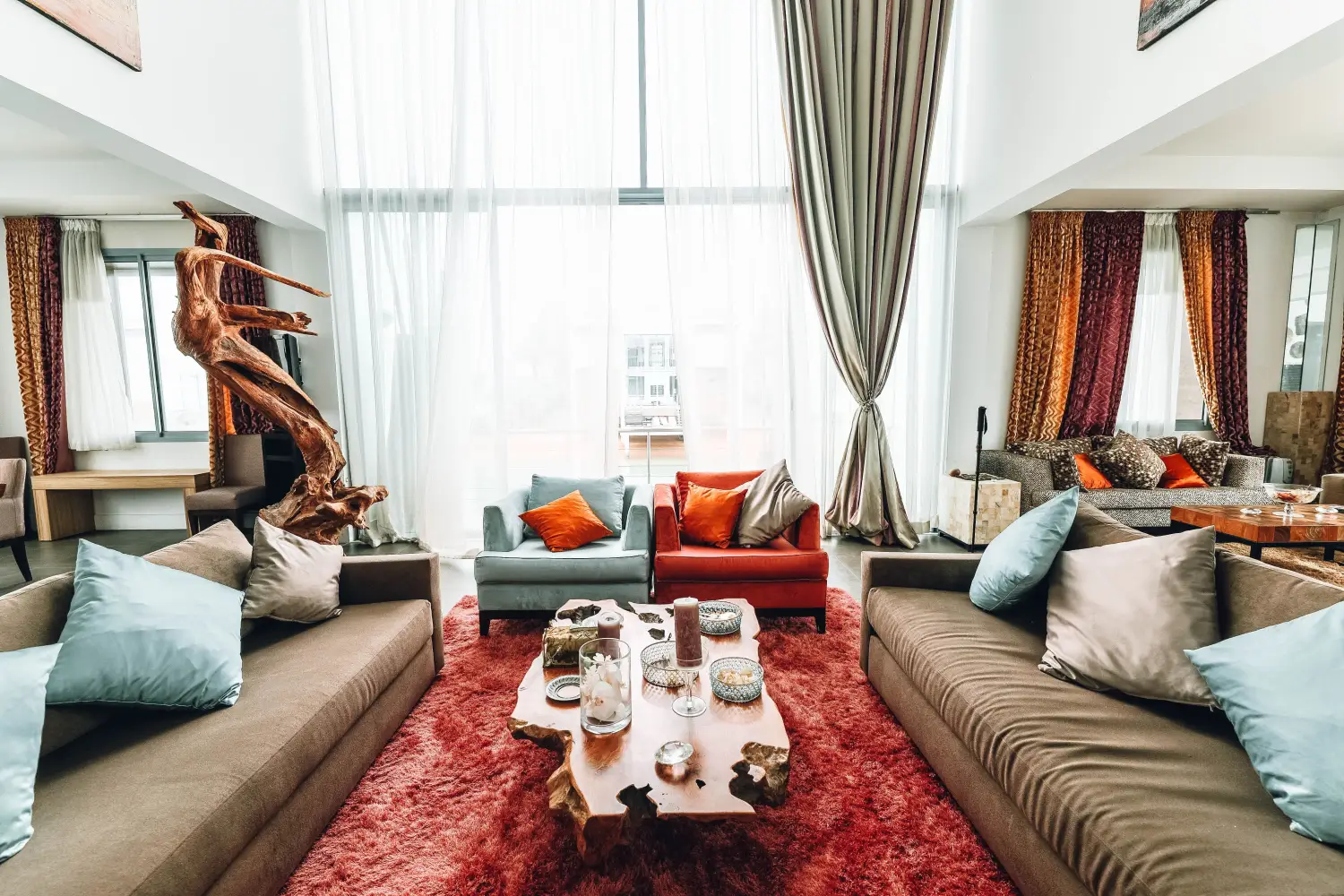
Oversized‑furniture anxiety dissolves once you apply two numbers: 0.667 and 0.618. The first is the two‑thirds rule—use it for the sofa. The second is the golden ratio—use it for the coffee table and the art above the sofa. These proportions decide where the eye rests and whether the room feels deliberate or cramped.
Common Scale Problems and Where They Point You
Three situations keep repeating, each with a direct route through the article.
- The sectional that fills the wall end‑to‑end — No negative space. The first leg is the two‑thirds rule for sofas.
- A coffee table dwarfed by the sofa — Wrong proportion immediately obvious. After the sofa, the golden‑ratio coffee table sizing holds the answer.
- Art that floats too high or sits too narrow — It reads as disconnected. The art proportion section applies the same ratio and closes the loop.
Applying the Two‑Thirds Rule to Your Sofa
This stage sets the primary mass in the room. The logic: a wall needs a dominant object, but that object must not colonize the whole surface. Leaving one‑third of the wall open creates a visual exhale that makes the room feel larger than its measurements.
Measure the wall behind the sofa. The ideal sofa length is roughly two‑thirds of that wall’s width. On a 10‑foot wall (120 inches), that means a sofa near 80 inches. On a 12‑foot wall, around 96 inches. The range—60 to 70 percent—holds because anything beyond 75 percent begins to read as wall‑to‑wall, and the brain registers the room as smaller.
An existing sofa that is wider than two‑thirds does not force a replacement. Move it forward from the wall, angle it slightly, or clear the end tables. The moment a slice of wall becomes visible on each side, the same sofa starts to look intentionally placed.
Ready to move on: At least a foot of visible wall on each sofa end and the room feels balanced, not stuffed.
Coffee Table Sizing: The Golden Ratio Shortcut
With the sofa anchored, the coffee table receives its dimensions from a multiplier that the eye finds naturally pleasing: the golden ratio, approximately 1:1.618. Flipped, the subordinate piece—the table—sits at 0.618 of the dominant piece, which is close enough to two‑thirds that mental arithmetic stays fast.
Multiply the sofa length by 0.618. For an 84‑inch sofa, that points to a table around 52 inches. For a 96‑inch sofa, a 59‑ to 60‑inch table fits the formula. The point is not mathematical purity; it is avoiding a table that competes with the sofa for visual weight.
Height and depth follow the same subordinate idea: tabletop level with the seat or an inch lower, depth around half the seat depth. The golden ratio logic applies to overall mass, not just one number.
Ready to move on: The table reads as part of the seating group, not a separate island, and is reachable from every seat.
Art Proportion: How to Size and Hang Wall Art Above a Sofa
Art connects the seating to the wall, and the same proportion keeps it from looking orphaned. A single framed piece or a gallery arrangement treated as one rectangle should span about two‑thirds the sofa’s width—a practical shortcut to the golden ratio in the vertical plane.
For an 84‑inch sofa, that means art 50 to 58 inches wide. For a gallery wall, measure the outermost edges of the cluster and hold that entire shape to two‑thirds of the sofa length.
The bottom of the art sits 6 to 8 inches above the sofa back. This prevents the art from detaching and puts the visual center near standing eye level, where the eye expects a focal point. The golden ratio here governs proportion, not absolute height.
Ready to move on: The art and sofa form one visual block, and the wall no longer looks incomplete.
Readiness Signs: Is Your Scale Dialed In?
- Sofa: clear negative space—at least a foot of wall on each side—and no sensation of crowding.
- Coffee table: two‑thirds the sofa length or close, reachable, visually subordinate.
- Art above sofa: width at two‑thirds of the sofa and bottom 6–8 inches above the backrest.
Scale Details You Can Put Off for Now
Some items are downstream of the main proportions; postponing them prevents premature second‑guessing.
- Area rug size — A too‑small rug hurts scale, but it depends on the sofa and coffee table layout. Trigger: once the seating group is set, select a rug that extends at least 6–12 inches beyond the sofa arms.
- Console table behind the sofa — Height and depth matter, but they are supplements, not anchors. Trigger: add only after the sofa and art are fixed.
- Lighting fixture scale — Pendants and chandeliers relate more to the whole room footprint than to the seating wall. Trigger: after the rug and secondary furniture are chosen.
Quick Answers to Common Scale Questions
What if my sofa is slightly longer than two‑thirds of the wall?
Up to 75 percent can still work if you keep both ends visually light. Pull the sofa forward a few inches and avoid squat furniture at the ends. The rule lifts the moment a strip of wall stays visible on both sides.
Does the golden ratio work for a rectangular coffee table?
Yes. Measure the length parallel to the sofa and keep that at roughly 0.618 of the sofa length. Depth can be whatever seating clearance allows.
How do I measure for a gallery wall above a sofa?
Mark the outermost left, right, top, and bottom of the frame collection and treat that boundary as one artwork. Size the boundary to about two‑thirds the sofa width and center it.
Can I use the two‑thirds rule for other furniture?
It applies to any dominant piece on a single wall: a headboard, a dining buffet, a media console. The principle is the same—one large object that leaves breathing room on both sides reads as intentional rather than forced.
The Room That Finally Feels Right
When the three major elements obey the same proportional logic, the room belongs to a single system and the eye stops searching for balance. The first concrete move for the most common starting point—the oversized sofa—is to measure the wall and the sofa, then create at least a foot of visible wall on each end by pulling the sofa forward or clearing the ends. That single adjustment opens the space.

Clara Bennett
After five years of transforming my 1920s bungalow room by room, I’ve refinished floors, hung blinds in bay windows, and spent more time choosing light bulbs than I’d like to admit. I learned paint sheens by painting my kitchen ceiling three times, and I found out the hard way that a rug too small makes a room feel unfinished. I believe every home can be both functional and beautiful, no matter the budget.
Related posts
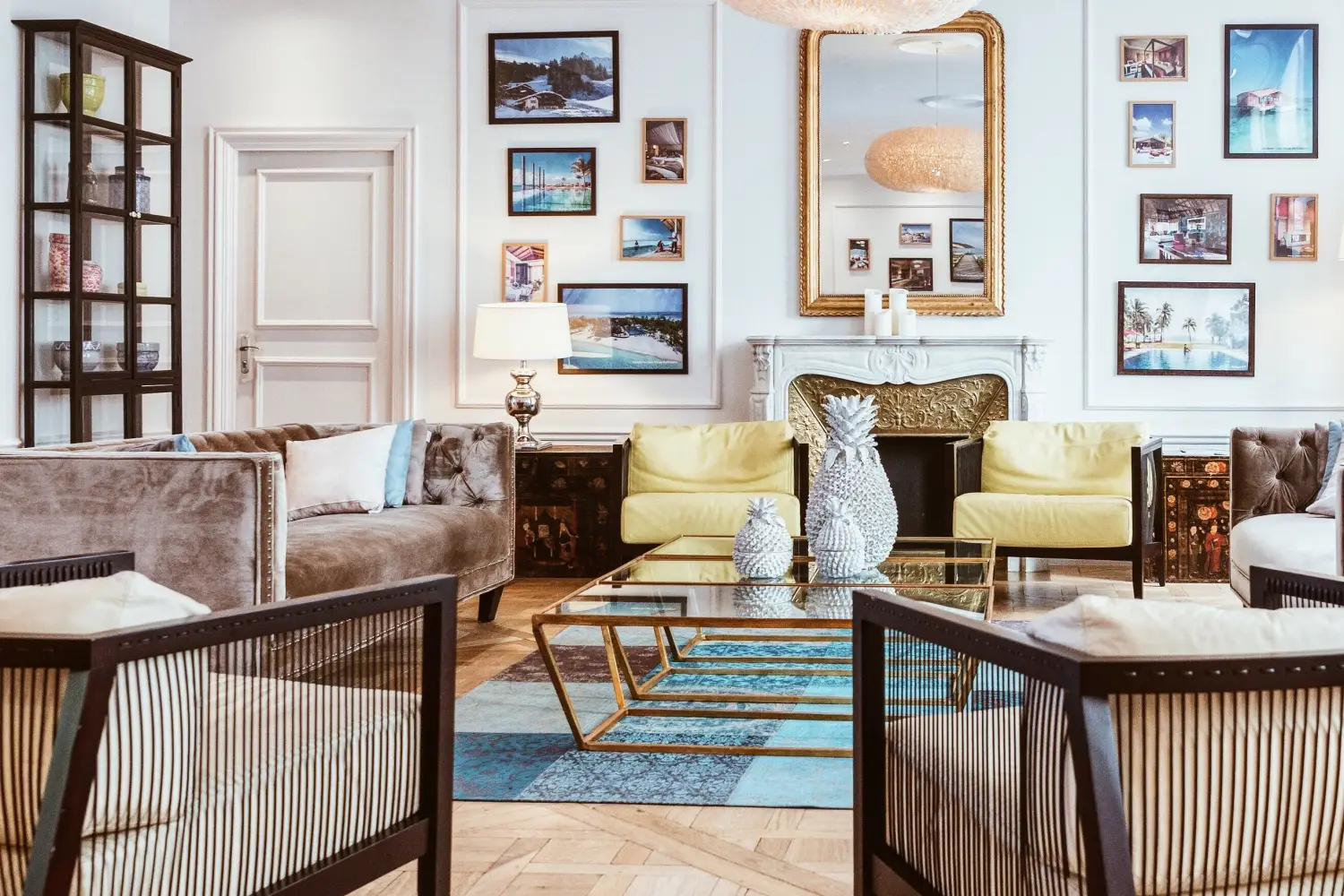
Living Room Layouts: The One Rule That Makes Everything Fit
Stop pushing furniture against walls. Use the pivot-point method to arrange your living room by function, not by the longest wall — and get a layout that finally feels right.
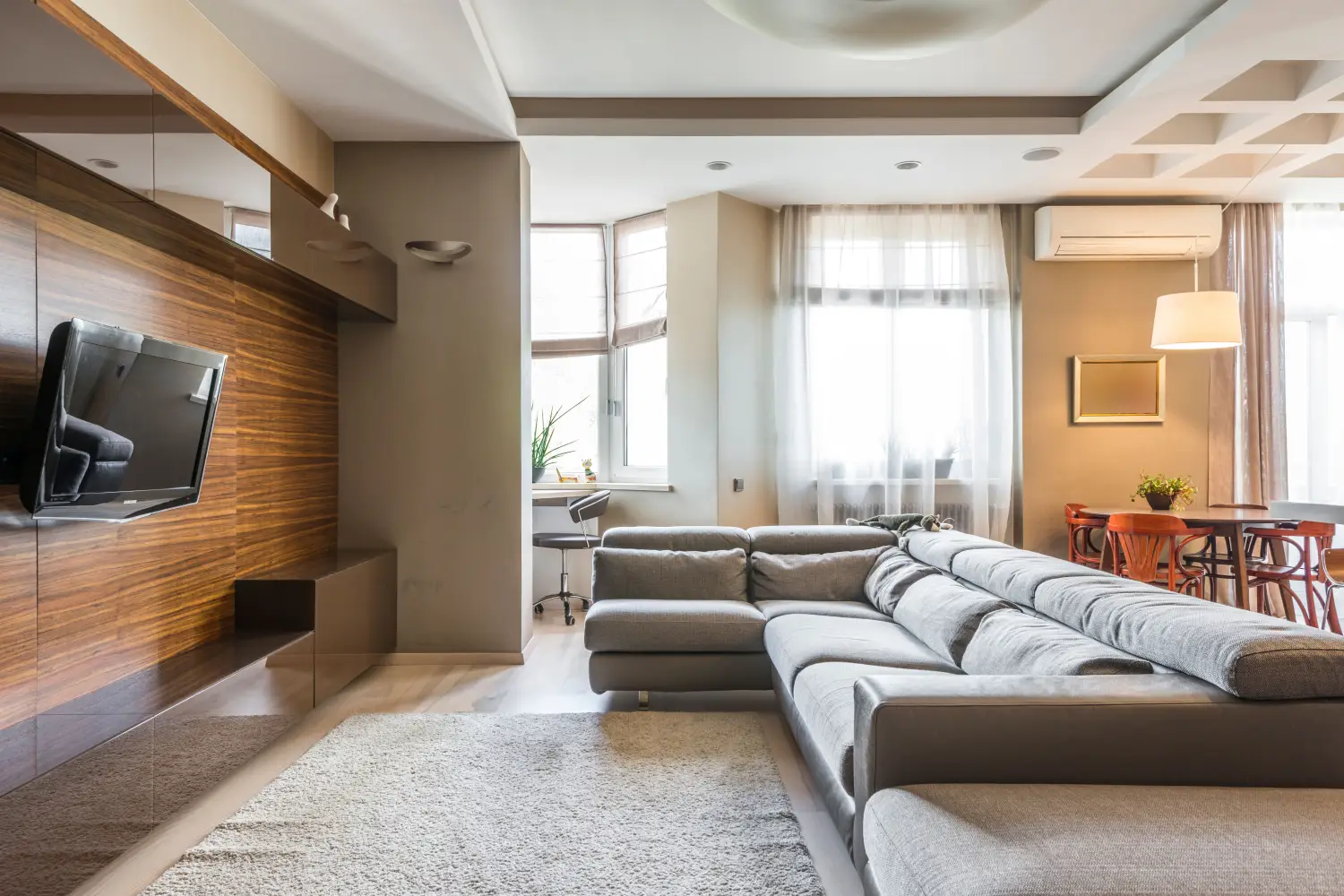
7 Living Room Clearance Distances You're Probably Ignoring
The exact inch-by-inch clearances between sofa, coffee table, and walkways that keep a living room open. Fix these 7 distances to avoid a cramped room.
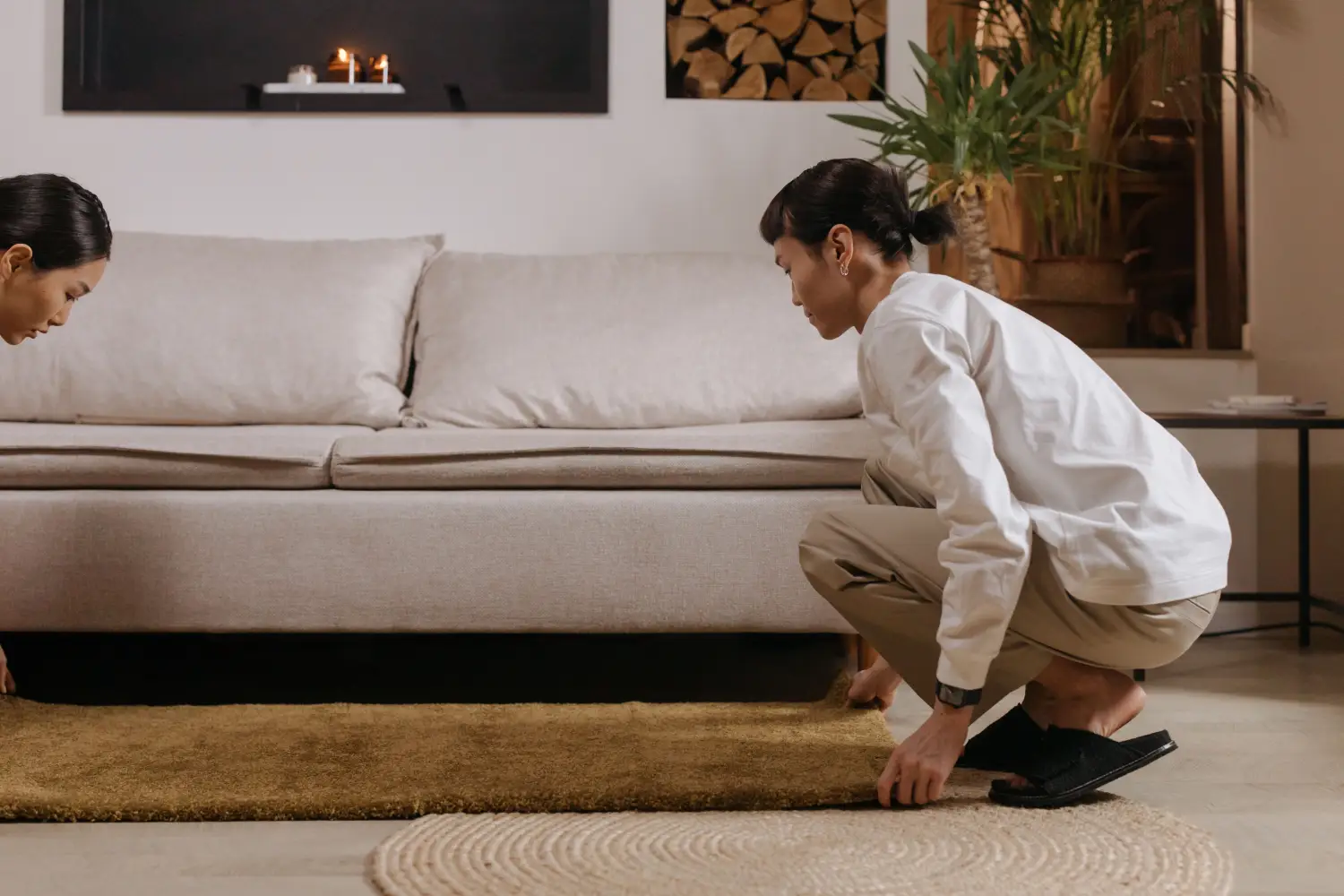
Your Living Room Rug Is Probably Too Small: Here's the Fix
Stop using the outdated 'front legs on, back legs off' rule. Learn the floating island method to size and place a rug that actually anchors your living room.
How Designers Decide Focal Point Placement in Living Rooms
See how designers choose between a fireplace, TV, or architectural focus—and how they layer both when a living room demands it. Quick scenario guide inside.
What's the Best Layout for a Small Living Room? Start Here
Find the best layout for your small living room based on its shape—narrow rectangle, square, or L-shaped. Step-by-step arrangements, rug tips, and a printable cheat sheet.