Your Living Room Rug Is Probably Too Small: Here's the Fix
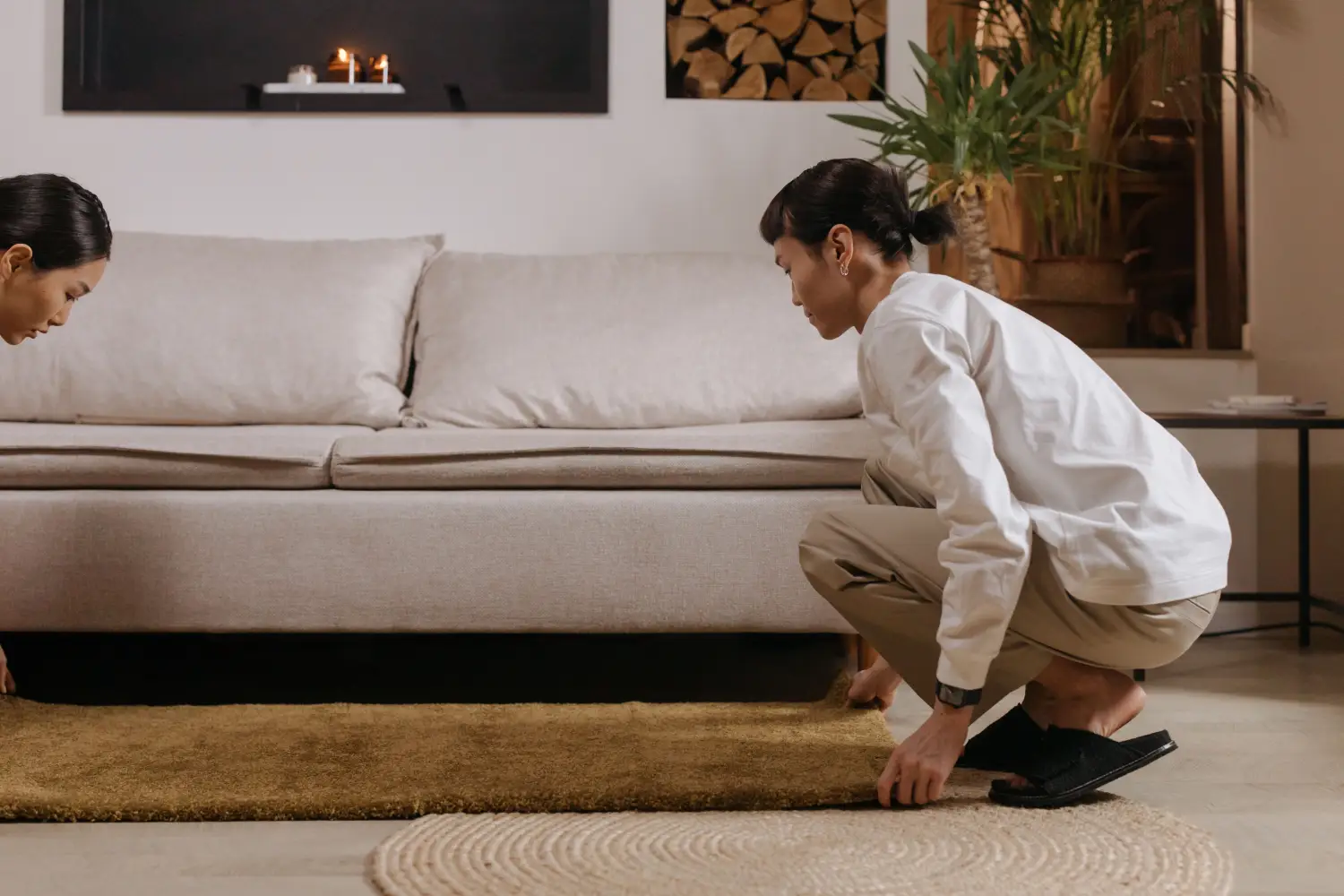
If your living room rug is a tiny patch of fabric under the sofa’s front legs, you’ve been following advice from a time when nobody actually gathered in the living room. The "front legs on, back legs off" rule is a design fossil—and it makes your space look smaller, not cozier. The real fix: forget furniture legs entirely. Treat the rug as a floating island—a defined zone that contains all the main seating, with at least 18 inches of bare floor on all sides. This shift turns the rug from a leg-catcher into the room’s visual anchor.
How Did You End Up With a Small Rug?
Find your situation below. Each path points you to the right stage in this article.
The Front-Legger
Your rug touches only the front legs of the sofa and chairs, leaving the back legs on bare floor. This is the classic "rule follower" scenario—you probably measured correctly but applied an outdated guideline.
Your path: Move directly to understanding why the old rule fails, then recalculate your rug size as a zone.
The Postage Stamp
The rug is smaller than the coffee table or centers under it without reaching any furniture. This often happens when a rug is bought based on a sale price rather than room needs.
Your path: Skip the history lesson, head straight to sizing and placement.
The Wall-Hugger
The rug sits against a wall or under a single piece of furniture, leaving the rest of the seating grouping floating in the room. Open-plan layouts create this mismatch when rugs are used like perimeter mats.
Your path: Learn the floating island method and how to position a rug to define a zone.
Why the Old Rule Makes Your Room Feel Smaller
The logic of front-legs-only anchoring falls apart in a modern room where furniture floats in the middle. A rug that only catches front legs becomes a series of disconnects—legs poke out, the floor fractures into awkward shapes, and the eye never settles. The room feels unfinished because the rug isn’t doing its job: defining a zone. Once you notice the scattered legs, you can’t unsee it.
A rug that extends beyond a sofa by at least 12–18 inches on all sides instantly reads as a complete "room" within the room, even in an open plan. The rug becomes a visual boundary, not a placeholder for furniture feet. That’s the missing piece—and it has nothing to do with which leg touches what.
The Observable Sign You’re Past This Stage
You can walk into your living room, look at the current setup, and explain in concrete terms why the rug feels too small—without mentioning a rule. You see a swimming set of legs, not a grounded grouping.
The Floating Island Method: Measure Your Zone, Not Your Furniture
Once you stop thinking about furniture legs, a simple measurement takes over.
Step 1: Find Your Seating Footprint
Arrange the sofa, chairs, and coffee table in their ideal positions—even if that’s not where they sit now. Mark the outermost points of this grouping with painter’s tape on the floor. This is your conversation zone.
Step 2: Add the Buffer
Add a minimum 12 inches (18 is better) on every side of that taped outline. The buffer creates the "island" edge. For an open floor plan, go larger—up to 24 inches—so the zone clearly separates from adjacent areas.
Step 3: Convert to Rug Dimensions
Measure the length and width of the enlarged rectangle. This is your target rug size. Standard rug sizes (like 8'x10' or 9'x12') might just cover it; if not, round up to the next common size.
Concrete action: Use a tape measure and masking tape right now to outline the floating island shape on your floor. Live with the tape for a day. The visual boundary will confirm you’re ready to buy. Even a budget rug in the right size grounds the room better than an expensive one that’s too small.
The Observable Sign You’re Ready to Move On
The taped outline feels like a clear "room" even when the furniture is not centered on it. You no longer measure from sofa arms; you measure from the zone.
Placing the Rug to Anchor the Zone, Not the Furniture
Sizing is half the battle. Placement locks in the floating island effect.
Center the Rug on the Zone, Not the Room
The rug should be centered under the conversation grouping, not necessarily in the middle of the room’s four walls. In a large open area, the rug floats in that section, with equal exposed floor on all sides of the zone.
Let the Buffer Do the Work
The 12–18 inch border of floor around the rug visually separates the seating area from traffic paths. If you have a walkway behind the sofa, the rug should stop before the path; the front legs of the sofa can either rest on the rug or off—this is no longer the deciding factor. The zone boundary matters, not leg count.
Avoid the "Floating Perch" Problem
If the room is so narrow that the floating island leaves less than 6 inches of floor on the longest sides, the rug will look cramped. In that case, either scale down the zone slightly or consider a custom-cut bound carpet remnant. The floating island method only works when the border is generous enough to be seen.
The Observable Sign You‘ve Nailed It
You can stand at the room’s entry and see the rug as a distinct destination, not as an extension of the sofa. The seating cluster feels contained, and the uncovered floor frames it.
Signs You’re Ready to Ditch the Old Rule (Checklist)
- You can articulate why the old "front legs on" rule visually fragments your room.
- You’ve taped out a zone outline and it looks spacious even without furniture.
- Your target rug size is based on the zone plus buffer, not on furniture dimensions alone.
- The rug placement centers on the conversation area, not the room’s walls.
- You see the exposed floor border as a design element, not wasted space.
Worries You Can Put Off for Now
Some details loom large but only matter after you settle on size and placement. Ignore them until you hit the trigger.
Rug Pad Thickness
A pad prevents slipping and adds cushion, but its thickness depends on the rug’s fiber and pile height—choices that only become relevant after you’ve selected the actual rug. Trigger: you’ve chosen a specific rug and know its backing.
Shape (Round vs. Rectangle)
Unless your seating zone is circular (a round table with a symmetrical chair circle), a rectangle almost always reads as a clearer island. Trigger: you have a square or gently curved arrangement where a round rug might be an option; test by taping both shapes.
Pattern and Color
A bold pattern won’t rescue a too-small rug. Size creates the foundation; pattern adds personality. Trigger: you have your zone dimensions and are browsing actual rugs.
Material and Durability
Wool, synthetic, natural fibers—these influence cleaning and wear resistance but don’t change the size equation. Trigger: you know the room’s foot traffic and sun exposure, and you’re comparing rugs in the correct size.
Common Questions About Living Room Rug Sizing
What if my living room is an open-plan space with no walls?
Use your furniture grouping to define the zone, and add a larger buffer—24 inches on all sides if possible. The rug becomes the room boundary, so the larger the border, the clearer the separation from dining or kitchen areas.
Can I use multiple rugs to define different zones?
Yes, that’s the floating island concept at scale. Just ensure each rug has its own generous buffer within its zone, and leave at least 18 inches between the edges of adjacent rugs to avoid a patchwork look.
What size rug do I need for a sectional sofa?
Measure the entire footprint of the sectional, including the chaise, and add your buffer. Often this requires an 8'x10' or larger rug. The key is that the rug contains the entire sectional zone—front legs and corner alike—so the chaise doesn’t jut out of the defined area.
Should the coffee table be fully on the rug?
In the floating island method, yes—the coffee table is part of the zone, so it sits completely on the rug. If the table extends beyond, the rug is too small.
How do I know if 8x10 is big enough?
Tape out an 8'x10' rectangle under your furniture grouping and check if you have at least 12 inches of bare floor around all sides of the seating footprint. If any furniture edges hang over the tape, 8'x10' is too small.
From Floating Island to Finished Room
A room anchored by a properly sized rug feels instantly more intentional—the seating cluster reads as one unit, foot traffic flows around it, and the floor itself becomes part of the design. If you started with a front-leg-only rug, the very first action is to ignore every furniture leg rule you’ve ever heard and tape out your seating zone tonight. The size will reveal itself.

Clara Bennett
After five years of transforming my 1920s bungalow room by room, I’ve refinished floors, hung blinds in bay windows, and spent more time choosing light bulbs than I’d like to admit. I learned paint sheens by painting my kitchen ceiling three times, and I found out the hard way that a rug too small makes a room feel unfinished. I believe every home can be both functional and beautiful, no matter the budget.
Related posts
Living Room Layouts: The One Rule That Makes Everything Fit
Stop pushing furniture against walls. Use the pivot-point method to arrange your living room by function, not by the longest wall — and get a layout that finally feels right.
The Scale Rule That Makes Large Furniture Work in Living Rooms
Discover how the two-thirds rule and golden ratio create perfectly scaled living rooms. Learn sofa, coffee table, and art proportions with this cheat sheet.
7 Living Room Clearance Distances You're Probably Ignoring
The exact inch-by-inch clearances between sofa, coffee table, and walkways that keep a living room open. Fix these 7 distances to avoid a cramped room.
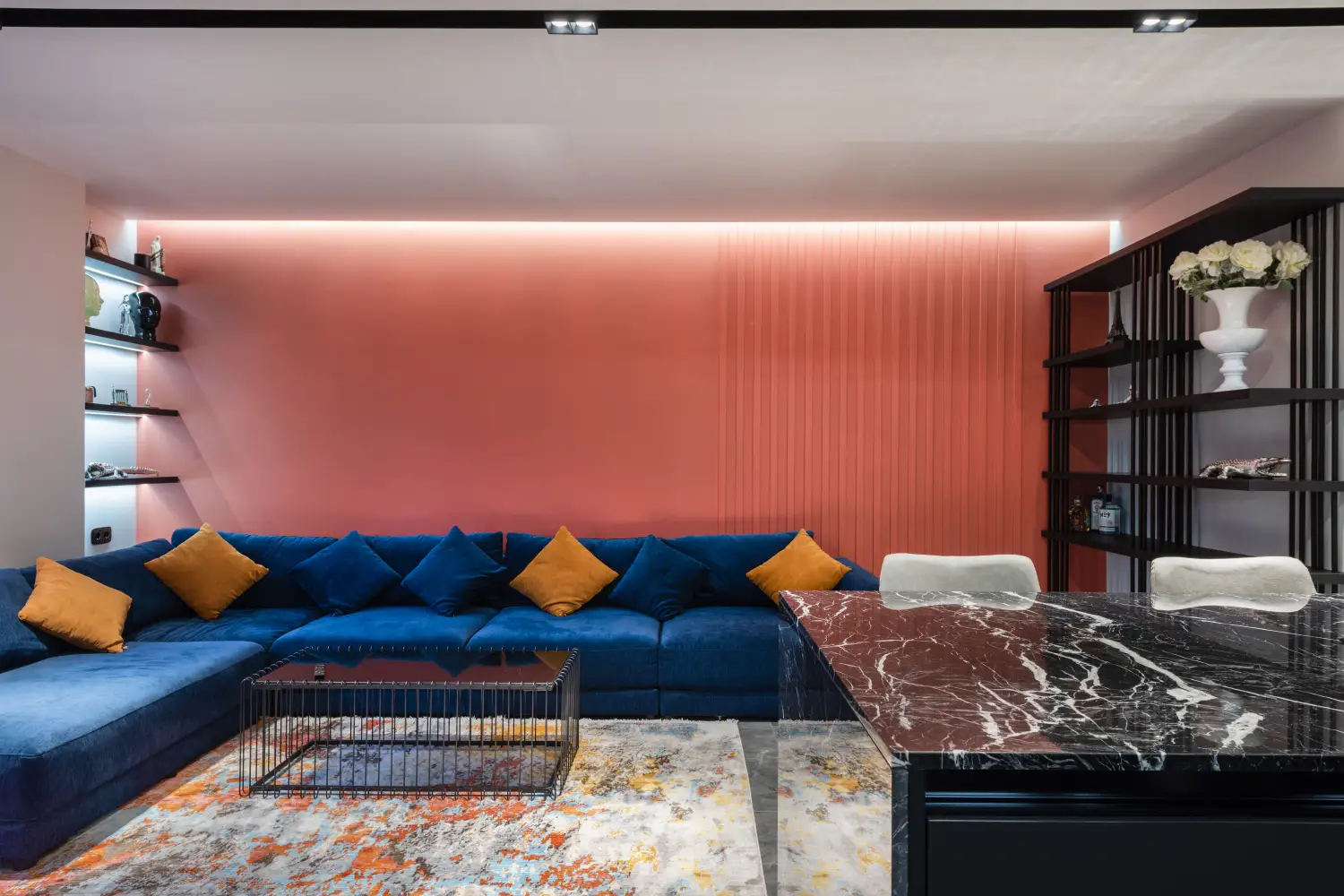
How Designers Decide Focal Point Placement in Living Rooms
See how designers choose between a fireplace, TV, or architectural focus—and how they layer both when a living room demands it. Quick scenario guide inside.
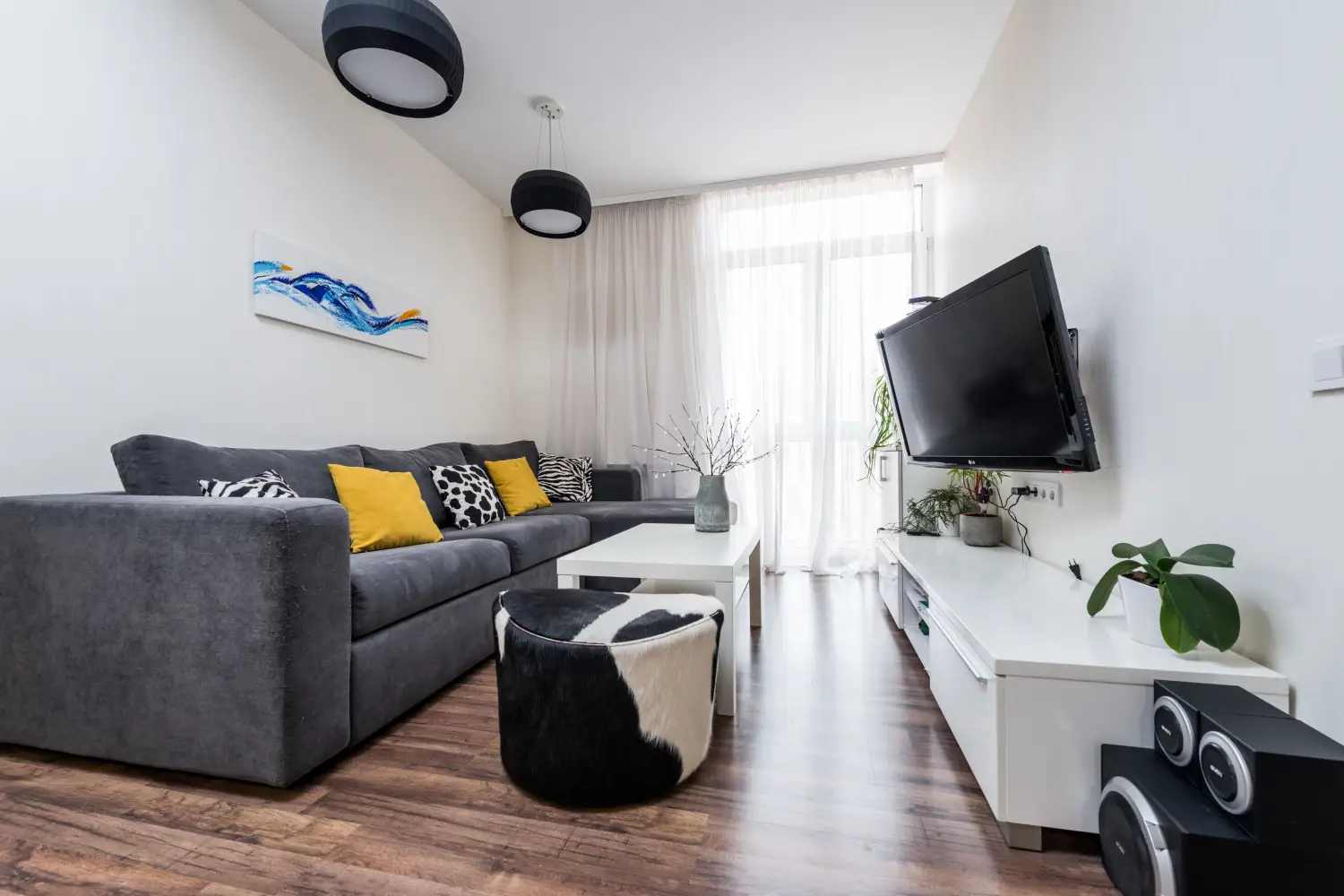
What's the Best Layout for a Small Living Room? Start Here
Find the best layout for your small living room based on its shape—narrow rectangle, square, or L-shaped. Step-by-step arrangements, rug tips, and a printable cheat sheet.