Matching Sets Are Over: How to Mix Furniture Styles Successfully

Matching sets are the quick-ship furniture version of wallpapering over a problem. A room that mixes pieces actually lives—it looks like someone with opinions built it over time. The method that makes that possible is dead simple: pick one common thread, then let every other detail run in different directions. No coordinating catalog numbers, no desperate hope that the salesperson’s “collection” solves it.
The common thread is the invisible string that makes a mid-century credenza, a rolled-arm sofa, and a black metal floor lamp feel like they belong on the same team. Without it, a mixed room reads as a storage unit with better lighting. With it, the variety reads as taste. That thread is never a style label—it is a physical, repeatable detail you can point at: a warm brass foot, a rounded-off corner, the exact tone of raw oak.
If You Own One Piece You Refuse to Let Go Of
Start there. You already own an anchor. It might be a teak sideboard you found at an estate sale or a velvet armchair your partner insists stays. Whatever it is, it has a visual fact about it you can borrow.
Walk the room and land your eye on that piece from three different angles. Name what you actually see—not what you know about its era. Write down its dominant colour (not “walnut,” but “medium warm brown with a red undertone”), its material (nubby linen, polished stone, thin steel tube), and its silhouette (a squat box, an arching curve, legs like sharpened pencils). This is raw data. The thread will be pulled from one of these.
When you are ready to move on: you can point to that anchor and describe one physical trait without using the words “mid-century,” “farmhouse,” or “modern.” You have taken a picture of it. You can show someone that trait with your finger.
Pick the One Detail That Travels
The thread is the detail you can spot on a sofa, a side table, and a lamp without it feeling like you are decorating a themed restaurant. No “nautical” ropes. No “industrial” pipes unless the pipe actually exists as structure.
Take your list of traits. Test each: could this trait show up naturally on a large upholstered piece, on a wooden case piece, and on a small metal accent? Brushed brass legs pass. A curved seat-back silhouette passes. A single shade of pale oak passes if you think in terms of exposed frames rather than solid furniture. Highly specific textures—like a chunky bouclé—fail because they do not translate across furniture categories without looking forced.
The winning thread is generous enough to repeat but specific enough to be noticed. Write it in three words or fewer: “brushed brass feet,” “rounded matte-black corners,” “raw-oak exposed legs.” That is your shopping filter.
When you are ready to move on: the thread is written on a sticky note, and you can name two realistic purchases that would wear it on very different types of furniture.
Push Every Other Variable Apart
This is where most people get nervous and reach for the matching lamp. Instead, once the thread is locked, deliberately break the other dimensions. If your thread is a material, vary the shapes—pair a boxy sofa with a round side table and a spindly floor lamp. If your thread is a silhouette, go after contrast in texture, colour, and era.
For any new piece, the test is two questions: Does it share the thread? (No, and it is out.) Does it differ from the last piece in at least two of these—shape, material, period, texture, visual weight? If it does not differ, you are accidentally building a set again.
A room held together by a brass accent can have a deep blue velvet sofa with brass cap feet, a cane-backed chair in a brass frame, and a blackened-steel coffee table with no brass at all. The one wildcard material works because the thread is already singing loud enough on the two main upholstered forms. You are not being random; you are being deliberate about where the thread shows up and where it pauses.
When you are ready to move on: you walk into a store and the matching three-piece living room group feels like a wrong answer—not because someone told you so, but because you see the missed opportunity for contrast.
Cut Whatever Is Screaming Over the Thread
Once the major furniture is in the room, the real editing begins. The thread works best when it hums, not when it competes with a piece that yells louder. A neon-orange accent chair might be brilliant—if it carries the thread. If it instead grabs all the attention and breaks the visual logic, it has to go.
Use the squint test. Stand back and squint until details blur. What leaps forward? If the thing leaping is not your focal piece and not visibly tied into the thread, move it, replace it, or put something calmer next to it—a quieter lamp, a solid rug—so the connecting logic has room to breathe.
When you are ready to move on: looking across the room feels like one thought, not a to-do list. The thing your eye lands on first is intentionally connected to the thread. No piece is begging to be explained.
Checkpoints Before You Move to the Next Step
- You have named a concrete, physical trait on your anchor piece without leaning on a style label.
- Your thread fits inside three words and you can list two future buys that would carry it across different furniture types.
- New furniture gets screened with “Does it share the thread?” then “How does it differ?”—and you discard anything that only says “yes” to the first.
- Squinting at the room feels calm; the loudest item is the one you wanted loud.
Worries You Can Defer
Getting wood tones to match. That can wait. Right now, a dining table in warm walnut and a chair in cooler oak can coexist if they share a leg shape or a brass detail. Tone-match later, after the thread is solid and the large pieces are locked in.
Mixing metals. Brass and chrome together do not automatically fail a room. This becomes worth a second look only when your thread is a metal finish and you need to place a contrasting metal deliberately. Until then, you have bigger problems.
Undertone precision. That gray sofa with a subtle blue cast matters more once you add wall colour and textiles. In the furniture-mixing phase, if the undertone fight is distracting, swap one piece. But diagnosing undertones is a finishing move, not a starting one.
Exact proportion. Dining chairs that look a hair too tall for the table can often be visually corrected with a taller vase or a lower pendant. Proportion is tweaked during styling, not at the moment you are choosing whether a common thread holds.
Legitimate Shortcuts
The mono photo trick. Take a picture of the room and switch it to black and white. If the pieces carrying the thread don’t show a relationship in value or density, the thread is too subtle and will not read from across the room.
A physical swatch board. Tape a paint chip, a fabric sample, or a metal finish to a piece of cardboard. Human memory for colour drifts quickly. A physical reference prevents you from coming home with something that looked right in the store under fluorescent light.
The three-piece rule. A thread needs to appear on at least three items at different heights to register as rhythm. Two reads as coincidence. One reads as an outlier.
Questions People Ask Once They Start Mixing
What is the easiest thread to start with? Metal finishes—warm brass, unlacquered brass, matte black—cross furniture categories without trying hard. You find them on legs, pulls, frames, and lamp bodies, and they never feel like a theme.
Can I mix more than two distinct styles? Absolutely. A Victorian settee, a 1970s acrylic side table, and a raw-edge farm bench share a room successfully when a specific element—like a repeated deep indigo blue—runs through them. The thread does the heavy lifting.
How do I blend modern and traditional furniture? Find a feature neither style needs to reject. Rounded silhouettes, dark metal bases, or a tightly edited neutral palette often work. Avoid pairing thin, tapered modern legs with heavy turned traditional legs unless the thread makes the contrast feel like a deliberate choice, not a mistake.
My anchor piece feels too plain to give me a thread. Now what? Look at the second-order details. A beige sofa might offer nothing—until you notice the contrast welt cord on its cushions. That thin line can become a thread: pick up the same piping colour on a chair frame, a table edge, or a lamp cord.
How many threads are too many? One primary thread. A secondary thread can be layered in later, once the first is so solid you barely notice it anymore. Adding a second before the first is embedded reads as indecision, not depth.
The Point of Good Mixing
When the common-thread method works, nobody comments on the thread. They just notice the room feels unusually right—pulled together without anyone having to say how. If you are starting with a piece you already own and cannot quit, do one thing: name one visible, repeatable trait from it, write it down in four words or fewer, and let every future purchase either carry that trait or deliberately diverge from it in everything but the thread. That is the whole system.

Clara Bennett
After five years of transforming my 1920s bungalow room by room, I’ve refinished floors, hung blinds in bay windows, and spent more time choosing light bulbs than I’d like to admit. I learned paint sheens by painting my kitchen ceiling three times, and I found out the hard way that a rug too small makes a room feel unfinished. I believe every home can be both functional and beautiful, no matter the budget.
Related posts

Decor Mixing That Works: A Realistic Plan for New Homeowners
Stop memorizing rules. Use this anchor-first framework to mix any furniture, finishes, and accessories into a room that feels intentional—step by step, with real-life starting points.
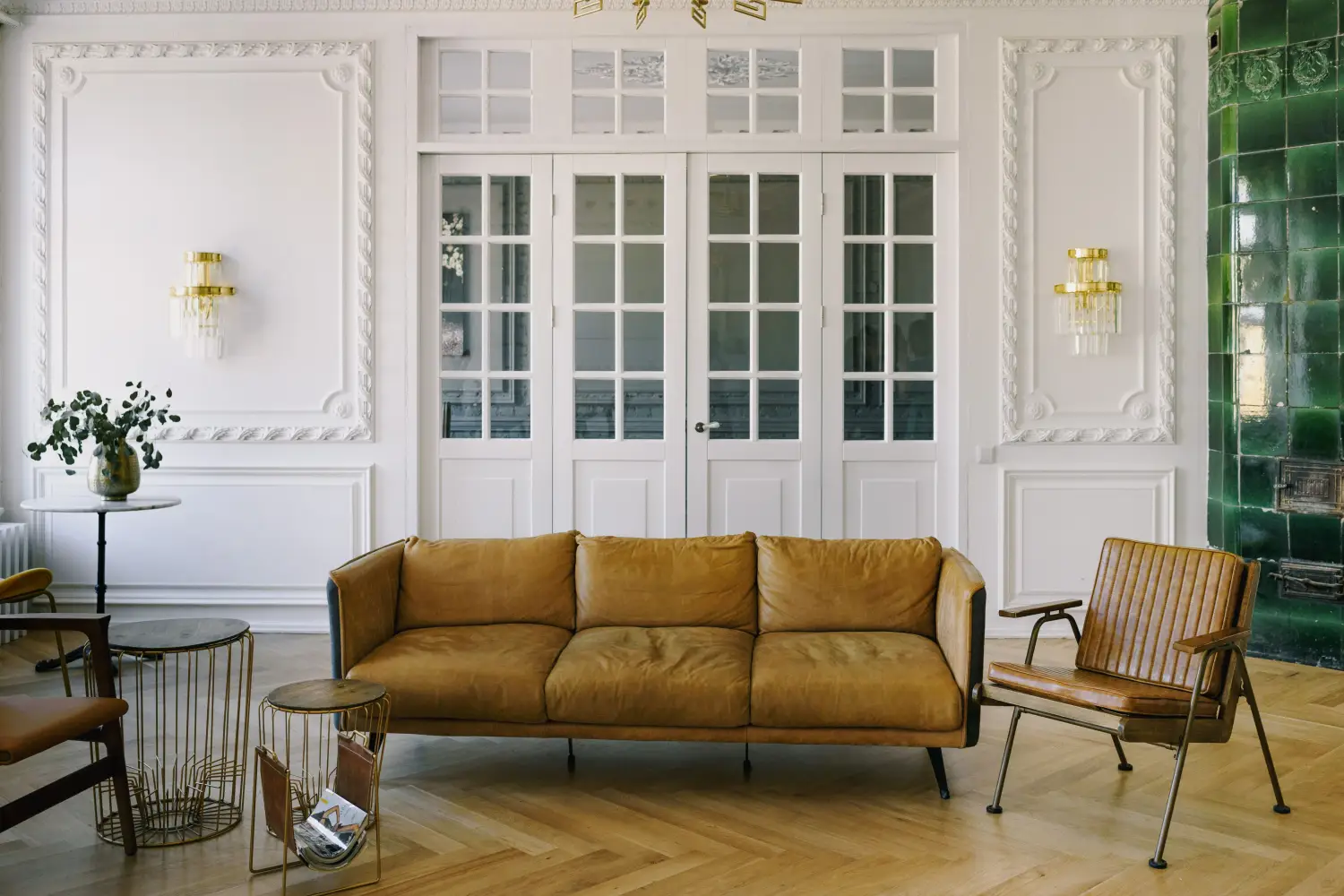
The Decor Rule Pros Break When Mixing Old and New
Pros ignore the 'one antique per room' rule. Learn the focal-point method that makes vintage pieces the star and modern items the frame — so the contrast reads as intentional, not accidental.
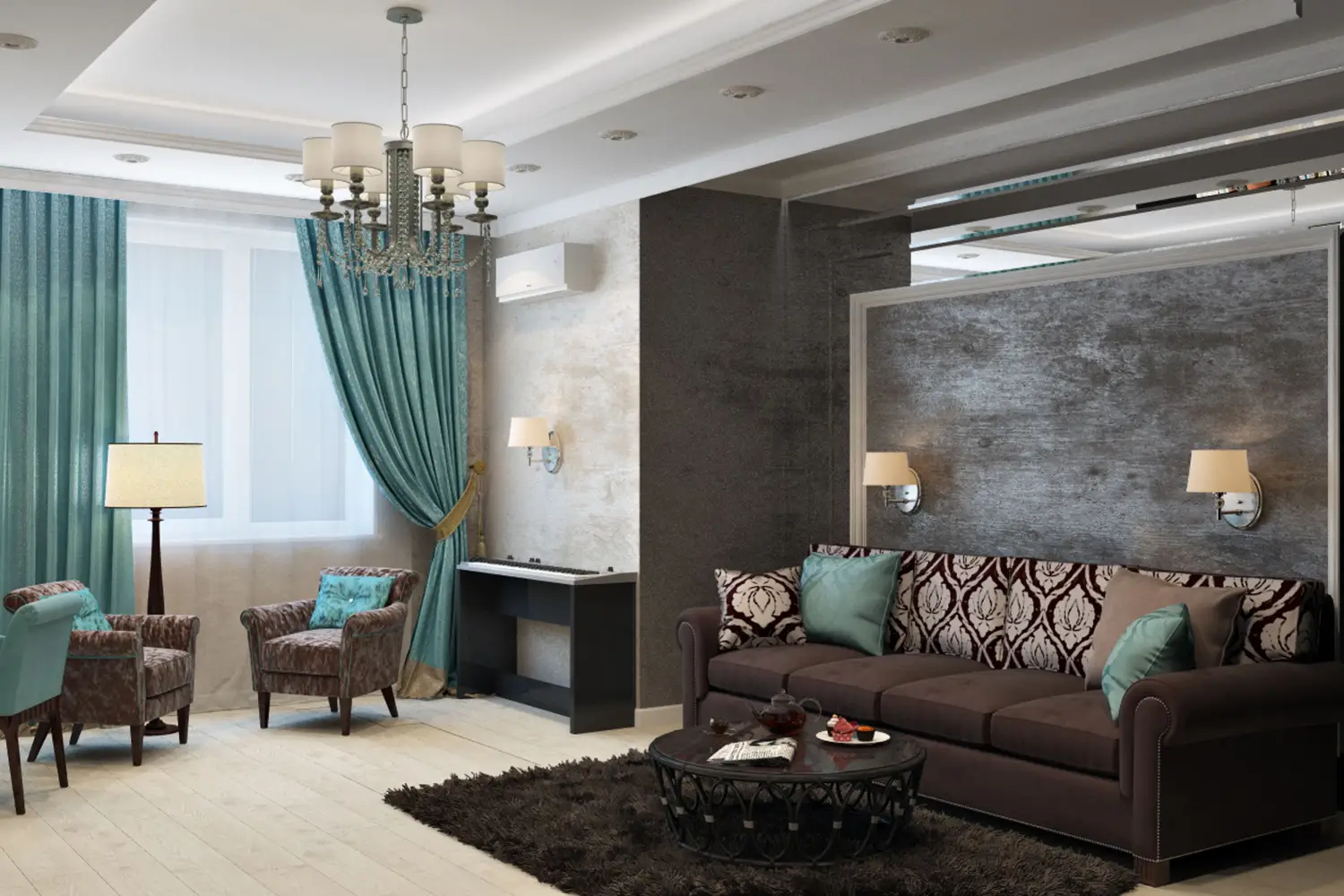
7 Pattern-Mixing Rules for a Cohesive Look in Any Room
Learn the room-specific sequence for pattern mixing: start with a large-scale pattern, add a small-scale coordinate, finish with texture. Adjust order for kitchens, bedrooms, and more. Beginner-friendly rules.

How Interior Designers Mix Colors in a Room (Steal Their System)
Stop guessing with 60-30-10. Learn how to assign square footage to each color so the eye lands where you want it first. A designer’s system you can steal.

Stop Losing Style: How to Mix Wood and Metal Finishes Right
Stop guessing with wood and metal finishes. Use a warm/cool temperature system to pair brass, chrome, oak, and walnut—no design mistakes, just a clear rule.