The Blackout Problem: Why Roman Shades Fail at 5 AM Every Morning
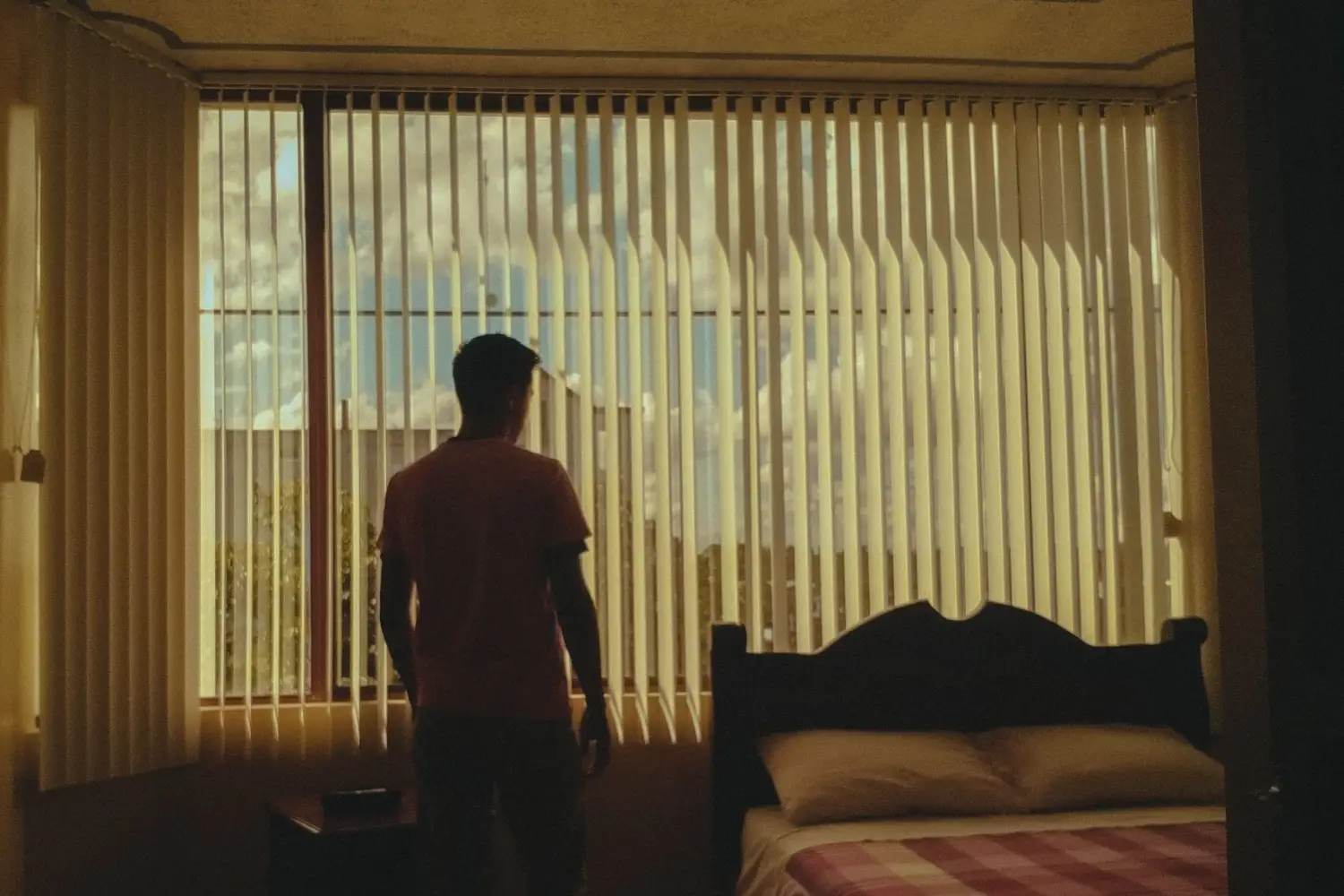
At 5:00 a.m., your blackout Roman shade is doing the one thing it was supposed to stop: letting in light. Not a lot — just a pale halo around the frame, or a diffuse gray glow that wakes you before the alarm. If you spent good money on these shades expecting darkness, here’s the blunt truth: most Roman shades labeled “blackout” fail because they’re missing the one component that actually seals out light — a rigid side track. That’s why cellular blinds with integrated side channels solve the early‑morning leak that Roman shades can’t. This breakdown walks through exactly which light‑leak symptom you’re seeing and what actually fixes it.
Pinpoint Your 5 A.M. Symptom
Which of these scenes greets you at sunrise?
- A frame of light outlines the whole shade — the fabric is dark, but a bright border leaks around all four edges like someone left the door ajar.
- The room turns a foggy gray — no sharp beams, just enough ambient brightness to see your hand clearly, even though the shade is drawn.
- A razor of sunlight cuts across the ceiling — it comes from directly above the shade, where the header meets the glass.
Each one exposes a different design shortfall, and every shortfall traces back to the same root issue: a flat Roman panel can’t create the tight seal that true blackout requires.
When Light Slips Around the Perimeter
This is the signature complaint of a blackout Roman shade — a glow that outlines the whole window. The fabric looks solid, but the edges betray it.
The Shade Has No Side Channels
A Roman shade is fabric that accordions up. Between the shade’s side hems and the window frame, there’s nothing but air — sometimes a half‑inch of it. Light doesn’t need much. Confirm the gap at night: shine a flashlight from behind the shade and watch the halo appear on the wall.
Fix: Add blackout‑grade side tracks — thin U‑shaped rails that mount to the frame and capture the shade’s edges. Standard Roman shades aren’t built to slide into tracks, so you’ll be retrofitting with stick‑on light‑blocking strips or a brush‑pile seal. These compress when the shade drops and knock down the direct beam, but the fabric’s flexibility eventually pushes them aside after a few dozen cycles.
What to expect: The light halo shrinks, but it rarely disappears. A retrofit never mimics the seal of a system designed from the ground up for tracks.
The Pleats Create Hidden Light Paths
Even if you close the side gap, the folds of a Roman shade leave tiny air tunnels between fabric layers. When the shade is down, these pleats bow outward and break the light‑blocking plane. Check this by running a bright penlight behind the shade — you’ll see pinpricks of light along the fold lines.
Fix: Add a rigid backing board or a weighted bottom bar to pull the fabric flat. Switching to a reverse‑roll Roman shade — where the fabric wraps forward so the smooth side faces the window — can help flatten the pleats. These help, but they still don’t seal the edges.
What to expect: The room gets noticeably darker, yet the morning glow around the perimeter persists unless you fix the side‑seal gap first.
When the Fabric Glows Instead of Blocks
A shade that turns the room a milky gray at dawn isn’t blocking light; it’s diffusing it. The material itself is the leak.
The Lining Is Just Room‑Darkening, Not Blackout
Many Roman shades sold as blackout use a standard white poly‑cotton backing. That backing cuts some light but bounces the rest right into the room. True blackout demands a laminated layer — typically a triple‑weave fabric with a foil or acrylic barrier that absorbs photons. Test it: hold a section of the shade up to a bright window. If you see a glowing patch, not total darkness, the fabric fails.
Fix: Swap the lining for a certified blackout interlining. A workroom can sew one in, but this adds bulk and alters the stack. An easier path is to mount a separate blackout roller behind the Roman shade or — the direction most people end up going — replace the whole thing with a foil‑faced cellular blind. That blind’s honeycomb cells trap light in air, so a pinhole never creates a direct beam.
What to expect: A true blackout liner blocks the glow, but the perimeter light leak remains. At 5 a.m., you’ll still see light around the edges unless the side seals are fixed too.
Sunlight Weathered the Coating
Even a good blackout backing degrades under daily UV exposure. After a couple of years, microscopic cracks open in the coating. Check by shining a flashlight behind different sections — you’ll see tiny points of light where the laminate broke down.
Fix: There’s no repair for a degraded coating. A temporary blackout curtain hung over the shade masks the problem, but it’s clumsy and unsightly. The only durable fix is a shade that doesn’t rely on a surface coating — a cellular blind’s multi‑layer structure handles wear without opening a light path.
What to expect: A curtain overlay buys darkness for months, but the sun will eventually find new cracks.
The Overhead Sliver of Sunlight
A sharp beam that cuts across the room from above the shade points directly at the mounting header.
The Mounting Bracket Left a Gap Behind the Header
Inside‑mount Roman shades sit a quarter‑inch or more off the glass because of bracket depth. That gap acts like a skylight the moment the sun hits the top of the window. Confirm by standing directly under the shade at sunrise and looking up — you’ll see a bright line of raw daylight.
Fix: Install a top‑mounted light‑blocking header — a fabric‑wrapped board or aluminum channel that bridges the space. A valance or cornice box can also block the path. Both add bulk and can interfere with the shade’s folding, but they kill the laser beam.
What to expect: The sliver disappears, but ambient light still leaks around the sides.
The Fabric Doesn’t Reach the Very Top of the Window
A small mis‑measurement — sometimes just a quarter‑inch — opens a gap between the top of the fabric stack and the window head. Light pours through. Confirm by checking whether you see daylight above the shade when it’s fully raised.
Fix: Remount the shade higher or attach a decorative top‑fix cover. If the shade was custom cut, a workroom can add a fabric fill strip.
What to expect: The gap closes, yet the side perimeter problem remains unchanged.
Quick Fixes That Cut Down the Light (For a While)
Before you commit to a real solution, a few low‑effort tweaks can reduce the 5 a.m. invasion.
- Apply magnetic or adhesive light‑block strips along the top and side frame. They compress when the shade lowers and knock down direct rays. Adhesive fails within months, and the strips often lift in summer heat.
- Lower the shade past the sill by an inch so the bottom hem presses against the windowsill and seals the lower gap. Works only on flat, level sills.
- Layer a temporary blackout curtain over the Roman shade. It’s ugly and makes daily operation a two‑handed chore, but it delivers immediate darkness.
These are band‑aids. They buy you one good night, maybe a month of uneasy truce. They don’t turn a Roman shade into a reliable blackout system.
Stop the 5 A.M. Wake‑Up for Good
The only way to stop the problem instead of chasing it is to accept that Roman shades — even expensive ones — aren’t engineered for complete light control. The solution that consistently delivers a dark room at dawn is a cellular (honeycomb) blind with integrated side channels.
Why that combo works:
- Honeycomb cells trap light in air pockets. Even if one layer gets a pinhole, the next layer catches it. That’s a fault‑tolerant design that a single fabric panel can’t match.
- Side channels are built into the blind’s track system. The fabric edges slide into rigid U‑shaped rails mounted to the window frame, sealing both sides without relying on adhesive or fabric tension.
- Top‑down/bottom‑up operation lets you adjust light from the top while keeping the bottom sealed — a function Roman shades can’t offer without sacrificing the blackout seal.
Making the switch is straightforward. Measure the width and height of the window opening, order an inside‑mount cellular blind with the side‑track accessory, and snap the U‑channels into the frame before mounting the blind. Most standard windows take under two hours from unboxing to total darkness.
Common Questions About Blackout Shade Failures
Are any Roman shades truly blackout?
A custom workroom can build a Roman shade with a blackout interlining, side‑lock seams, and a top‑seal header that comes close. But fabric flex and installation tolerances almost always leave a light path visible at 5 a.m. Tracked systems are the safer bet for real blackout.
Can I add side channels to my existing Roman shade?
Generally, no. Side channels need the shade’s side hems to be shaped into rigid rails that slide inside the track. Standard Roman shades have soft folded edges, not rails. Aftermarket clip‑on tracks exist, but they’re fragile and rarely hold a lasting seal.
Do blackout curtains work as well as cellular blinds with side channels?
Curtains can darken a window when pulled well past the frame, but they leave gaps at the top and bottom unless you install a ceiling‑mounted track that wraps the sides. Even then, fabric billowing lets light sneak in. Curtains are a good backup layer, not a primary blackout solution.
How much do cellular blackout shades with side channels cost?
A basic cellular shade runs $40–$80. Adding the blackout inner cell and side channels raises the price to roughly $80–$150 for a standard window. Custom sizes or motorized versions cost more. Compared with the money lost on repeated Roman shade fixes, it’s usually the cheaper long‑term route.
When Even a Tracked Shade Fails: Escalation Path
If a new cellular blind with side channels still shows light at dawn, the problem isn’t the shade — it’s the window or the installation.
- Capture exactly where light enters — record a sunrise video to show the angle and intensity.
- Inspect the window seals and frame. Warped wood, sash gaps, or missing weatherstripping can funnel light behind any blind.
- Measure the light gap — width and distance from glass to blind.
- Take photos and measurements to a local window‑treatment fabricator — a shop that builds custom shades, not a big‑box counter. They can assess whether a specialty track, a tensioned cable system, or a different mount style will close the leak.
- As a last resort, apply a blackout film directly to the window glass — this kills light before it ever reaches the shade, but it changes the window’s appearance permanently.

Clara Bennett
After five years of transforming my 1920s bungalow room by room, I’ve refinished floors, hung blinds in bay windows, and spent more time choosing light bulbs than I’d like to admit. I learned paint sheens by painting my kitchen ceiling three times, and I found out the hard way that a rug too small makes a room feel unfinished. I believe every home can be both functional and beautiful, no matter the budget.
Related posts
Roman Shades vs Cellular Blinds: The One Number That Settles It
Multiply sunlight hours by insulation need to find the clear winner. Our no‑nonsense guide calculates the four numbers every homeowner needs before buying blinds.

The Cleaning Mistake That Ruins Roman Shades (And How to Avoid It)
Stop using water on Roman shades—that's the cleaning mistake that ruins the folds and backing. Learn how often to vacuum, how to spot-clean safely, and what to avoid.
R-Values: Roman Shades vs Cellular Blinds — 3 Crucial Numbers
Stop guessing. See exactly how much insulation a cellular blind adds vs a Roman shade on a 3x5 window. R-values from R-1 to R-4.5 compared.
Overpaying? How to Get Cellular Blinds’ Savings Without the Price
Roman shades that ignore energy costs can run $400 more than cellular blinds. See which wins for drafty windows, blackout needs, and short timelines.
Roman Shades Are Outdated? The Cellular Blind Design That’s Sleeker
Roman shades aren't always outdated, but a modern cordless cellular blind hides hardware and looks cleaner. See when to use each and the one style that feels fresh.