Using the Wrong Bathroom Paint Sheen Invites Mold
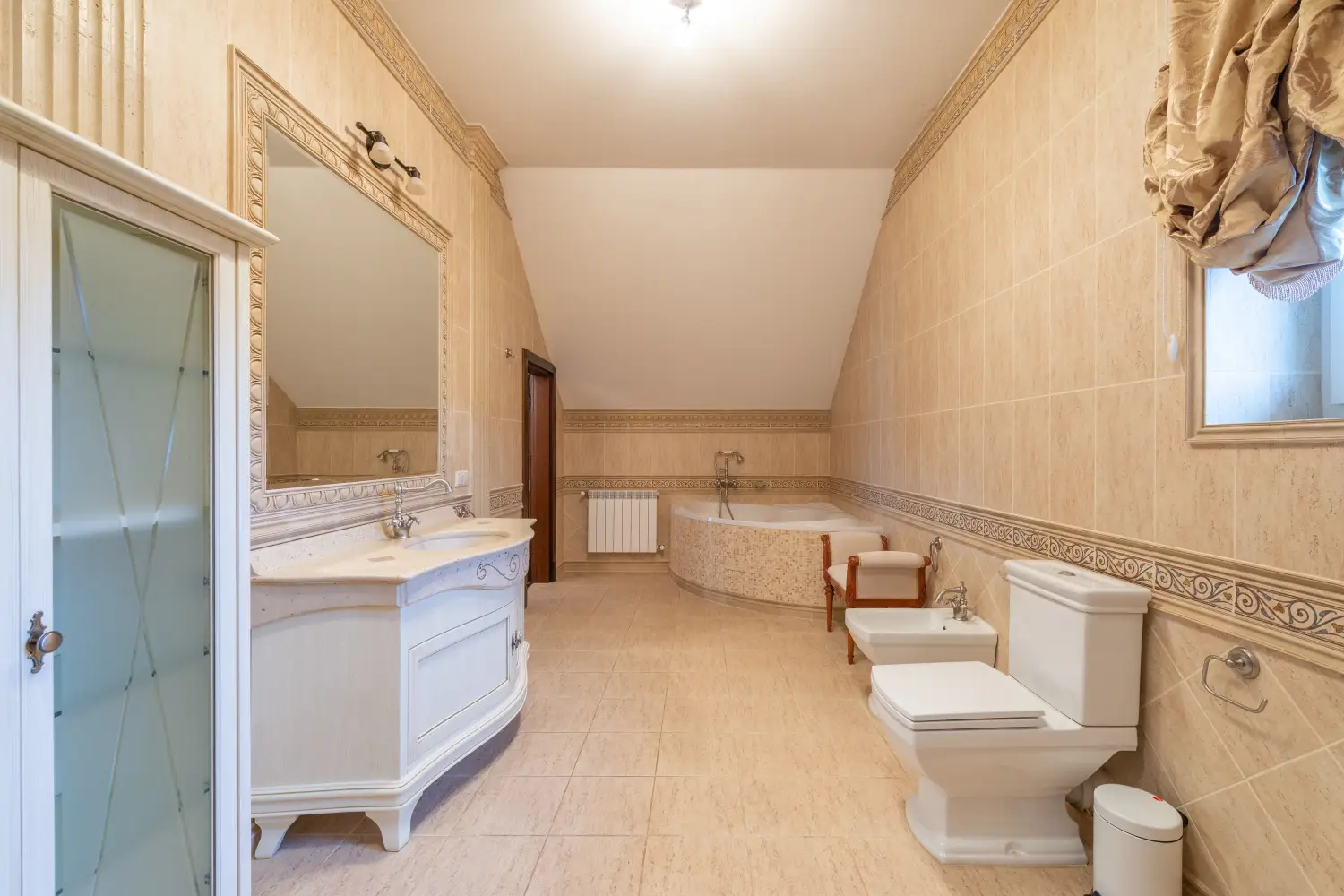
Painting a bathroom with flat or matte finish is an active invitation for mold. Those sheens are porous; moisture sinks in instead of sliding off. Satin and semi-gloss form a tighter film—water beads up, evaporates, and never reaches the drywall where mold feeds. The entire decision comes down to how moisture moves through your specific space. With robust ventilation, flat paint can hold up. Without it, semi-gloss is the only logical selection. The breakdown below sorts the choices by moisture exposure, not by aesthetics first.
The table that follows replaces a blanket recommendation with scenario-specific verdicts tied to how your bathroom actually functions.
Verdict by Moisture Scenario
| Scenario | Winner | One-Line Reason |
|---|---|---|
| Daily steamy showers, typical exhaust fan | Satin | Water beads and evaporates; less sheen than semi-gloss so walls look calmer. |
| No exhaust fan, no window | Semi-gloss | Maximum moisture block; the only safe bet when humid air has nowhere to go. |
| Guest powder room, occasional use, window present | Flat can work | Low humidity plus fast air exchange make permeability acceptable. |
| You want a dead-flat, matte look and have excellent cross-ventilation | Flat (with caution) | Only viable if you can guarantee continuous air movement; still a calculated risk. |
| You’re painting a ceiling directly above a shower | Semi-gloss | Ceilings trap rising steam; semi-gloss withstands near-constant condensation better than satin. |
When the Bathroom Gets Daily Steam
Most bathrooms run under these conditions: morning showers, occasional baths, an exhaust fan that works but isn’t oversized. Satin paint is the correct choice here. Its surface is closed enough that water stays on top and dries before it can penetrate. That bead-up-and-dry cycle is what keeps mold colonies from establishing behind the paint film. Satin also wipes clean with minimal effort, which matters when soap residue builds up weekly.
The trade-offs: satin reveals imperfections. Roller marks, patches, and drywall seams become more visible than with flat, because light hits those surface variations at different angles. The aesthetic sacrifice is a slight shine that some homeowners dislike. And satin isn’t magic—if the exhaust fan is underpowered or rarely used, it will still fail. Moisture can eventually break it down, leading to peeling and subsurface mold.
When the Room Gets Almost No Moisture
The conditions shift entirely for a powder room or guest bath used sparingly and featuring good air exchange—a window or an adequately rated fan. Flat or matte paint becomes rational here. The humidity load never reaches the level where porosity matters; the paint film never saturates, so mold spores lack the hydration they require to grow.
What’s sacrificed: adaptability. Turn that powder room into a daily-use bath, and the flat paint will be a problem within weeks. Scrubbability is also lost. Flat paint abrades when cleaned, so removing a smudge permanently alters the finish. That’s acceptable in a room that rarely needs cleaning, but it’s a permanent limitation.
When There’s No Ventilation at All
A bathroom with no exhaust fan and no window is a containment chamber for moisture. Steam from every shower penetrates surfaces and has no exit path. In this environment, flat or matte paint guarantees mold. Even satin can struggle if the space stays damp for hours after use. The only defensible option is a quality semi-gloss or gloss finish—the hardest, least-permeable films available in standard latex. They withstand repeated condensation without degrading.
The trade-off is visual. Semi-gloss reflects, making every wall flaw stand out. The room can feel clinical and cold. But those are cosmetic concessions against a concrete threat: mold remediation inside a wall cavity is expensive and disruptive.
When You Insist on a Flat Finish Despite the Risks
Top-tier ventilation changes the calculation. A powerful exhaust fan correctly sized for the room’s cubic footage, a large window that stays open during and after showers, or a dehumidifier running through the steam cycle—these measures can keep walls dry enough for flat paint. The key metric is drying time. If walls go from wet to completely dry in twenty minutes or less, mold never gets a foothold.
The compromise: the whole system runs on human diligence. One oversight—a window left closed after a shower, a fan not turned on—can trigger peeling and mildew within weeks. This path demands constant attention. It fails anyone who wants a maintenance-free bathroom.
Where the Differences Between Sheens Don’t Matter
In the moisture analysis, several features of paint sheen are irrelevant. Ignore these:
- Mildewcide claims: Modern interior paints include mildewcides across the sheen range. The sheen’s physical barrier matters far more than the additive chemistry. A matte paint loaded with mildewcide won’t compensate for its open structure.
- Color fidelity at normal distance: Sheen affects surface sheen, not perceived color when you’re standing a few feet away. Switching from flat to satin won’t ruin your chosen paint color.
- Application method: All interior latex paints go on the same way—by roller. No special technique is required for glossier sheens.
- Primer choice: The same bonding primer works under flat, satin, or semi-gloss. No separate product is needed regardless of topcoat sheen.
Focus on ventilation and actual moisture exposure. These details are noise.
Hard Limits That Rule One Option Out Immediately
Some thresholds are absolute. Here’s what instantly disqualifies a choice:
- Flat or matte is ruled out if the bathroom has no exhaust fan and no window. Trapped moisture will overwhelm any permeable finish within months.
- Semi-gloss becomes mandatory if the ceiling sits low and directly above the showerhead. Condensation that drips down needs a completely non-absorbent surfaces, and semi-gloss outperforms satin under direct water contact.
- Any sheen is insufficient if the drywall wasn’t primed with a mold-inhibiting product before painting. The backside will still rot regardless of the topcoat’s performance.
FAQs About Bathroom Paint Sheens and Mold
Can I use flat paint in a bathroom if I use a mold-resistant primer?
The primer adds a protective layer behind the paint, but it can’t stop water from saturating the flat topcoat itself. The paint will eventually peel and trap moisture against the primer. Mold appears in the paint film, not directly on the drywall.
How often should I clean satin bathroom walls to prevent mold?
A wipe-down with a mild detergent every two weeks keeps soap scum and body oils—the nutrients mold needs—from accumulating. The satin base resists moisture already; regular cleaning removes the fuel.
Does semi-gloss paint contain mildewcide, or is the sheen enough?
Most formulations include mildewcide, but the film’s density is the primary defense. The tight surface physically blocks mold from reaching the substrate. The additive is supplementary.
Can I put eggshell paint on bathroom walls?
Eggshell sits between flat and satin. In a bathroom with good ventilation and light usage, it’s workable. Its slight increase in porosity over satin means it will absorb moisture more readily. In a steamy, poorly vented room, avoid it.
Is ceiling paint different from wall paint in terms of mold resistance?
Ceiling paints are designed to prevent spatter and sag, but mold resistance is still about sheen. Use semi-gloss or a designated bathroom ceiling paint; the sheen stops rising steam from soaking into the surface.
The Shortest Advice
For the bathroom that generates steam every day, satin is the safe, practical default. The decision rests on a single question: Can this room dry out thoroughly within twenty minutes of a shower? If the honest answer is no, increase the sheen—never decrease it.

Clara Bennett
After five years of transforming my 1920s bungalow room by room, I’ve refinished floors, hung blinds in bay windows, and spent more time choosing light bulbs than I’d like to admit. I learned paint sheens by painting my kitchen ceiling three times, and I found out the hard way that a rug too small makes a room feel unfinished. I believe every home can be both functional and beautiful, no matter the budget.
Related posts
Finish Your Bathroom Without Regrets: The Pro's Decision Sequence
Follow the exact sequence of bathroom finish decisions—from layout and plumbing to grout and hardware—to avoid repainting, re-tiling, and renovation regret.
How Choosing the Wrong Bathroom Tile Invites a Slip Hazard
The wrong bathroom tile stays wet and slick. See how porcelain and ceramic compare on slip resistance, water absorption, and cold-floor comfort before you make a costly mistake.
Bathroom Lighting: 3 Zones That Stop Shadows and Glare
Stop bathroom shadows and glare. Learn to layer ceiling, mirror, and shower lights for precise makeup, safe showering, and a relaxing atmosphere.

Why the 5x8 Bathroom Floor Plan Works—and How to Tweak It
The 5x8 bathroom layout relies on two clearance rules. Learn what pros adjust when square footage changes, from double vanities to walk-in showers, and what instantly rules a plan out.
The Rule Pros Use to Mix Bathroom Hardware Finishes
Pros don't match finishes—they match shapes. Learn why faucet silhouette must coordinate with cabinet pulls before you layer a second metal finish.