Should Your Sofa's Front Legs Be on the Rug?
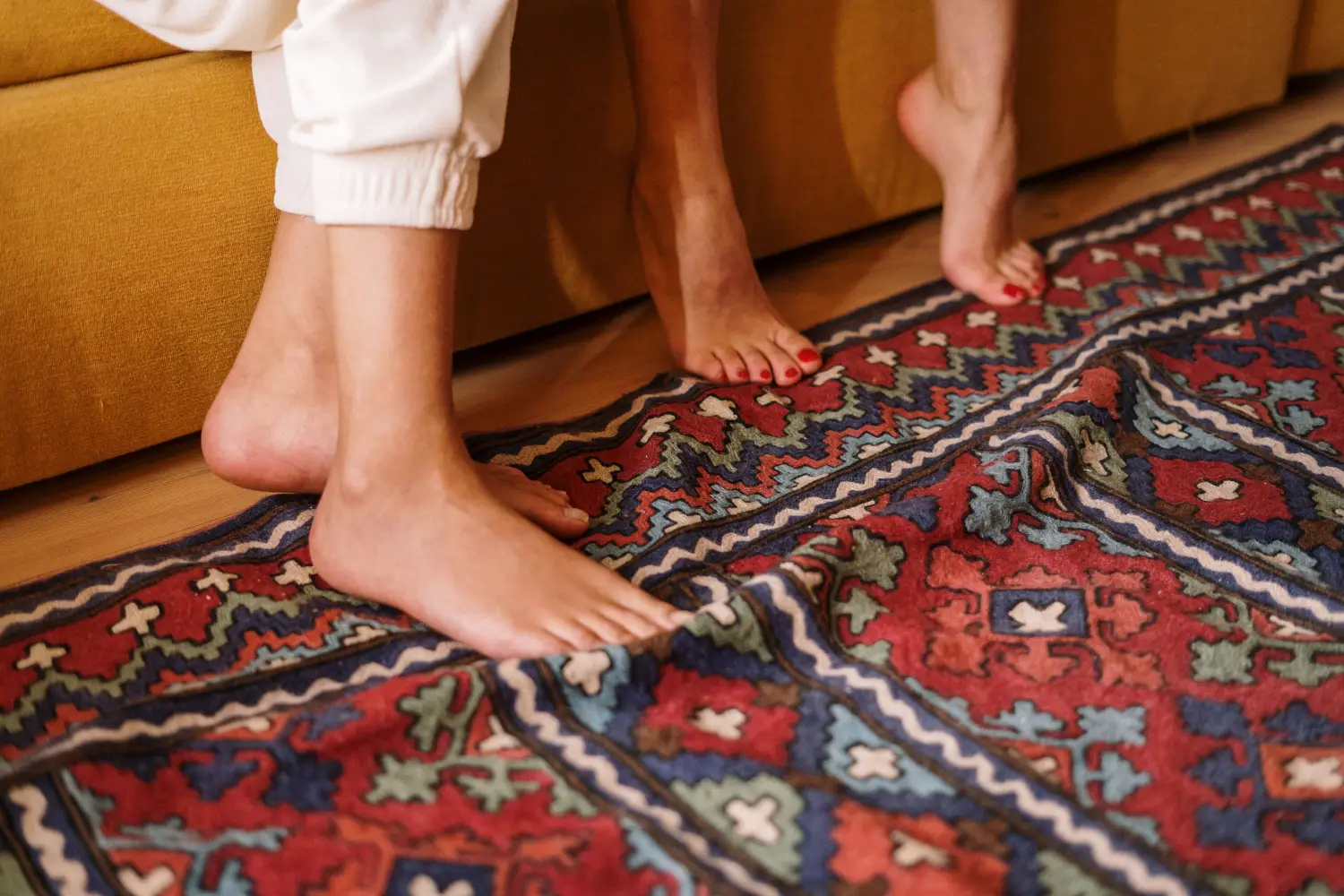
Should your sofa’s front legs be on the rug? For most living rooms, the answer is a confident yes — keep the front legs on the rug, extending it at least 8 inches past each arm and 12 inches beyond the front edge. That one move anchors the seating without suffocating the room, while all‑legs‑on shines for open‑plan zones and a floating rug rescues oddly shaped or tiny spaces.
Where Your Room Stands: Three Quick Paths
- A standard three‑seater in a rectangular living room. Start with the front‑legs‑on rule and its sizing formula — it’s the straightforward, breathable solution.
- An open floor plan that needs a distinct seating island. Begin with the all‑legs‑on placement, then check whether the footprint still lets people move freely around it.
- A small or unusually shaped room where typical advice feels wrong. Let the floating‑rug approach and a carefully sized textile undo the awkwardness.
What to Measure Before You Choose a Placement
Grab a tape measure and pin down three numbers: the sofa’s width from arm to arm, the clear floor width the rug can claim, and the clear floor depth directly in front of the sofa. Jot them down. Next, notice where walkways cross the room; aim for at least 18 inches of bare floor between the rug’s edge and a wall or a piece that blocks movement. Those three dimensions — sofa width, usable width, usable depth — are the hard facts every placement rule relies on.
The Front‑Legs‑On Formula That Solves Most Living Rooms
The front‑legs‑on setup earns its popularity honestly: it carves out a seating area without swallowing the space whole. Here’s the math.
Rug width = sofa width (arm to arm) + 16 to 24 inches. That delivers 8 to 12 inches of rug beyond each arm.
Rug depth = from the front feet forward, add 12 to 18 inches. If your sofa is about 3 feet deep, you’ll end up with a rug 5 to 7 feet deep. The back legs stay off, so roughly the front two‑thirds of the sofa sit on the fabric.
This placement feels right in rooms at least 12 by 15 feet where you want things connected but not heavy. The rug frames the coffee table and the front of the sofa; the bare floor behind keeps the whole room feeling light and walkable.
You know the size is correct when:
- The rug’s side and front edges leave a clear 18–24 inches of bare floor — room to pass without stepping off.
- Your coffee table rests entirely on the rug with enough leftover to pull a chair back.
- The sofa width plus those 16–24 inches still comfortably fits within the seating zone’s floor width.
When All Legs On Is the Better Choice
Some rooms call for a more defined footprint. Putting all four legs on the rug builds a “room within a room,” perfect for open‑plan living or when you need to group a sofa, side chairs, and a large coffee table.
Rug width = sofa width + 24 to 30 inches (12–15 inches past each side).
Rug depth = sofa depth + 24 to 36 inches, so the rug extends behind the back legs and offers generous front runway. That extra border gathers surrounding pieces into one cohesive zone.
This path needs more square footage. It works when the rug still lets at least 12 inches of bare floor breathe on the sides and when you can circle the entire arrangement without squeezing.
You’re ready to commit when the rug’s edges frame the whole seating group and nobody has to step on it just to enter the room.
The Floating‑Rug Option for Tricky Spaces
Sometimes the best choice is to keep every leg off the rug. A floating rug sits solely under the coffee table and the front of adjacent chairs — it touches only the floor, not the furniture. Small rooms where even a modest rug overwhelms, or very large rooms that need an oversized statement piece to anchor the whole interior, both benefit from this approach.
Size by the grouping, not the sofa. Make the rug at least as long as the sofa width plus any side chairs, and deep enough to hold the coffee table with 18 inches of bare rug in front. No legs touch it; the rug becomes a visual island that pulls the conversation area together.
This placement clicks when the room feels balanced with every leg on the bare floor, the rug doesn’t create a tripping hazard, and the arrangement still reads as one coherent zone.
You’ll Know the Rug Fits When…
- Front‑legs‑on: Rug edges stay clear of walkways, the coffee table lives comfortably on it, and the sofa‑plus‑extension width doesn’t squeeze the floor.
- All‑legs‑on: The rug’s generous border frames the seating group and people can move around it without brushing furniture.
- Floating: All furniture legs sit on the bare floor, and the rug is scaled to the conversation group, not the room’s outer walls.
What Can Wait Until After You’ve Picked a Size
- Rug pad thickness. Worry about this once the placement and dimensions are locked; an over‑grippy pad is an easy swap later.
- Pattern and color. Proportion rules first — when the footprint looks right, style choices fall into place with much less guesswork.
- Slipping concerns. If front legs sit on the rug, a non‑slip pad matters, but that’s a fix for after the sizing is settled, not a reason to stall now.
- Heirloom or delicate rugs. Placement rules don’t shift, but once you know exactly where furniture legs land, extra protection can be added. Save that step for the final round.
Common Questions When Nailing Down Sofa‑Rug Placement
What size rug do I need if my sofa has a chaise?
Measure the full width including the chaise, and apply the front‑legs‑on width formula (sofa width + 16–24 inches). Make sure the rug extends far enough on all sides so the chaise doesn’t hang off in an awkward way.
Can I put a rug under only part of the sofa?
Yes — that is exactly the front‑legs‑on method detailed above. It’s the most popular approach for a reason: it fits most living rooms without making them feel boxed in.
Should the rug be centered under the coffee table or the sofa?
Center the rug on the seating arrangement as a whole. Usually that means aligning it with the sofa’s width and where the coffee table will sit, not forcing it to the exact middle of the room.
What if my living room has an L‑shaped sofa?
Treat the entire L‑shape as one wide unit. Apply whichever leg rule fits your room: front legs on (both sections’ front legs can sit on the rug) or all legs on if the square footage allows. A rug that follows the L‑shape or a large rectangle tends to work best.
How far should a rug extend past a sofa in an open concept?
When all legs are on the rug, extend it 12–15 inches past each side and 24–30 inches in front. That generous border makes the zone feel intentionally carved out rather than randomly dropped.
The Moment Your Layout Clicks
When the rug clears the walkways, anchors the seating, and leaves the whole room feeling open yet connected, you’ve arrived. Begin with two numbers — your sofa’s width and the room’s usable floor area — and let them point you to the right placement.

Clara Bennett
After five years of transforming my 1920s bungalow room by room, I’ve refinished floors, hung blinds in bay windows, and spent more time choosing light bulbs than I’d like to admit. I learned paint sheens by painting my kitchen ceiling three times, and I found out the hard way that a rug too small makes a room feel unfinished. I believe every home can be both functional and beautiful, no matter the budget.
Related posts
The Rug Sizing Rule Designers Use in Every Room
Stop guessing 5x8 vs 8x10. Use the designer framework: size your rug to your furniture grouping, not the room. Learn how to map, calculate, and test for a perfectly anchored room.
Dining Room Rug Size: Add 30 Inches to Table
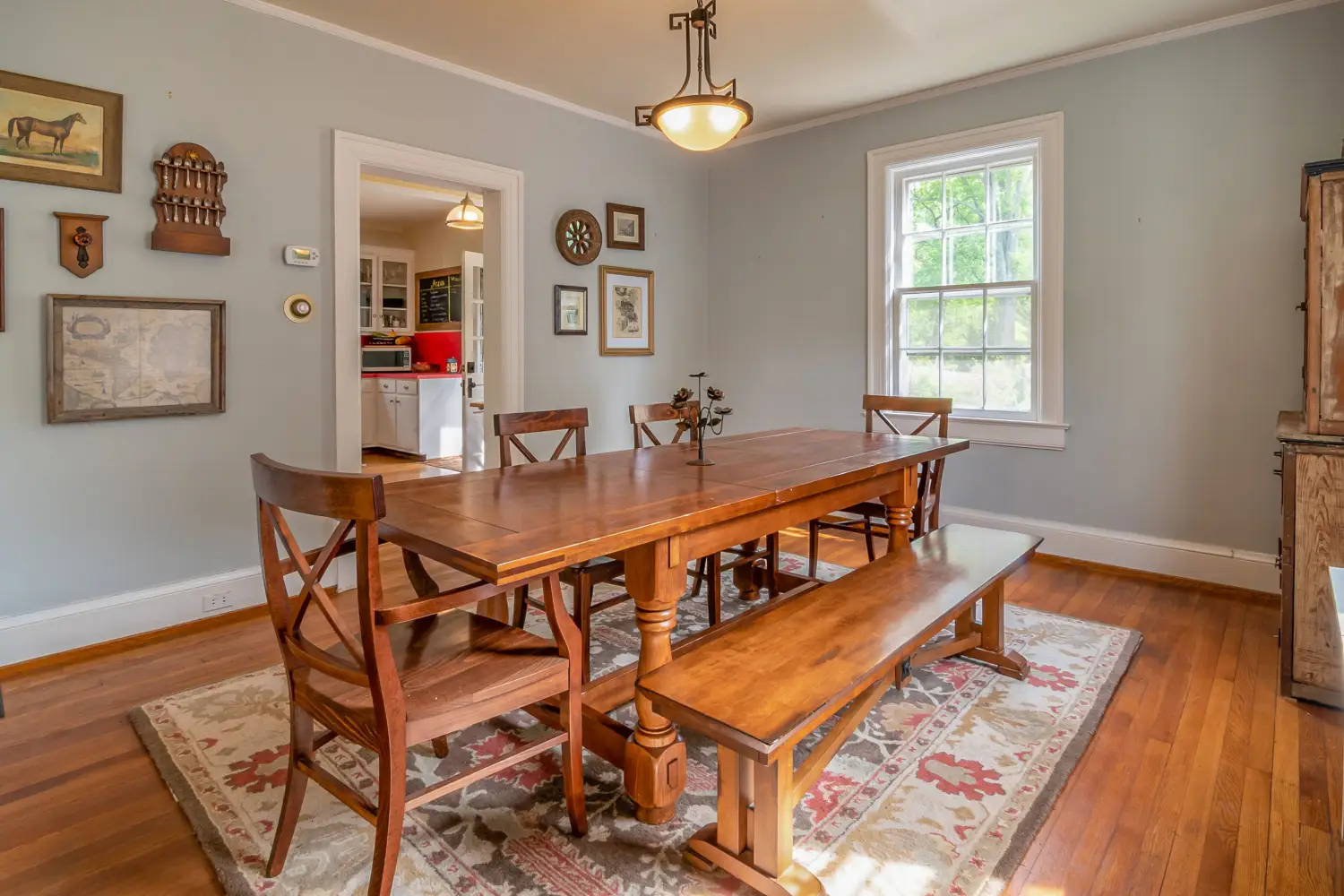
Learn the exact 24-30 inch clearance rule for dining rugs. Use this simple math to prevent chair legs from catching and get the right size for any table shape.
4 Rug Mistakes That Make Your Room Feel Tiny
A too-small or floating rug shrinks any room. See the four worst rug placement errors ranked by how much space they steal, with before/after fixes you can try today.
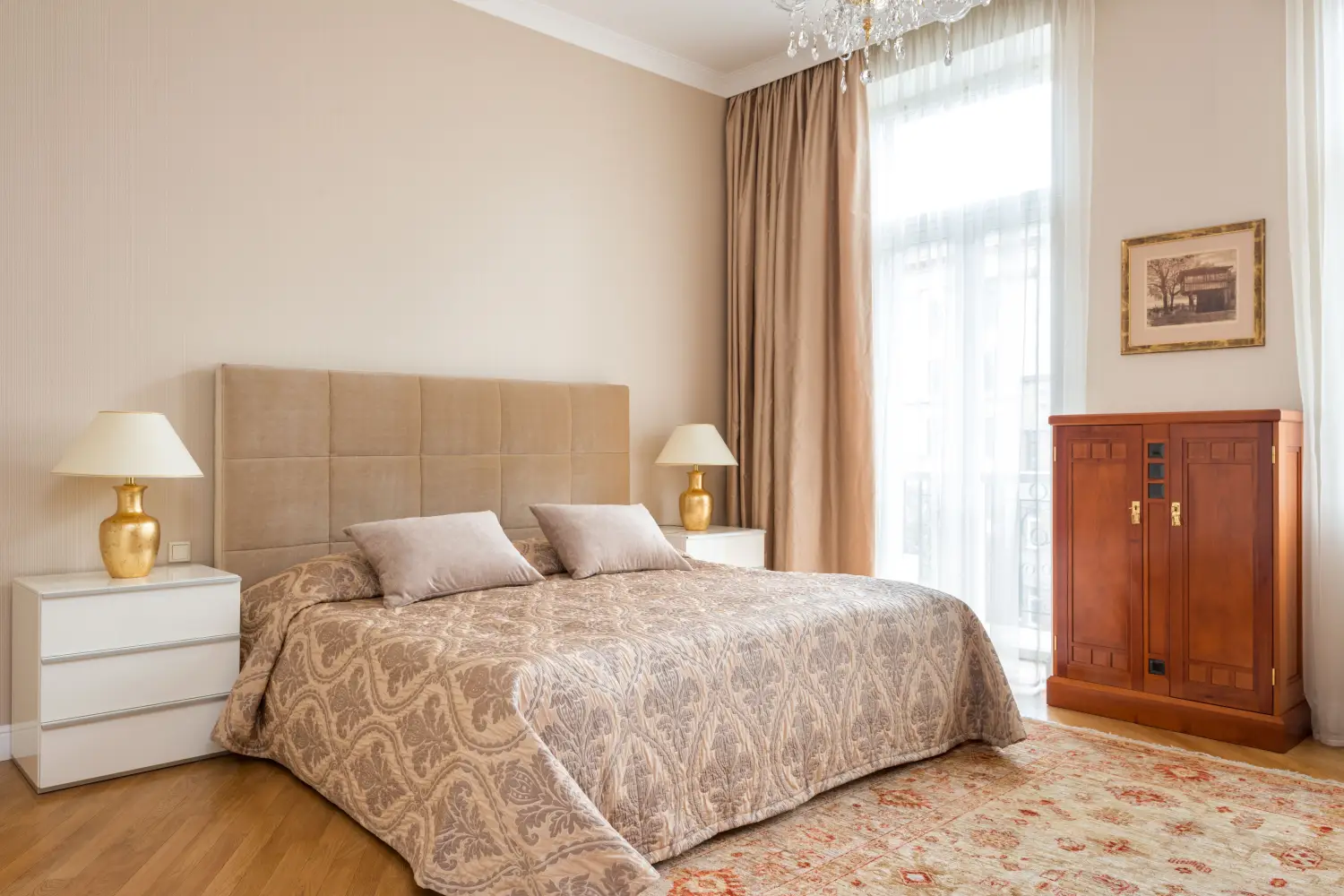
Rug Sizing for a King Bed: Under or Beside?
Compare three rug placement strategies for a king bed—full coverage, partial underlay, and side runners—plus sizing formulas and a runner-under-bench check. Get the right fit.