4 Rug Mistakes That Make Your Room Feel Tiny
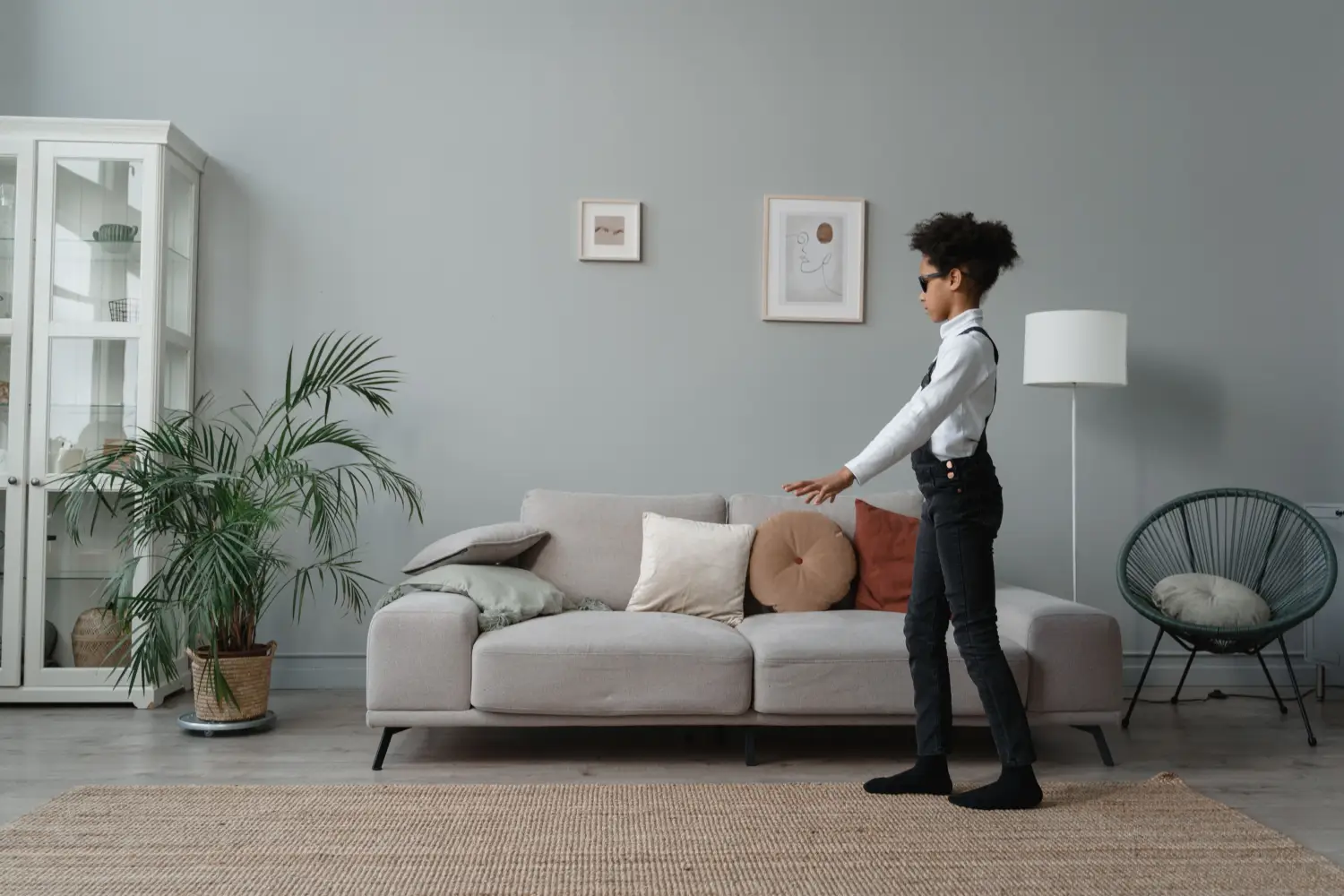
A room feels cramped the moment a rug stops being a floor and starts acting like a border around a furniture island. Too small, no furniture touching it, turned the wrong way, or sitting in the footpath—those four mistakes pull the walls inward, and you can feel it before you can name it.
The ranking below isn’t theory. It’s based on what a floor plan does to the eye when you first walk in. Each mistake gets compared before and after, same room, different rug behavior.
What Decides the Order of Damage
Three things control the ranking: how much the mistake visually shrinks the room’s footprint, how often it shows up across different layouts, and how much time or money it takes to undo. The worst mistake collapses a room instantly. The last one just nags at a layout that’s already close to right.
The Mistakes, Ranked from Most to Least Destructive
Mistake #1: A Rug That’s Too Small for the Whole Room
This one shrinks everything. A rug that stops well short of the walls creates a little furniture raft in the center, surrounded by a moat of bare floor. Every seat crowds toward the middle, and the room loses its outer edges. It’s the single fastest way to make a modest living space feel like a hallway.
It lands at #1 because you can’t rearrange your way out of it. No amount of decor will stretch that rug. The gap between this and the next mistake is a hard line: a rug that’s the right size but floating can be fixed in ten minutes. A rug that’s too small has to go.
Before: a 5'×8' rug under a sofa leaves two feet of bare floor on every side. The room is timid, unfinished.
After: an 8'×10' rug catches the front legs of all seating. The group breathes, and the room feels like a room again.
Mistake #2: A Rug That Sits Alone in the Center
A rug placed dead center with zero furniture legs touching it acts like a misplaced bath mat. Instead of grounding the seating zone, it creates a second island that competes with the actual furniture grouping. The room fights itself.
Second place because the fix costs nothing and takes force, not cash—just drag the furniture onto it—but the damage while it lasts is serious. Even a generously sized rug will make a room look stingy if nothing anchors it. It never overtakes #1 because a floating rug of the correct size can be saved; a too-small rug can’t.
Before: an 8'×10' rug sits beneath a coffee table but every sofa leg rests on bare floor. Two separate zones exist.
After: push the seating so front legs hit the rug. The conversation area unifies, and the rug becomes the floor it was meant to be.
Mistake #3: A Rug Running the Wrong Direction
Turn a rectangular rug 90 degrees from the room’s long axis, and you cut the space in half visually. Even the right square footage will shorten the room if the rug’s long edge crosses the natural flow of the floor.
Behind #2 because orientation errors can sometimes hide under furniture, and flipping a rug is easier than replacing one. But in a dining room where all chairs must stay on the rug, a sideways runner pinches the table area and pulls attention toward the short walls.
Before: a 6'×9' rug runs crosswise under a dining table in a narrow room. The table overhangs, and one walkway disappears.
After: rotate the rug to run with the room’s length. The table sits fully on the rug, and the room reads as one continuous rectangle again.
Mistake #4: A Rug That Blocks the Natural Walkway
Place a rug so a corner or edge sits directly in a path between doorways or around a kitchen island, and you slice the room into tight lanes. The space feels small because movement is uncomfortable, and that friction reinforces the cramped feeling every time someone steps on the border.
This ranks last because it’s often a byproduct of the first three mistakes. A rug that fits well and sits under furniture rarely blocks traffic. But it still belongs on the list because ignoring footpaths turns a solid layout into a daily obstacle course, and it’s the easiest mistake to miss during a fast design decision.
Before: a runner placed between a couch and a media console blocks access to a hallway. People squeeze around it.
After: shift the runner two feet closer to the console. The pathway opens, the room feels larger because walking is smooth.
When the Real Trouble Stops and the Fine-Tuning Starts
The sharpest drop in impact is between mistakes #2 and #3. The first two—wrong size or no anchor—break the basic spatial logic. Once those are fixed, orientation and walkway tweaks sharpen a layout that already works. If you only have one hour, ignore #3 and #4 until #1 and #2 are done.
Which Problem to Hit First, Depending on Your Setup
Tight budget, one afternoon. Attack Mistake #2. Moving furniture onto the rug is free and instantly makes the seating area feel bigger. It’s the highest-return move you can make without spending a cent.
Just moved in, nothing is placed yet. Solve Mistake #1 before you buy a single stick of furniture. The rug sets the floor’s boundary; get the size right first, and everything else lands in a room that already feels open.
Heavy furniture you can’t easily shift. Target Mistake #3. Rotating a rug under a dining table or sofa takes some muscle but rescues a layout that looks accidentally arranged, and it costs nothing.
Open-plan living space. Go after Mistake #4. In a wall-free zone, a rug blocking movement makes the whole area feel pinched even if the square footage is generous. Clear the path and the openness returns.
FAQ
How can I tell if my rug is too small?
Look at the room from the doorway. If you see a wide ring of bare floor around the furniture group, the rug is too small. A straightforward test: at least the front legs of sofas and chairs should land on the rug.
Can an oversized rug make a room feel tiny?
Only when it runs almost wall-to-wall with no floor showing, which can feel enclosing in a bedroom. In a living room, leaving a 6-inch border of exposed floor around the rug’s edge usually keeps the space breathing.
What if my furniture can’t all fit on the rug?
Anchor the main conversation circle—coffee table and front legs of seating. Side tables and lamps can live off the rug without breaking the visual grouping.
The One Mistake That Undoes a Room Fastest
Mistake #1, the too-small rug, is the problem to lose sleep over. If you’re buying new, pick the right size first. The only time to ignore that rule is when you’re stuck with a small rug in a rental. Then your entire focus goes to Mistake #2: get every piece of furniture you can onto that rug, because a small anchored rug does far less damage than a small rug floating alone.

Clara Bennett
After five years of transforming my 1920s bungalow room by room, I’ve refinished floors, hung blinds in bay windows, and spent more time choosing light bulbs than I’d like to admit. I learned paint sheens by painting my kitchen ceiling three times, and I found out the hard way that a rug too small makes a room feel unfinished. I believe every home can be both functional and beautiful, no matter the budget.
Related posts
The Rug Sizing Rule Designers Use in Every Room
Stop guessing 5x8 vs 8x10. Use the designer framework: size your rug to your furniture grouping, not the room. Learn how to map, calculate, and test for a perfectly anchored room.
Dining Room Rug Size: Add 30 Inches to Table
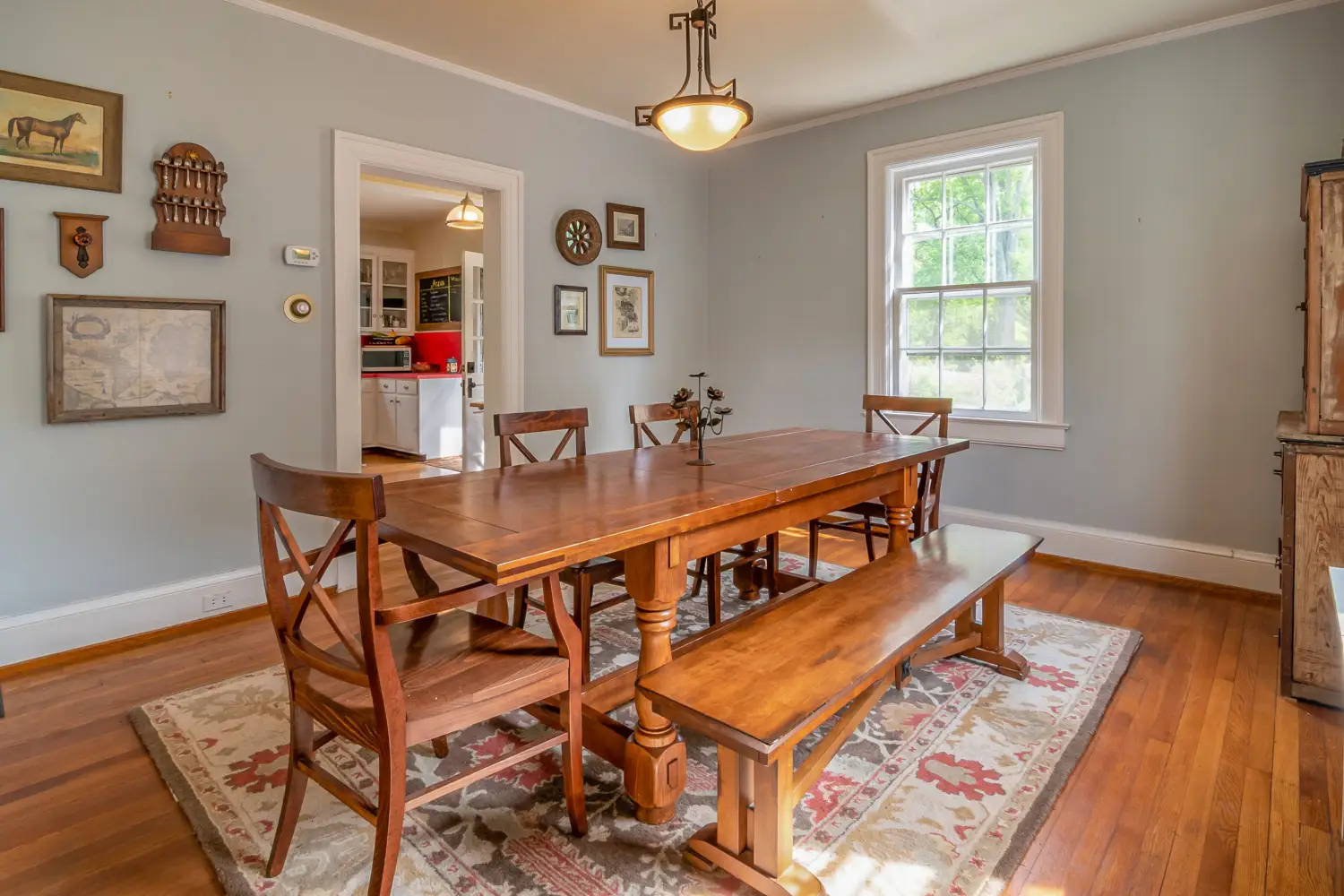
Learn the exact 24-30 inch clearance rule for dining rugs. Use this simple math to prevent chair legs from catching and get the right size for any table shape.
Should Your Sofa's Front Legs Be on the Rug?
Yes, in most rooms the sofa's front legs belong on the rug. Get the exact width and depth formulas for front‑legs‑on, all‑legs‑on, and floating placements.
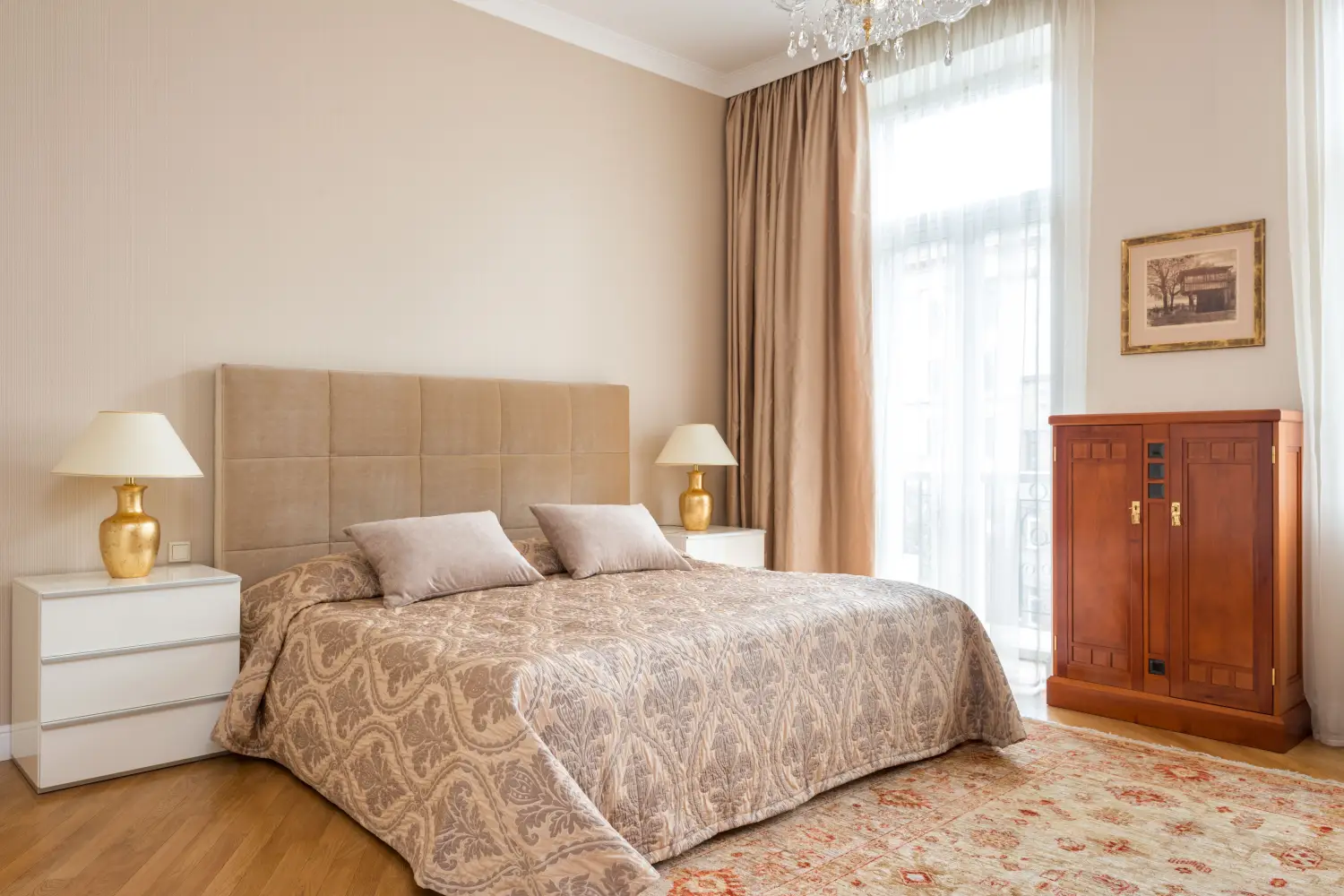
Rug Sizing for a King Bed: Under or Beside?
Compare three rug placement strategies for a king bed—full coverage, partial underlay, and side runners—plus sizing formulas and a runner-under-bench check. Get the right fit.