Pros Never Use Eggshell on Ceilings Without This Check
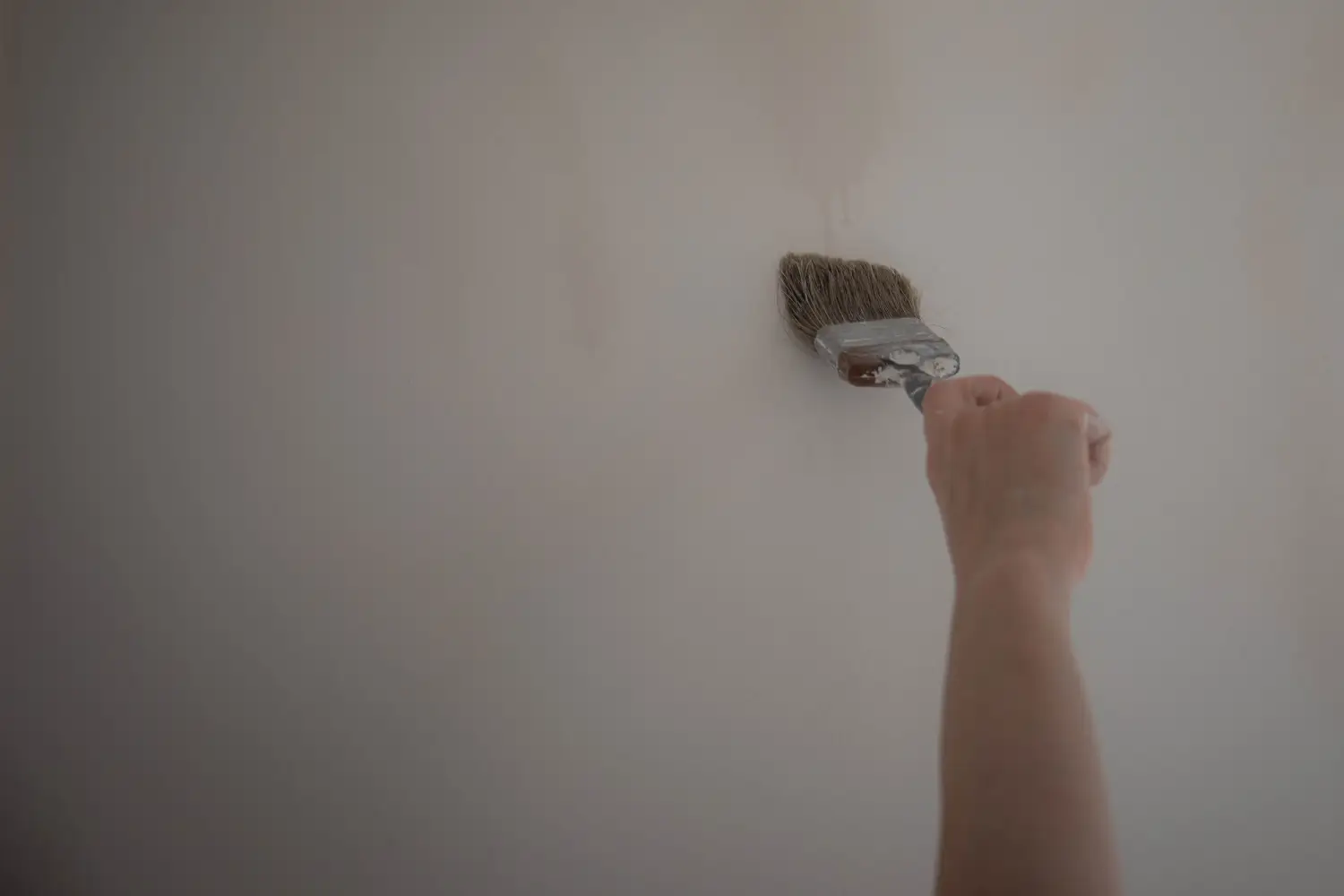
Shine a bright work light parallel to the ceiling before you even crack the lid. If drywall ridges, tape lines, or skim-coat waves throw shadows under that light, eggshell will turn every one of them into a permanent feature. That’s the check pros never skip, and it’s the only thing that separates a crisp, low-luster ceiling from a wavy mess that pulls every eye upward for the wrong reason.
Flat owns ceilings for a reason: it absorbs light instead of reflecting it, so it hides almost anything. Eggshell offers a washable surface and a subtle glow that can actually make a room feel airier — but only if the ceiling underneath is nearly flawless. The whole point here is to map out exactly when eggshell makes sense, and exactly when it risks turning every drywall seam into a visual crater, so you don’t have to learn that the hard way.
Verdict by Ceiling Condition
| Scenario | Winner | One-Line Reason |
|---|---|---|
| You mainly need to hide drywall seams, skimming flaws, or texture mismatches | Flat | Zero sheen scatters light; imperfections stay invisible. |
| You mainly need a ceiling that survives kitchen grease, bathroom steam, or occasional scrubbing | Eggshell | The tighter resin film resists moisture and wipes clean without burnishing. |
| You mainly want a ceiling with a subtle glow, and the surface is already a smooth Level-5 finish | Eggshell | On an immaculate plane, eggshell adds depth without amplifying defects — there’s nothing to amplify. |
When Hiding Imperfections Is the Priority
Flat wins this one outright. The physics is straightforward: a matte surface takes incoming light and throws it every direction, so the eye never picks up the sharp contrast that defines a ridge or a tape hump. Even a decent Level-3 drywall job leaves tool marks that flat can swallow. If the ceiling has been patched after a leak, still shows faint tape lines, or carries a texture that’s been partially skimmed, flat is the only sheen that won’t make those spots shout for attention.
What you lose with flat is any real ability to clean it. A scuff from moving furniture, a splash from a kid’s toy, a water stain from a slow roof leak — none of those can be wiped without leaving a darker, burnished patch. In bedrooms, living rooms, hallways, that loss costs nothing because the ceiling rarely gets dirty. In a kitchen or bath, it means you’re repainting the whole ceiling the moment a stain locks in.
When Washability and Moisture Resistance Drive the Choice
Eggshell takes this scenario. The sheen comes from a resin film that’s less porous than flat, so grease that drifts up from a stovetop and condenses overhead sits on the surface long enough to be wiped with a damp cloth instead of soaking straight in. The same applies to the light mildew spotting that forms around bathroom exhaust fans when steam settles overnight. An eggshell ceiling won’t take aggressive scrubbing, but it handles the gentle, frequent cleanup that would destroy flat.
The catch is that the very property that makes eggshell cleanable — a hint of gloss — also acts as a spotlight on subsurface flaws. The moment a light hits that ceiling at an angle, any ridge, hollow, or patch mismatch announces itself. The inspection step isn’t a nice-to-have; it’s the gatekeeper. Skip it, and you trade a stain-proof surface for a ceiling that looks permanently poorly finished.
When a Near-Perfect Ceiling Deserves a Subtle Sheen
If the ceiling was drywalled fresh and finished to a Level-5 smooth plane — skim-coated from edge to edge and sanded dead flat — eggshell adds something flat can’t: a faint lift that makes the room read as more open and deliberate. The light doesn’t bounce in a way that exposes texture; it just gives the ceiling plane a gentle presence, especially useful in small powder rooms or dining areas starved for natural light.
Here there’s no real downside, provided “near-perfect” is actually true. That condition is rarer than most people think. Many ceilings carry a light orange-peel texture, even if it’s hard to see head-on. Overestimating the surface’s flatness leads straight to an expensive do-over: skim coat and repaint.
Where the Difference Is Too Small to Matter
Some details get debated endlessly but make almost no difference on an overhead surface. Color accuracy between flat and eggshell from the same product line is virtually invisible from eight feet below. Any tiny chroma shift disappears in the low-angle viewing context of a ceiling. Impact durability is another non-issue — neither sheen will survive a ladder gouge better than the other.
Adhesion on a clean, primed surface is equally reliable for both sheens with modern water-based acrylics. The hardness difference people feel under a fingernail doesn’t translate into meaningful longevity on a ceiling; that matters more on trim and doors. Stop weighing these things — they won’t influence the outcome.
The Non-Negotiable Deal-Breakers
Some room conditions kill one sheen immediately, no matter what else you need.
Flat becomes a problem in any ceiling that will face regular steam, grease, or spot-cleaning. A bathroom without a properly working exhaust fan eventually stains flat with condensation rings. A kitchen where frying happens daily deposits a film that can’t be removed from flat without pulling the paint film off. In those spaces, flat guarantees a future repaint.
Eggshell becomes a problem on any ceiling that shows visible joint lines, patched areas, or uneven texture when checked under raking light. Primer won’t fix it; careful rolling won’t fix it. The only prep that works is a full smooth finish — which means new drywall work or a complete skim coat. If that’s not happening, eggshell stays off the ceiling.
Common Questions When Deciding on Ceiling Sheen
Can I use eggshell on a ceiling that has knockdown texture?
No. Knockdown texture is, by design, an irregular surface of peaks and valleys. Even a low-angle eggshell sheen catches the peaks and creates a patchy, uneven look that makes the texture read as a defect. Textured ceilings call for flat.
What if I prep the ceiling with a high-build primer first?
A high-build primer fills minor pinholes and surface porosity, but it won’t level drywall ridges or tape lines. It improves adhesion and uniformity without altering the macro flatness eggshell demands. The raking light test after priming still decides the result.
Is there an in-between sheen that solves both problems?
Matte or “scrubbable flat” paints claim washability without sheen, and they outperform standard flat. On a ceiling, though, the awkward scrubbing angle limits even pressure, so streaks often remain. For serious moisture or grease, eggshell still cleans more reliably. For heavy texture, even a scrubbable flat won’t hide what a bright light exposes.
The Two-Sentence Decision Rule
For the most common scenario — a ceiling that needs to look clean and uniform above all else — flat remains the straightforward winner. Before grabbing eggshell, ask whether this ceiling looks flawless under a work light swept across it, or whether it shows lines, patches, and waves; if it’s anything short of dead smooth, flat is the answer.

Clara Bennett
After five years of transforming my 1920s bungalow room by room, I’ve refinished floors, hung blinds in bay windows, and spent more time choosing light bulbs than I’d like to admit. I learned paint sheens by painting my kitchen ceiling three times, and I found out the hard way that a rug too small makes a room feel unfinished. I believe every home can be both functional and beautiful, no matter the budget.
Related posts
Flat vs Eggshell: Why 'Always Eggshell' Is a Mistake
Eggshell isn’t always the upgrade. See which rooms actually work better with flat paint — and why wall condition, light, and cleaning needs decide the winner.

Why Families with Kids Choose Eggshell Over Flat Paint
Families with kids need paint that can take a beating. See why eggshell wins for scuffs, moisture, and cleaning — and when flat paint won't hold up.

The 3-Minute Window Test for Flat vs Eggshell Sheen
Hold a sample board to your window and see exactly how flat and eggshell look in your room’s light, not the store’s. A 3-minute DIY test that ends the guesswork.

Flat Paint Can Hide Wall Flaws: A Room-by-Room Guide
Flat paint hides dents, seams, and uneven texture when matched to the right room. Learn to choose sheen based on wall condition and traffic, not trends.
One Trick Painters Use When Mixing Flat and Eggshell
Turn leftover flat and eggshell into a design tool. Learn how to mix sheens to create visual depth and guide the eye—no color change needed.