One Trick Painters Use When Mixing Flat and Eggshell
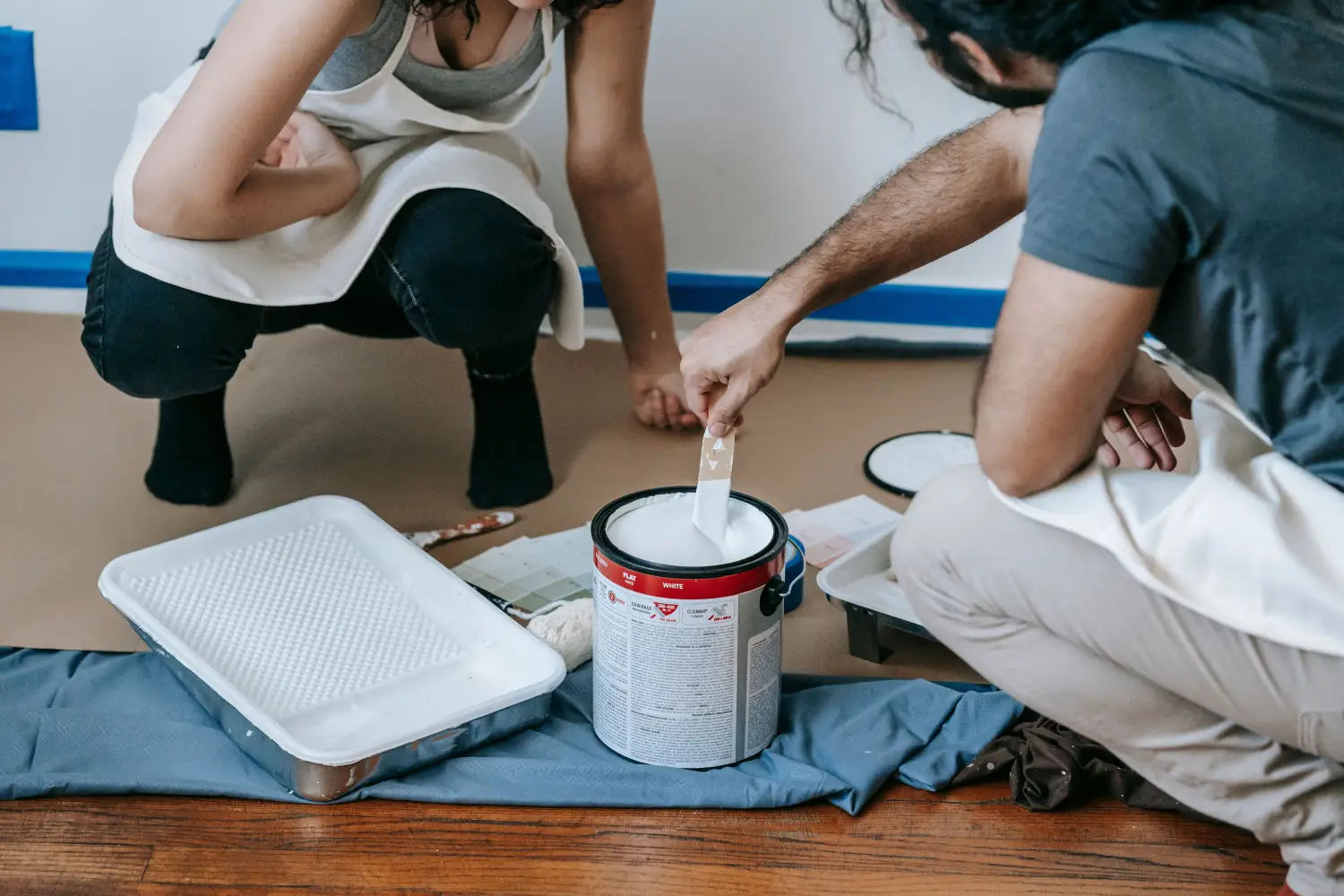
The trick painters know? Mixing flat and eggshell isn’t about saving money—it’s about giving a room a pulse. Flat paint eats light and makes walls sink back; eggshell whispers light forward. When you blend them with intention, you’re not mixing paint—you’re mapping where the eye rests and where it wanders. This approach skips the standard “combine leftovers” advice and goes straight to using sheen as a design tool.
Starting Points: Finding Your Reason to Mix Sheens
You’re Staring at Two Half-Empty Cans
Leftovers can feel like a compromise, but they’re actually a ticket to a more interesting room. Your route: learn how to combine them into a light plan that reads as a deliberate design choice, not a frugal afterthought.
You Want an Accent Wall That Doesn’t Clash
Color contrast isn’t the only way to draw the eye. Your route: lean on sheen contrast instead—a whisper of shine on one surface against the hush of flat everywhere else. It’s subtle enough to soothe a sensitive eye, yet still pulls focus.
Your Flat-Painted Room Feels Flat—Literally
Flat finish everywhere can make a room feel like a blank box. Your route: wake up the architecture by introducing a barely-there gradient. Start with a mix that’s just a splash of eggshell in flat, and watch a wall suddenly breathe.
You’re Painting a Rental and Color Is Off-Limits
You can change the finish, even if you can’t change the color. Your route: use a custom sheen on trim, a painted panel, or a piece of furniture that moves with you. It’s depth without a security deposit worry.
Stage 1: See the Light—How Flat and Eggshell Shape a Room
What this stage achieves: Train your eye to notice how existing sheens push and pull space.
Concrete actions: Walk through the room at different times of day. Flat walls recede—they swallow light and soften every bump. Eggshell surfaces step forward with a soft gleam. Hold a board with pure flat and pure eggshell next to a wall and watch the shift.
Ready to move on when: You can point to two surfaces—one you want to push back, one you want to bring forward—and say exactly why.
Stage 2: Draw Your Sheen Map
What this stage achieves: A simple sketch that assigns a sheen role to every surface.
Concrete actions: Grab a rough floor plan and label walls, ceiling, trim, alcoves, fireplace surround. Decide: pure flat where you want retreat (ceilings, upper walls), custom mix for a warm mid-sheen on main walls, pure eggshell on trim or a focal panel. Scribble target ratios—maybe 75/25 flat-to-eggshell for a gentle lift.
Ready to move on when: Your map shows at least one clear contrast—like a flat ceiling, mixed walls, and eggshell baseboards. The room now has a visual rhythm on paper.
Stage 3: Mix, Don’t Guess—Test Ratios in Real Light
What this stage achieves: A repeatable custom formula that actually looks good under your own light bulbs and windows. Nothing disappoints faster than a mix that looked right in the cup but dried into a dull mismatch.
Concrete actions: Pour small measured batches—try 80/20, 50/50, and 20/80 flat-to-eggshell in separate cups. Stir well. Paint swatches on poster board or a hidden wall spot. Let dry. Observe under morning, midday, and evening light. Eggshell’s gleam changes with the angle; what reads matte at noon can glow at dusk.
Ready to move on when: You’ve chosen a ratio that feels intentional, and you’ve confirmed that neighboring pure flat and eggshell areas still belong to the same room.
Stage 4: Paint with Contrast in Mind
What this stage achieves: A room where sheen shifts only at natural architectural boundaries—never in a weird, accidental line across a flat plane.
Concrete actions: Paint the flattest surfaces first—ceiling, matte walls. Cut in tightly where two sheens will meet with a good angled brush. Apply your custom-mix walls. Finish with the highest-sheen trim or accent panel. If sheens must meet on the same wall, use sharp tape; remove it before the paint cures to keep edges crisp.
Ready to move on when: You step back from every doorway and the light feels sorted—like the architecture is guiding your gaze without a single gimmick.
Light Check: Signs You’re Ready for Each Next Step
- You can name two surfaces where you want to shift perceived depth.
- Your sheen map shows at least one intentional contrast between adjacent surfaces.
- You’ve tested at least two mix ratios and chosen one based on how it behaves in actual room light.
- The final paint job reads as a cohesive whole—no abrupt, unintended lines where sheens collide.
Durability, Ratios, and Other Worries You Can Postpone
- Exact durability math: Mixed flat-eggshell sits between pure flat and pure eggshell in washability. Unless the wall faces constant touching—like a stove backsplash—this isn’t your first concern. Let the room live for a few weeks; you’ll know then if it needs extra protection.
- Perfectly matching ratios in big batches: Tiny variations in sheen are nearly invisible on a wall, especially when the whole point is a subtle shift across the room. Repeatability matters more than laboratory precision.
- Long-term touch-up anxiety: Keep a small jar of your mix. A slight sheen difference between old and touch-up paint shows far less in a blended sheen than in pure eggshell.
- Primer compatibility: No special primer is needed over existing latex, unless you’re painting over a high-gloss surface. Flat and eggshell bond well to each other.
Quick Questions About Mixing Flat and Eggshell
Can I mix any brand of flat and eggshell paint?
Yes, as long as both are the same base type (usually water-based acrylic latex) and the same color or similar tones. Mixing oil and water formulas causes adhesion problems—check the label.
Will adding eggshell to flat change the color?
Only a little. More sheen can make a color seem slightly richer or darker in low light. That’s why testing a swatch matters—especially if the cans are from different batches.
Is it cheaper to mix my own sheen than buying a new gallon?
Often yes if you already have both paints. If you’re buying both, the cost evens out, but you get a sheen that many paint lines don’t stock—a true between flat and eggshell.
How do I clean walls with a mixed sheen?
Treat them like eggshell: soft sponge, mild detergent, gentle pressure. Avoid harsh scrubbers—the flat component still scuffs more easily. A damp microfiber cloth handles everyday dust and smudges.
Your First Move: The Wall That Deserves the Glow
Walking into a room where light pools and retreats in rhythm with your walls is the goal. Start by walking through your space this evening and marking which surface catches the last sunlight. That’s the wall to wake up first—with a brush and a small cup of hope.

Clara Bennett
After five years of transforming my 1920s bungalow room by room, I’ve refinished floors, hung blinds in bay windows, and spent more time choosing light bulbs than I’d like to admit. I learned paint sheens by painting my kitchen ceiling three times, and I found out the hard way that a rug too small makes a room feel unfinished. I believe every home can be both functional and beautiful, no matter the budget.
Related posts
Flat vs Eggshell: Why 'Always Eggshell' Is a Mistake
Eggshell isn’t always the upgrade. See which rooms actually work better with flat paint — and why wall condition, light, and cleaning needs decide the winner.
Why Families with Kids Choose Eggshell Over Flat Paint
Families with kids need paint that can take a beating. See why eggshell wins for scuffs, moisture, and cleaning — and when flat paint won't hold up.
The 3-Minute Window Test for Flat vs Eggshell Sheen
Hold a sample board to your window and see exactly how flat and eggshell look in your room’s light, not the store’s. A 3-minute DIY test that ends the guesswork.
Flat Paint Can Hide Wall Flaws: A Room-by-Room Guide
Flat paint hides dents, seams, and uneven texture when matched to the right room. Learn to choose sheen based on wall condition and traffic, not trends.
Pros Never Use Eggshell on Ceilings Without This Check
Eggshell on a ceiling only works if the surface is near-perfect. Learn the inspection step pros use, when eggshell makes sense, and when flat is the only right call.