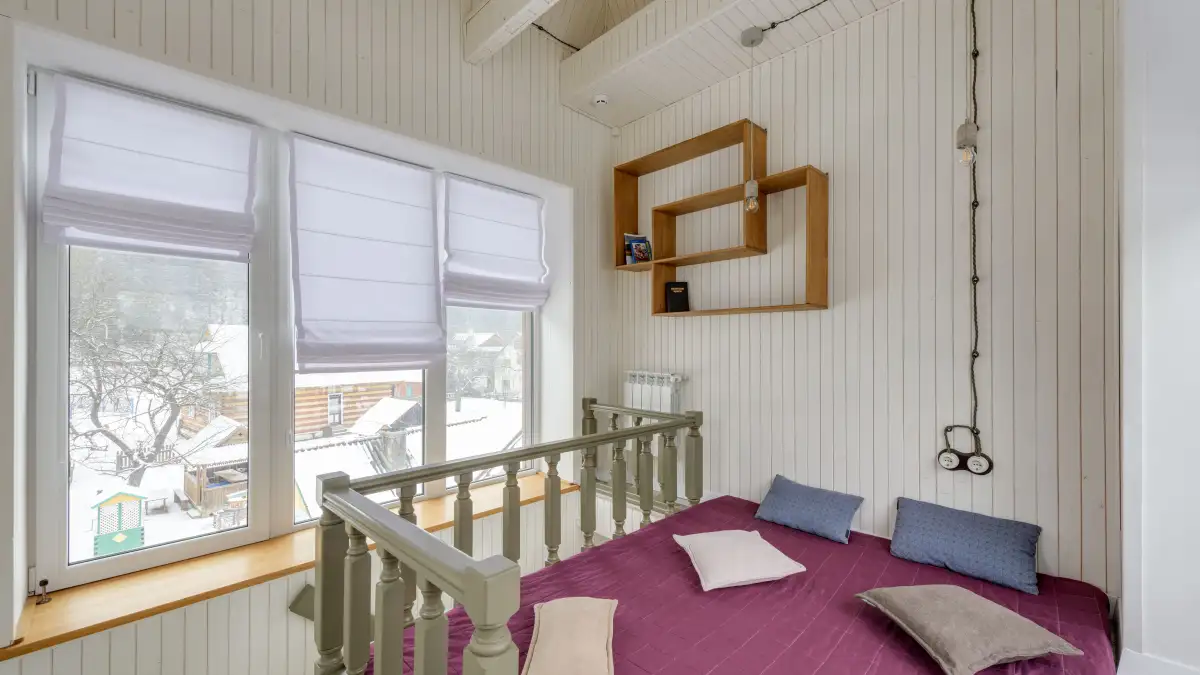
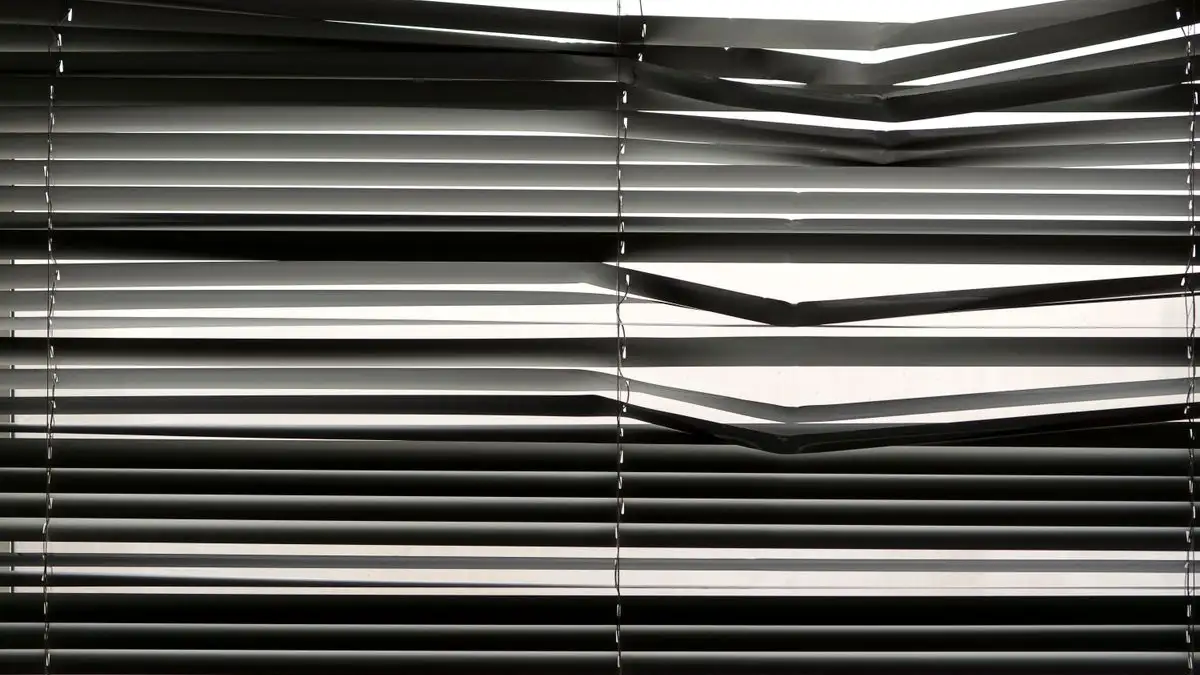
The choice comes down to what the window is supposed to do in the room, and four things settle it: how much fabric stays stacked at the top when the shade is raised, how much of the trim survives the mount, how the fabric behaves once it is folded, and whether curtains will ever hang beside it. Roman shades are fabric-first and can carry a focal point on their own. Cellular shades are geometry-first and read as architecture. Get that backwards and one of two things happens: the window competes with whatever else the room is already about, or it goes quiet when you wanted it to speak.
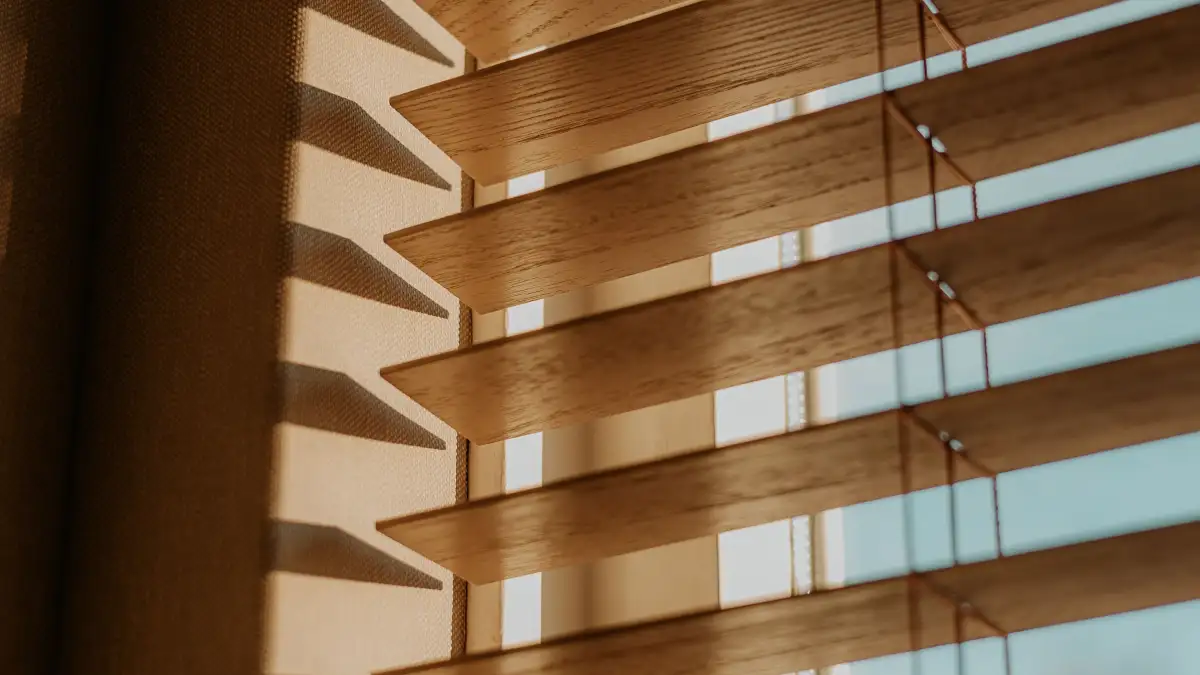
I run these decisions standing in the doorway at two in the afternoon with the lights off. You are standing next to me. The shade is raised, because that is where it lives most of the day, and what you are looking at is a mostly bare window with a band of something across the top of it. Nearly everyone deciding between Roman and cellular is picturing the lowered shade in soft evening light. The raised state is the one you actually live with, and it is where these two products stop resembling each other.
The stack is the part nobody pictures
A raised Roman is a horizontal mass of fabric. Flat-fold Romans gather into a tighter, shallower band. Relaxed and soft-fold versions sag into a looser and noticeably taller one. A hobbled or balloon Roman takes enough fabric that the stack can claim a serious fraction of the glass. On a long drop, a soft-fold Roman can stack eight, ten, twelve inches deep. That is not a defect; it is the look. But it means the top of your window is now an upholstered element with weight, color, and presence.
Raised cellular shades compress into a thin, even header, often two or three inches, sometimes less with small cells. The opening comes back almost entirely. From across the room, the glass looks bare and the trim reappears.
Stand in front of both, raised, and you are looking at two different rooms. The cellular window is quiet. The Roman window is dressed even when it is open. If the room already has a strong focal point, a fireplace wall, a large piece of art, a view worth protecting, the cellular's disappearing act is an advantage. If the window wall is the only thing in the room with any presence, an open Roman is doing work nothing else in that room is doing.
Stacks also repeat. Three windows in a row with three Romans give you three stacked bands and three breaks in the wall's horizontal line. Three cellular shades read as one continuous datum. Rhythm or a clean line: that is the actual fork, and it gets decided before anyone talks about color.
Trim is either a frame or a casualty
Mount matters more than most people expect, and it is worth settling before fabric.
An outside-mounted treatment sits in front of the casing. On a window with decorative trim, or trim you paid to have painted a specific color, the shade covers it and the trim effectively leaves the composition. That is fine when the trim is ordinary. It is a loss when the trim was the point.
An inside-mounted treatment preserves the trim profile and lets the shade sit in the recess, so the casing still frames the window. The constraint is depth. A Roman wants a couple of inches of recess to fold into without binding. Many cellular profiles will fit in an inch or less. In newer construction, where recesses run shallow, the shade type may be choosing you rather than the other way around. Measure the recess depth before you fall in love with a fabric.
Trim color is a composition decision, not a maintenance one
If the trim color sits close in value to the shade, the window reads as one framed mass, and the shade becomes the surface. If there is real contrast, the trim turns into a drawn line around the shade, and the window reads as a picture. Neither is better. They are different amounts of attention, and the room tells you which one it can absorb. A shade that matches the wall usually erases the window. A shade that matches the trim usually frames it.
Pattern behaves differently once it is folded
A Roman folds, and every fold cuts across the print horizontally. Horizontal stripes break into a stack of interrupted lines. A large-scale motif gets chopped and goes out of register from one fold to the next unless the shade is fabricated deliberately, sometimes with the pattern matched by hand. Vertical stripes and small allover repeats hold up far better, because the eye can still follow their direction through the stack.
Then there is the lining. When a Roman is raised, the lining faces the room as the underside of the stack. A contrasting lining puts a band of color at the top of the window that was not in anyone's plan. Sometimes that is the best thing in the room. Sometimes it is a second color the window cannot carry.
Cellular shades come in a deep range of solids and very few prints, so their variation has to come from cell size and the way the pleats handle light. Small cells, in the three-eighths-of-an-inch range, read fine and architectural. Large cells, around an inch and a quarter, read chunkier and more casual. Match the cell to the scale of the room. A big cell on a small window looks clumsy. A tiny cell on a tall window can vanish completely, and you will have paid for texture nobody can see.
Curtains change the answer
Layering a Roman shade with drapery is one of the most traditional, tailored looks a window can have, and it is also the setup most likely to go wrong in the measuring. The Roman's stack plus the rod's projection is what has to clear. Mount a Roman outside the frame under a rod, and a deep stack can collide with the rod return or push the panels off the wall.
Cellular shades are usually asked to work alone, and that is not an accident. They deliver one clean horizontal at the top of the window. Put a rod above a cellular shade and you have two horizontal systems stacked on top of each other, both trying to be the top of the window. In a traditional room that can be lovely. It just has to be a decision rather than a leftover.
If drapery is coming later, even two years later, plan the mount and the stack for it now. Changing a mount means patching holes in the wall and the casing, and nobody wants to do that twice.
The order I run these checks
- Feature or background. Does the room already have a focal point? If it does, the window should support it, and the cellular's low profile wins. If it does not, the window has to be the moment.
- Is the trim worth showing? Decorative casing and painted trim argue for an inside mount, which usually means cellular or a flat Roman with enough recess depth.
- What does the raised state look like at two in the afternoon? That is the state you will see most often, so it decides more than the lowered state does.
- Does the fabric survive folding? Check the repeat against the fold lines, and check the lining against the top of the window.
- Is drapery ever coming? If yes, the stack and the mount are being chosen for the curtains, not for the shade.
None of this is free. Romans cost more per window, are harder to clean, generally need custom sizing if you want a pattern to land where you want it, and do little for heat and cold. Cellular shades are forgiving on odd sizes, they insulate, they are easy to live with, and they will never be the most interesting thing in the room, which is either the point or the problem. If the window should be a moment and it can be one without fighting the rest of the room, choose the Roman. If it should not, choose cellular and put the pattern somewhere else.