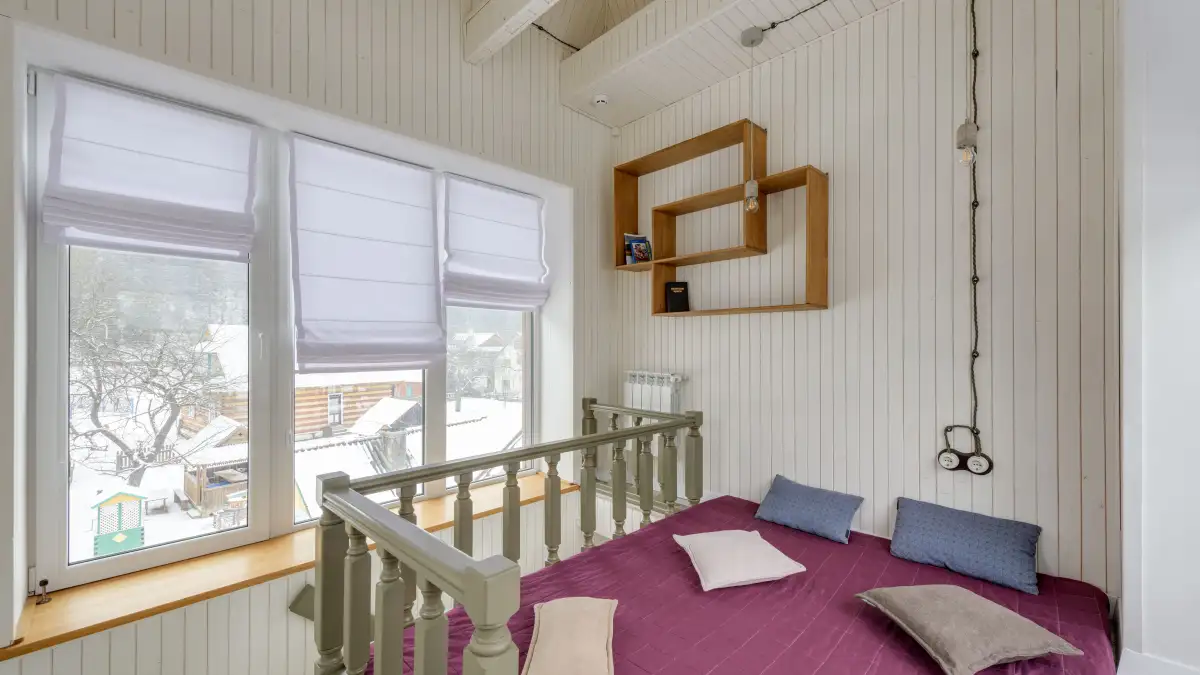
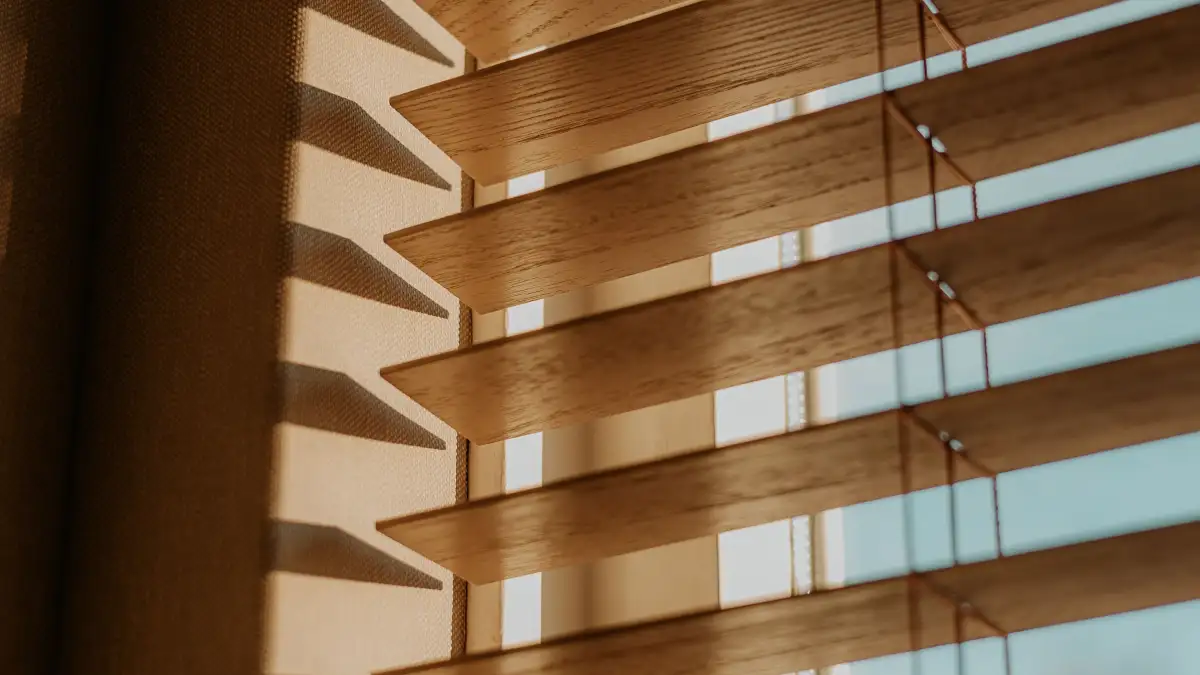
For five windows, cellular blinds land in the lower half of a window-treatment allowance and fabric Roman shades in the upper half, and across a set that size the two come closer together than per-unit prices suggest — closer to a one-and-a-half-to-two-times spread than a four-times spread once cordless hardware, wide-window upcharges, lining, and custom fabrication are all counted. The durable way to plan it is to set the window-treatment allowance as a percentage of the room's finishes budget first, divide that allowance by sun exposure and room priority, and only then choose a product tier that fits the division.
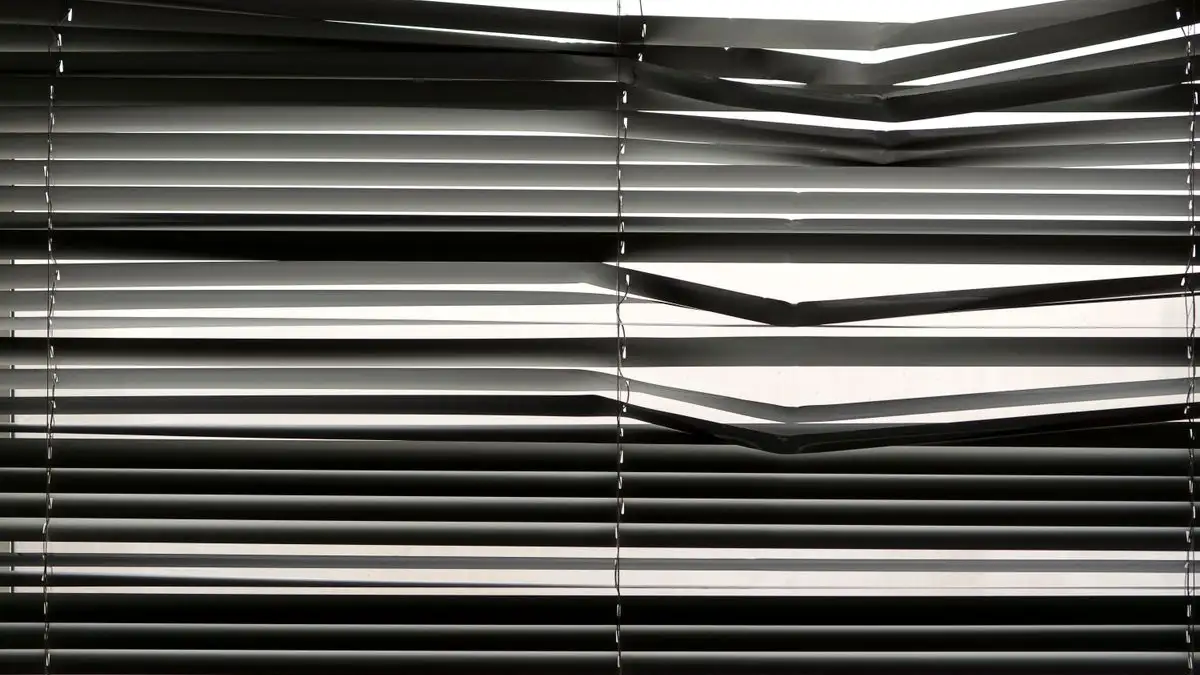
Stand at the south window with me for a second. It's mid-afternoon in late summer, and there's a hard stripe of light on the floor that reaches almost to the opposite wall. Lay a tape measure across the glass and write down three numbers: the width of the opening, the width including any trim you want the shade to sit outside of, and the drop from the top of the trim to the sill. Now do that four more times. Five windows in a real house are almost never five identical windows, and that single fact breaks most of the per-window price math people do in their heads before they ever get to the store.
The reason the two products behave differently is not that one is "nicer." It's that they are priced on different axes.
Where the two products actually sit in the tiers
I think about window treatments in four rough tiers, and both products show up in all four. What changes is how far up the ladder you have to climb before the product stops being the value option.
- Entry tier: stock-size cellular shades, light-filtering, single cell, cordless. This is the cheapest sane outcome for a whole house, and nothing in the Roman world competes with it.
- Second tier: cellular in a larger cell or a double cell, or a simple unlined Roman in a basic linen-look or cotton-blend fabric.
- Third tier: lined or blackout cellular on a wide span, or a Roman in a mid-grade fabric with a proper lining and a clean hem.
- Fourth tier: motorized versions of either, or a Roman in a designer fabric with a pattern that has to be matched across the folds.
The trap is that the jump from tier one to tier three in cellular is easy to trigger accidentally. Cellular shades are priced by cell size, the number of layers, and the width of the span. A wide window pushed past a certain width wants a heavier construction, or it goes baggy in the middle, so a big opening can quietly push a cellular shade into the third tier where it's sitting right next to a mid-grade Roman.
Roman shades are priced by fabric grade and by how much custom fabrication they take. Lining, interlining, a blackout layer, pattern matching, and returns at the sides all add. That's why two Roman shades of the same size can differ by more than a cellular shade costs in total — the fabric is doing the talking.
Why five windows is a different problem than one
One window is a product decision. Five windows is a budget decision with a product decision embedded in it.
Here's the framework I use. Pick a number for window treatments as a share of the room's finishes budget — that share is yours to set, and it should be a smaller share than flooring or paint, sometimes much smaller. Commit to it before you shop. Then divide that allowance rather than spending it evenly.
Three things drive the division:
Sun exposure. A west or south window with hours of direct light is where cheap fabric and cheap cells die first. That's the window that deserves the better tier.
Room priority. The window you look at from the sofa or from the bed gets the upgrade. The window behind the water heater in the laundry room does not.
Shape. The odd window out — the wide slider, the bay, the arch — is where the money disappears, because it's the one that triggers upcharges on either product.
A practical version: give the two hardest-working windows the better tier, keep the three average windows in the entry-to-second tier, and accept that the set won't match perfectly in construction even if it matches in color. Nobody notices the difference in cell size from across the room. Everybody notices a shade that won't close.
Cleaning is a line item, not a footnote
This is the part that rarely makes it into a comparison, and it's the part you actually live with.
Cellular shades hide their dust. The honeycomb cells catch it on the inner faces where a cloth can't reach. A microfiber wand duster works for surface dust on the front and back; getting inside the cells takes a vacuum on low with a brush attachment, or a hair dryer on the cool setting. In a kitchen or a bathroom, that's a monthly job, and in a humid bathroom the cells are the first place you'll see a gray bloom that isn't dust.
Roman shades are flat and accessible, which is their one quiet advantage. Vacuum them with an upholstery attachment on low, spot-clean with distilled water and a drop of mild soap, blot rather than rub, and let them hang dry. The catch is the fabric itself. Some are dry-clean-only, and an unlined natural fiber can shrink or water-spot, so follow whatever the fabric care guidance says rather than what worked on your last pair. Lined fabric Romans are more forgiving than unlined ones, which is one of the reasons the lining is worth paying for.
How long each one lasts, and how it fails
Public consensus on durability is fairly consistent, and so is the failure mode.
Cellular shades go soft rather than torn. The pleats lose memory, the cells crush and stop re-opening, and on a wide span the whole thing starts to bow. In a hard-sun room, a generous expectation is around a decade, and the last two or three of those years are usually spent looking tired. Blackout and room-darkening versions, being heavier, sag sooner than light-filtering ones at the same width.
Fabric Roman shades age in the fabric. Direct sun fades the dye, especially on strong colors, and the fold line takes the beating — that's where dust settles and where the fabric creases permanently. Linings degrade from UV as well, and cord-and-ring mechanisms wear at the points where they turn. In a shaded room, a lined Roman can outlast a cellular shade comfortably. In a sun-drenched room, the comparison flips.
The replacement problem nobody prices in
This is the cost that separates the two products more than the sticker does.
Cellular shades use broadly standardized sizing. If one dies in year six, you buy a comparable size and it reads as the same product, because cellular shades are visually identical across most manufacturers at a given cell size and color family.
Fabric Roman shades don't give you that. If your fabric is discontinued — and three or four years is a normal life for a print — a single failed shade means either living with a mismatched window or redoing the whole room to match. I always price in one extra yard of the fabric at the time of the original order, or a spare shade if the cut is tight, because that small up-front cost is the cheapest insurance in this entire category. Weight the replacement risk higher if the Roman is going in the sunniest window in the set.
Hardware moves both of them up a tier
Cordless is the baseline now for safety in homes with kids or pets, and it carries a premium on both products. Motorization carries a much larger premium on both — and it's usually only worth it on a window you genuinely can't reach, like one sitting behind a sofa or above a stair landing. Motorizing a window you can touch with one hand is one of the easiest ways to push a well-planned window budget into a different tier for no functional gain.
What I'd actually decide
Set the allowance. Divide it by sun exposure and by which windows you look at every day. Spend the upgrade on the two windows that get punished by light and attention. Keep the other three in the tier below. Buy cordless everywhere, motorize only the unreachable one, and put a spare cut of any custom fabric in the closet the day it arrives.
Five windows is where you stop comparing two products and start allocating a budget across a set. The product answer follows the allocation — not the other way around.