Why All Nylon Carpets Are Not the Same Underfoot
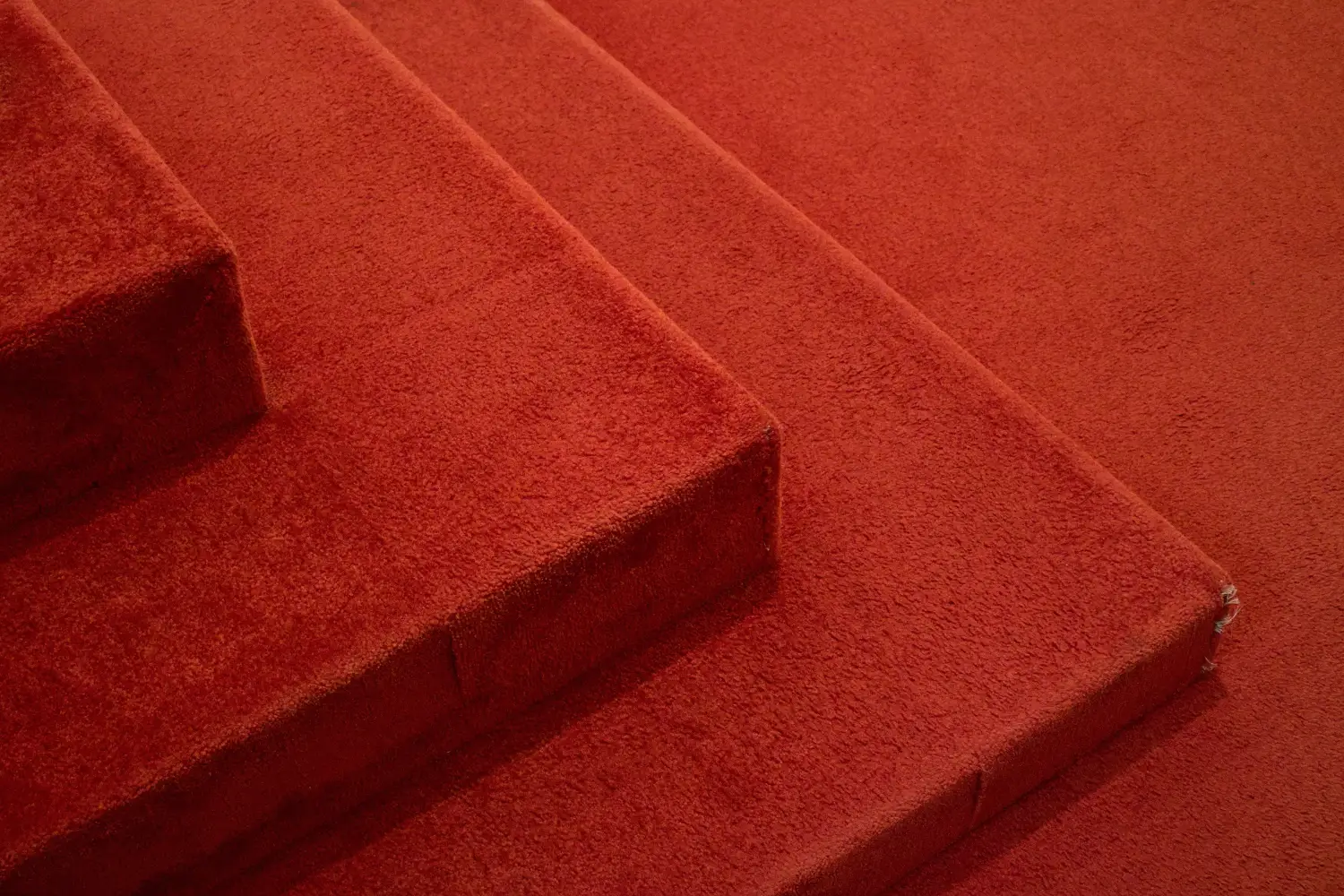
Not all nylon carpets are the same underfoot because “nylon” is a fiber category, not a performance specification. Two variables — the dye method and the polymer structure — account for wide gaps in softness, stain resistance, and how well a carpet recovers from foot traffic.
A carpet labeled simply “nylon” offers no clue whether it will mat beside the stairs or bleach under a sunlit window. Understanding solution-dyed versus acid-dyed construction and Nylon 6 versus Nylon 6,6 lets you pair a carpet to actual room demands instead of trusting the word “nylon” as a promise.
The Two Nylon Polymers: 6 and 6,6
The behavior difference between Nylon 6 and Nylon 6,6 originates in their molecular packing. Nylon 6,6 forms a more ordered crystalline structure because two alternating monomers align tightly. Nylon 6, built from a single caprolactam monomer that self-repeats, stays somewhat more open at the molecular level.
How Molecular Structure Affects Resilience and Feel
That tighter packing in Nylon 6,6 raises the melting point, stiffens the fiber, and improves crush recovery. Foot traffic causes less visible matting because the fiber springs back faster. Nylon 6 retains decent resilience — stronger than polyester or olefin — but it will show compressed pathways sooner under repeated heavy use.
Feel is a separate axis. Nylon 6,6 carpets lean slightly firmer, while Nylon 6 can deliver a softer hand. The distinction is not a quality hierarchy; it is a tradeoff between plushness and bounce-back.
Where Each Polymer Performs Best
- Hallways, stairs, and other high-traffic zones favor Nylon 6,6 for its crush resistance.
- Bedrooms and guest rooms, where smoothness matters more than resilience, perform well with Nylon 6 — often at a lower material cost.
The Dyeing Process That Determines Longevity: Solution-Dyed vs. Acid-Dyed
Color application shapes how a carpet withstands light, spills, and cleaning over its lifespan. Two main paths exist.
Pigment Locked Inside vs. Dye on the Surface
Solution-dyed nylon introduces pigment while the polymer is still liquid; color becomes part of the filament. Acid-dyed nylon receives its color after extrusion, bonding dye molecules near the fiber surface through acid-induced chemistry.
Because pigment runs through every cross-section, solution-dyed carpet resists fading far more than acid-dyed versions. A rug positioned under a south-facing window keeps its color for years. Stain resistance also improves because staining agents cannot easily find a reactive dye site to grip.
The Bleach-Cleanable Advantage
Acid-dyed nylon reacts to bleach by shedding its color. A single drop of a bleach-based cleaner can leave a permanent pale spot. Solution-dyed nylon, by contrast, tolerates bleach — a practical difference for homes that need disinfection or frequent spot cleaning.
Stain Resistance Isn’t a Single Feature — It’s a System
“Stain resistant” on a nylon label can mean two very different things. Acid-dyed nylon relies on topical protectants applied after dyeing. These treatments wear away through foot friction and hot-water extraction cleaning. The carpet may look resistant when new, but that protection fades.
Solution-dyed nylon builds stain resistance into the fiber from the start. The dense pigment loading blocks most staining agents without a surface coating. Years of use and cleaning don’t strip the defense away. When complaints surface about nylon staining easily, they almost always point to acid-dyed carpet whose topical guard has thinned.
Decoding Carpet Specs So You See Past the Label
Product literature can hide the details that matter. Focus on the fiber content and dye method rather than the brand story.
Recognizing Nylon 6,6 in Writing
Some manufacturers state “Type 6,6 Nylon” or “Nylon 6,6” outright. Others wrap the polymer inside a proprietary name — for example, STAINMASTER PetProtect generally uses a Nylon 6,6 base and solution-dyed construction. If a label only says “100% nylon” without specifying polymer type, it is safe to assume Nylon 6 or a blend whose performance aligns with Nylon 6.
Catching Solution-Dyed Nylon Without a Sales Pitch
Terms like “solution-dyed,” “color-through,” or “bleach-cleanable” are direct signals. Warranty coverage for fading and bleach stains further confirms it. A product that guarantees no dye loss after bleach exposure is almost certainly solution-dyed.
Matching the Nylon Variation to the Room’s Demands
Real performance emerges not from the fiber alone but from aligning the grade with what each room throws at it.
- Entryways and mudrooms – Solution-dyed Nylon 6,6 handles tracked-in grit, moisture, and sun exposure. The color-through pigment and high crush recovery keep the surface looking acceptable longer.
- Living rooms and family rooms – Solution-dyed Nylon 6,6 works where strong light and foot traffic combine. Nylon 6 with a quality topical treatment can serve a shadier, lower-traffic living room, though the treatment will need refreshing sooner.
- Stairs – Nylon 6,6 earns its premium here. Repeated foot pressure demands maximum crush resistance, and solution-dyed construction helps if the staircase catches daylight.
- Bedrooms – Nylon 6, acid-dyed or solution-dyed. Softness drives the decision. Acid-dyed Nylon 6 can provide a velvety feel at a lower cost, but large uncovered windows make fading a concern.
- Basements – Solution-dyed nylon, regardless of polymer. Basements amplify moisture and cleaning-chemical exposure; solution-dyed construction avoids dye bleed from both.
What the Spec Sheet Won’t Advertise
- Getting “nylon” isn’t enough; the polymer and dye method are the actual specifications.
- Nylon 6,6 holds an edge in resilience, but that edge shrinks in light-use spaces. Paying for it in a guest room rarely yields proportional benefit.
- Solution-dyed nylon’s stain protection follows the fiber’s entire life cycle; acid-dyed nylon’s protection erodes.
- The softness of Nylon 6 can fool a buyer into thinking they’re getting a superior product — it’s often just a different set of tradeoffs.
- A bleach-cleanable claim almost always signals solution-dyed construction, so it doubles as a quick field test when comparing samples.
Nylon Carpet Questions, Answered
Is Nylon 6,6 objectively better than Nylon 6?
It offers better crush resistance and a higher melting point, which makes it superior in high-impact, sunny spaces. In a low-traffic bedroom, the difference may not justify the price. The answer depends entirely on where the carpet will live.
Does solution-dyed nylon feel rough compared to acid-dyed?
Early generations did, but modern manufacturing narrows the gap. Many current solution-dyed nylons feel close to acid-dyed. Still, subtle textural differences can remain, so hands-on sampling is the most reliable test.
Can I safely use bleach on nylon carpet?
Only on solution-dyed nylon. Acid-dyed nylon will lose color. A patch test in an inconspicuous area remains sensible even with claimed bleach resistance.
What’s the most common error in nylon carpet shopping?
Assuming that “nylon” guarantees equal durability and stain performance across all brands. Without verifying the dye method and polymer, a buyer may choose a carpet that fades, mats, or stains in ways a slightly different nylon would have avoided.
Why do some nylon carpets still stain after years of use?
Topical stain protectors break down, especially under frequent cleaning or heavy footwork. Solution-dyed nylon avoids this by embedding the color, eliminating the need for a disappearing surface shield.
A nylon carpet performs according to the specifications buried inside its label, not the fiber’s name. The next time someone points to a sample and says “this is nylon,” the only useful follow-up questions are “Is it Nylon 6 or 6,6?” and “Is it solution-dyed?” Those two answers predict how the floor will look and feel long after the showroom lighting dims.

Clara Bennett
After five years of transforming my 1920s bungalow room by room, I’ve refinished floors, hung blinds in bay windows, and spent more time choosing light bulbs than I’d like to admit. I learned paint sheens by painting my kitchen ceiling three times, and I found out the hard way that a rug too small makes a room feel unfinished. I believe every home can be both functional and beautiful, no matter the budget.
Related posts
The Carpet Fiber Rule That Flooring Inspectors Swear By
Use the four-variable decision matrix inspectors rely on: rate foot traffic, stain risk, budget, and underfoot feel to pick between nylon, polyester, wool, Triexta, and olefin. Checklist included.

How to Get a Carpet That Still Looks New After 10 Years
Nylon and Triexta are the only carpet fibers that survive a decade of family foot traffic. See how polyester, wool, and olefin compare—and avoid paying twice for the same floor.

The Hidden Wear Cost of Polyester Carpet You're Not Seeing
Polyester carpet's stain-resistant label hides a flaw: it absorbs oils and mats in traffic lanes. Learn the real wear cycle and how to avoid permanent damage.
How Much Does Wool Carpet Really Cost Over 15 Years?
Wool carpet isn't a one-time buy. Our 15-year per-square-foot breakdown accounts for professional cleanings, shedding, beetle-resistant construction, and replacement. See the real cost before you commit.
The Carpet Stain-Resistance Mistake That Ruins Floors
Not all stain-resistant carpets are equal. Learn why fiber chemistry vs. topical coatings is the difference between a wipeable spill and a permanent stain.