The Carpet Fiber Rule That Flooring Inspectors Swear By
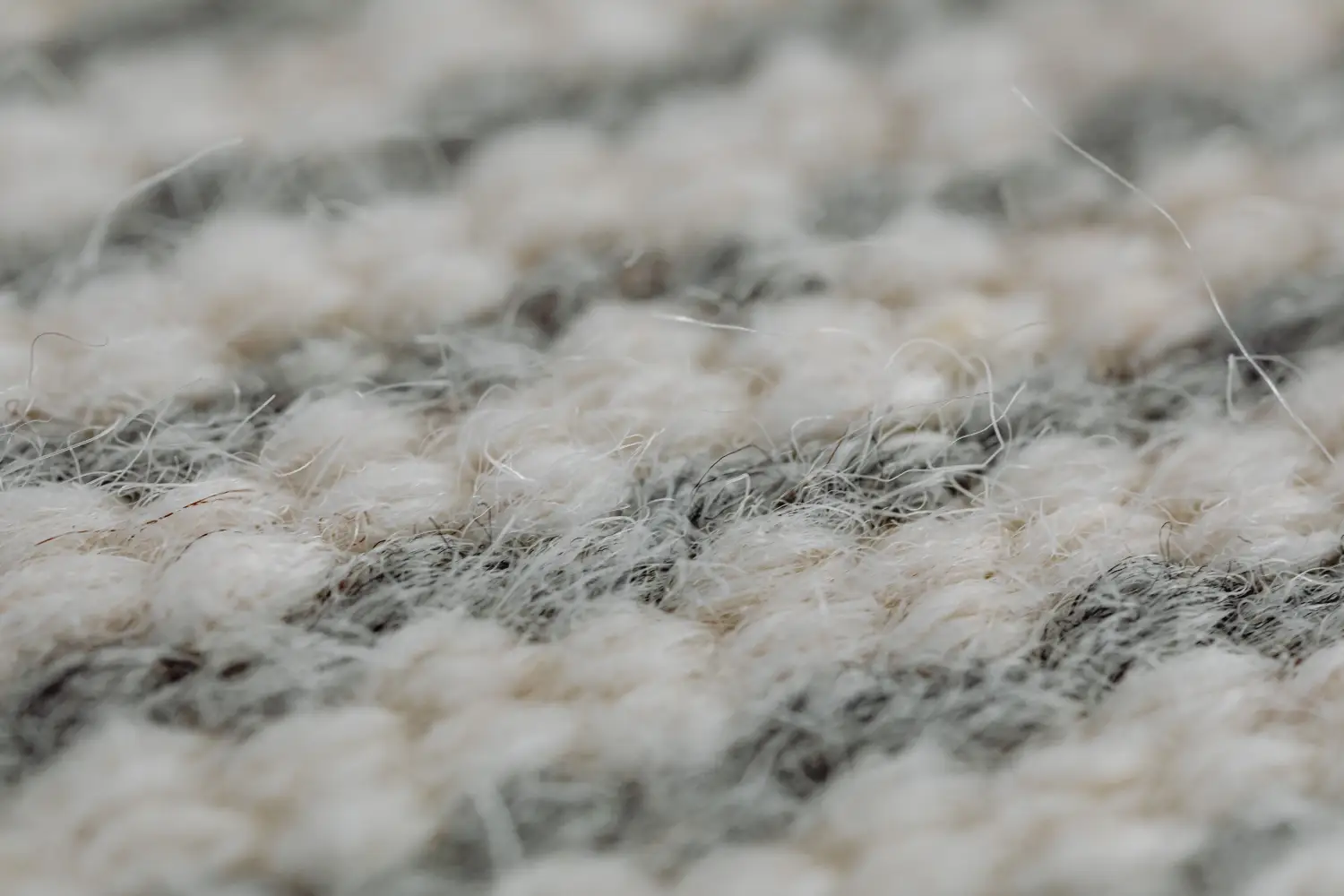
Flooring inspectors pick carpet fiber by matching four room facts to a fiber's physical limits. They don't weigh marketing language; they run a simple elimination. After reading, you'll have a checklist that forces you to look at foot traffic, stain risk, budget, and underfoot feel before you ever look at a sample, and you'll leave that process with a single fiber type already chosen.
The Problem With Picking Carpet by Description Alone
Most carpet guides list fiber strengths: nylon is durable, polyester resists stains, wool feels luxurious. Those lines describe what a fiber can be under ideal conditions, not what it will become in a specific home. A high-traffic staircase in a four-person household will crush a low-twist polyester within 18 months. A dining room where toddlers eat pasta and a dog sleeps under the table will punish wool's stain vulnerability. Without first measuring the room's actual demands, every fiber sounds usable—and that's exactly how homeowners end up with the wrong one.
Flooring inspectors see the evidence of that mismatch regularly. The process they follow is not a favorite fiber; it's a series of hard questions that eliminate fibers that can't survive the room's three biggest stressors. The answer is whatever fiber remains.
The Four Variables That Determine the Right Fiber
Most rooms that fail early do so because the homeowner never rated the wear factors. Before any fiber enters the conversation, assign each of these a concrete rating for the room in question.
Foot Traffic
Traffic is the primary mechanical threat. A hallway that sees twenty passes a day from shoes, paws, and a vacuum subjects fibers to far more compression and twist-loss than a guest bedroom opened twice a month. Rate traffic as low, moderate, or high.
- Low traffic: guest rooms, formal sitting rooms used only a few times a year.
- Moderate traffic: master bedrooms, dens used for a few evening hours daily.
- High traffic: hallways, staircases, family rooms, children's play areas.
Fibers with good resilience—the ability to spring back after being walked on—handle high traffic. Fibers with poor resilience will mat and show paths quickly.
Stain Likelihood
Stain risk isn't a fiber property; it's a measure of spill frequency and content type. A kitchen with a pet feeding area and daily cooking presents a different risk than a bedroom where food rarely enters. Rate it low, moderate, or high, and note the dominant type: water-based, oil-based, or both.
- Low risk: bedrooms where drinks are kept on nightstands only.
- Moderate risk: living rooms where coffee cups and occasional snacks appear.
- High risk: dining areas, kitchens, playrooms, basements with pet access.
This variable determines how forgiving the fiber must be when a spill sits for fifteen minutes before someone notices. A fiber that repels grape juice but absorbs cooking oil can still fail in a kitchen.
Budget Tier
Installed carpet cost is best expressed in tiers that bundle fiber, pad, and labor. Set the tier before seeing any products; that prevents the common mistake of stretching a budget for a fiber that can't deliver in the room anyway.
- Economy tier: roughly $2 to $4 per square foot installed. Polyester and olefin dominate this range.
- Mid tier: $4 to $7 per square foot. Includes decent nylon, many Triexta products, and entry-level wool.
- Premium tier: $7 and up. Dense wool, high-face-weight nylon, and the top Triexta constructions.
Budget is a hard filter. If the budget is locked at economy tier, wool and high-end nylon are not options, and that's a useful constraint.
Underfoot Feel
Softness and cushion underfoot matter most in rooms where people walk barefoot. In a basement or entryway, durability usually outweighs feel. Rate the importance as low, moderate, or high.
- Low priority: basements, mudrooms, utility areas where shoes stay on.
- Moderate priority: family rooms where people occasionally sit on the floor.
- High priority: master bedrooms, nurseries, any room intended for barefoot comfort.
Softness almost always comes with a trade-off. Polyester's plush feel masks its poor resilience; wool's thick softness carries a premium price. The matrix puts that trade-off on the table.
How Nylon, Polyester, Wool, Triexta, and Olefin Score on Each Variable
Each fiber's real-world performance under the four variables comes from years of in-home wear, not specification sheets. The scores below reflect what holds true when the conditions are less than ideal.
Nylon
Nylon has the best resilience among synthetics. It recovers from compression for decades, which is why it's the usual choice for hallways, stairs, and heavily used family rooms. Stain resistance is not inherent—it depends on the treatment. Solution-dyed nylon resists fading and many stains well, but acid dyes and some chemical spills can remain threats. The feel underfoot is firm and springy; it will not feel plus unless paired with a dense pad. Budget: mid to premium. Good nylon starts around $4 per square foot and can exceed $8 for high-face-weight products.
Score against the matrix: Excellent for high foot traffic, good for stain-prone areas if solution-dyed, moderate softness that needs a pad upgrade, mid- to premium budget required.
Polyester (PET)
Polyester is inherently hydrophobic and cheap to manufacture, so it dominates the economy tier. It resists water-based stains and holds dye well without fading. The critical weakness is resilience: polyester fibers crush easily and stay crushed. In a hallway, a polyester carpet will show a matted path within 12 to 18 months. It works best in low-traffic rooms where stain resistance and softness are the primary concerns. Underfoot, it is soft and can mimic wool at a low cost. Budget: economy to low mid-tier, typically $2 to $4 per square foot.
Score against the matrix: Poor for high traffic, excellent stain resistance, high softness, economy-friendly only.
Wool
Wool is naturally durable and resilient when constructed with high pile density. It ages well in the right environment. Stain resistance is a real weakness: untreated wool absorbs liquids, alkaline spills can bleach it, and even treated wool demands immediate cleanup to avoid permanent damage. Underfoot, wool offers density, warmth, and spring—a feel no synthetic fully replicates. Budget: premium tier. Expect $6 to $12 per square foot installed for a quality woven or tufted wool.
Score against the matrix: Excellent for traffic with dense construction, fair stain resistance that relies on treatment and fast response, premium feel, premium budget only.
Triexta (PTT)
Triexta sits between nylon and polyester in performance. It offers nylon-like resilience in moderate to high traffic and polyester-like stain resistance that is permanent—built into the fiber, not applied as a coating. It feels noticeably soft underfoot, often softer than standard nylon. The caution flag is embedded soil and oil: Triexta can darken in heavy-use areas if not cleaned regularly, especially with lower face-weight products. Budget: mid tier, roughly $3.50 to $6 per square foot.
Score against the matrix: Good resilience for moderate to high traffic, excellent stain resistance, very high softness, mid-tier budget.
Olefin (Polypropylene)
Olefin is moisture-resistant, cheap, and often used in loop-pile Berber styles. It handles water and fading well. Its two major limits are oil absorption and extremely poor resilience. Olefin mats quickly and never recovers. It belongs in low-traffic zones where moisture is the main concern, like finished basements or indoor-outdoor areas. Underfoot, it feels thin and coarse. Budget: economy tier, often under $3 per square foot.
Score against the matrix: Poor resilience—fail for anything above low traffic, good moisture resistance, low softness, economy budget only.
The Carpet Fiber Decision Matrix
Use this table to cross off any fiber that cannot meet the room's non-negotiable variable.
| Fiber | High Foot Traffic | High Stain Likelihood | Underfoot Softness | Budget Tier |
|---|---|---|---|---|
| Nylon | Excellent | Good (if solution-dyed) | Moderate | Mid to Premium |
| Polyester | Poor | Excellent | High | Economy |
| Wool | Excellent (if dense) | Fair (requires treatment) | Excellent | Premium |
| Triexta | Good | Excellent | High | Mid |
| Olefin | Poor | Good (water-based only) | Low | Economy |
The Selection Checklist That Flooring Inspectors Follow
The inspector's rule is four elimination questions. Answer them for each room and the fiber that remains is the one to buy.
- What is the traffic level of this room?
- If high: remove polyester and olefin.
- If moderate: remove olefin if traffic includes rolling chairs or consistent heavy use.
- If low: no elimination.
- What is the real stain risk?
- If high and includes oils or grease: remove olefin and untreated wool.
- If high but mostly water-based: olefin may stay.
- If low: keep all.
- What budget tier can you afford, installed?
- Economy tier: only polyester and olefin remain.
- Mid tier: polyester, Triexta, nylon, some olefin.
- Premium tier: all fibers become options, but wool still must survive the stain and traffic checks.
- How important is underfoot softness?
- If high: prioritize polyester, Triexta, or wool; nylon only with a quality pad upgrade.
- If moderate: nylon, Triexta, or dense wool.
- If low: nylon or olefin are sufficient.
Once you answer those four, you'll usually have one fiber left. If two remain, give the tie to the fiber that performs best on your highest-priority variable—traffic if durability is everything, stain resistance if spills never stop.
A Real-World Example
A family room with moderate daily foot traffic, frequent food spillage that includes butter and salad dressing, a firm $5 per square foot budget, and a household that walks barefoot constantly. High traffic removes polyester and olefin. Moderate stain risk with oils removes untreated wool and olefin. Mid-tier budget leaves Triexta and nylon. High softness preference points to Triexta over nylon without a premium pad. The checklist selects Triexta.
What to Remember Before You Buy
- No single fiber is the best for every room. The correct fiber is always room-specific.
- Rating traffic, stain likelihood, budget, and feel before looking at samples prevents showroom bias.
- Polyester and olefin should not go in hallways or stairs, regardless of how attractive the price is.
- Wool requires a premium budget and a household willing to react to spills immediately.
- Triexta offers a useful middle ground, but lower face weights will reduce durability in heavy traffic.
- Nylon is still the most dependable fiber for high-traffic zones when the budget allows.
Common Questions About Carpet Fiber Selection
Is wool worth the higher price?
Only in low-stain-risk rooms where the household has both the budget and the reflexes to clean spills fast. Dense wool can last twenty years, but a single red wine stain left overnight can destroy that investment.
Can polyester last in a hallway?
No. Polyester's lack of resilience means it will mat and show a visible traffic path within two years under regular use. It is a bedroom and formal-space fiber, not a passageway fiber.
What's the real difference between Triexta and nylon?
Triexta gives better stain resistance and a softer feel out of the box, while nylon provides longer-term resilience under constant, heavy foot traffic. For a moderately busy home, Triexta often wins on comfort; for entryways and commercial-level home use, nylon is safer.
Can olefin be used in a finished basement?
Yes, because basements tend to have low traffic and the real threat is moisture, which olefin handles. Do not use olefin in a basement that doubles as a high-traffic playroom or a kitchen area where oil spills are common.
Does carpet pad compensate for a weak fiber?
A dense pad can improve underfoot feel and absorb some impact, but it cannot fix a fiber's inherent lack of resilience. A polyester carpet on the best pad will still mat in a hallway.
Your Next Step: Run the Checklist Before the Showroom
The matrix gives you a fiber type, not a brand or a color. The most important action before driving to a flooring store is to write down each room's traffic level, stain risk, budget tier, and softness requirement, then cross off fibers that fail. Walk in asking to see carpets made only from the remaining fiber. That keeps the conversation on pile height, twist, and style—details that matter only after the material is already determined.

Clara Bennett
After five years of transforming my 1920s bungalow room by room, I’ve refinished floors, hung blinds in bay windows, and spent more time choosing light bulbs than I’d like to admit. I learned paint sheens by painting my kitchen ceiling three times, and I found out the hard way that a rug too small makes a room feel unfinished. I believe every home can be both functional and beautiful, no matter the budget.
Related posts

How to Get a Carpet That Still Looks New After 10 Years
Nylon and Triexta are the only carpet fibers that survive a decade of family foot traffic. See how polyester, wool, and olefin compare—and avoid paying twice for the same floor.

The Hidden Wear Cost of Polyester Carpet You're Not Seeing
Polyester carpet's stain-resistant label hides a flaw: it absorbs oils and mats in traffic lanes. Learn the real wear cycle and how to avoid permanent damage.
How Much Does Wool Carpet Really Cost Over 15 Years?
Wool carpet isn't a one-time buy. Our 15-year per-square-foot breakdown accounts for professional cleanings, shedding, beetle-resistant construction, and replacement. See the real cost before you commit.
The Carpet Stain-Resistance Mistake That Ruins Floors
Not all stain-resistant carpets are equal. Learn why fiber chemistry vs. topical coatings is the difference between a wipeable spill and a permanent stain.
Why All Nylon Carpets Are Not the Same Underfoot
Not all nylon carpet withstands stains or feels soft the same way. Learn how solution-dyed vs acid-dyed and Nylon 6 vs 6,6 determine durability, feel, and room suitability.