This Rug Size Is Destroying Your Living Room Layout
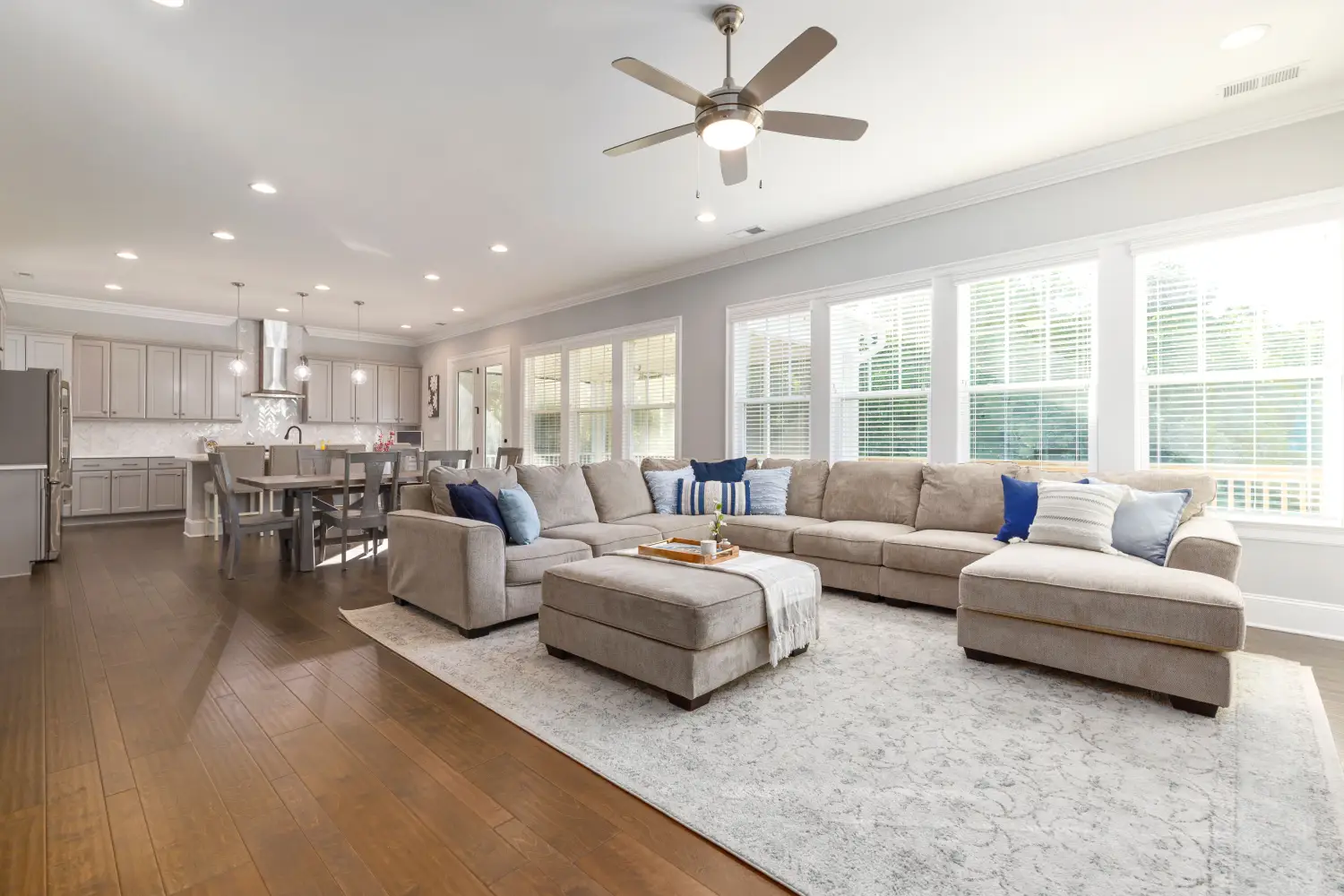
A living room that feels oddly disjointed—where the sofa seems to float without connection to the rest of the space—is almost certainly suffering from a rug that's several sizes too small. Anyone who has bought a 5'x7' rug for a first apartment only to realize it belongs under a dinette table, not a seating area, knows that sinking feeling. The fix is straightforward and doesn't demand a design degree: choose a rug large enough that at least the front legs of your sofa and chairs rest on it, with a consistent floor border of 6 to 12 inches all around. Get this right, and the room locks into place. Miss it, and you'll be ordering a replacement within months.
This article tackles that exact trap—the undersized rug that wrecks a layout—and gives a sizing method for each major room so you never have to repurchase.
The Few Tools That Will Save You from a Rug Return
Before you measure, collect these items; they prevent the guesswork that leads to costly mistakes.
- A steel tape measure at least 25 feet long (cloth tapes stretch and give false readings).
- The exact width and depth of every piece of furniture that will touch the rug.
- Painter's tape so you can outline the rug footprint on the floor and test it before buying.
- A rough sketch of the room with furniture placement—even on notebook paper.
No special tools or accounts needed, just attention to detail.
How to Size a Rug for Every Room (So You Buy Only Once)
Each room type asks for a slightly different calculation because furniture function determines how much rug is truly necessary.
1. Map the Furniture Clusters, Not the Bare Floor
Arrange the furniture exactly as it will be used—sofa, chairs, coffee table, side tables. Then measure the outermost edges of that grouping. The rug needs to extend at least 6 to 12 inches beyond those edges. Find the length and width of the footprint, then round up to the nearest standard rug size. Resist the instinct to center a rug in an empty room; a rug anchors furniture, not open floor space.
2. Set the Anchor Zone for Living Areas
In a living room, stick to this rule: all front legs of seating—sofa and chairs—must land on the rug. For larger rooms, try to get all legs on the rug for a settled look. The bare floor border between the rug and walls should be equal on all sides, ideally 12 to 18 inches. If the rug covers an entire seating cluster, the border can shrink to 6 inches along one wall, but avoid a lopsided appearance.
3. Size for the Dining Table, Not the Dining Room
A dining rug has to accommodate chairs when they're pulled out. Add at least 24 inches to each side of the table's length and width. For a six-seater table, an 8'x10' or larger rug is typical. The classic disaster: a rug that stops just under the table base, so chairs slide off the edge every time someone sits down. Test by taping the outline on the floor with chairs in the fully pushed-out position; it's the only way to avoid the worst kind of return trip.
4. Bedroom Rugs: Start from the Bed
A bedroom rug should extend at least 18 to 24 inches beyond the sides and foot of the bed. With a queen bed, an 8'x10' rug laid horizontally works well, with the top edge tucked under the front two-thirds of the bed. For a king, a 9'x12' is safer. The goal is a soft landing zone on both sides and at the foot, not a small patch that barely clears the nightstands.
5. Hallways and Runners: Leave Breathing Room
In a hallway, a runner should leave 4 to 6 inches of floor visible on each side. Measure the hallway width, then subtract 8 to 12 inches total to get the runner width. Length should be about 60 to 75 percent of the hallway length, centered between doorways. A runner that is too short reads as a misplaced bath mat.
The Four Most Painful Rug Sizing Errors (and How to Sidestep Them)
Beginners repeat these mistakes again and again; spotting them ahead of time is the cheapest form of insurance.
The “Postage Stamp” Under the Coffee Table
A rug that sits directly under the coffee table while all furniture legs sit on bare floor chops the room into pieces. The rug becomes a tiny island instead of a unifying layer. Fix: enforce the front-legs rule—even if the required rug is larger than you originally planned, it's worth every extra inch.
Floating the Rug with No Furniture on It
A rug marooned in the middle of a room with nothing touching it serves no purpose and looks accidental. At minimum, it should connect to one major seating piece. Even in open-plan spaces, use the rug to define a zone and anchor it with furniture legs.
Allowing Less Than 24 Inches of Walking Space Around a Dining Table
A dining rug with inadequate clearance forces chairs to teeter on the edge every time someone sits. Before you buy, mark the chair positions in the pushed-out state and walk around the taped footprint. Confirm there is enough room to pull chairs in and out without the back legs leaving the rug.
Forgetting That a Rug Must Extend Beyond the Vanity in a Bathroom
A too-small rug that hovers in front of a bathroom vanity reads as a bath mat, not an intentional design element. Extend it at least 12 inches beyond each side of the vanity cabinet so it visually grounds the sink area.
Quick Answers to Rug Size Questions You Haven't Asked Yet
What rug size is best for a 10x12 living room?
An 8'x10' or 9'x12' rug typically works. The larger option lets you fit all front furniture legs on the rug with an even floor border. In a 10x12 room, a 5'x7' rug will always look undersized.
Can I use a 5x7 rug in a small apartment?
Only if the seating group is extremely compact—a loveseat and one chair, for instance. In most small living spaces, a 5'x7' still feels pinched. A 6'x9' is a safer bet.
Should all furniture legs stay on the rug?
In a generous living room, having all legs on the rug creates a calmer, more anchored feeling. In tighter rooms, the front-legs-only approach works well. For dining tables, all chair legs must stay on the rug when pulled out—no exceptions.
What if my room is an odd shape?
Use painter's tape to outline the best rectangle that fits your furniture grouping, then ignore the wall angles. A rug aligned with the main furniture arrangement reads as intentional, even in L-shaped rooms.
Is it better to go a little too big than too small?
Yes. A rug that is a few inches larger than needed can usually be adjusted by shifting furniture inward. A rug that is too small cannot grow. Always err toward the larger size.
Now That the Dimensions Are Right, Focus on Foundation
You now have a dependable method for picking a rug size that holds a room together instead of breaking it apart. With the correct dimensions in hand, your next step is material: factor in foot traffic and choose a fiber that will hold up. Complete the setup with a quality rug pad to prevent sliding and add cushion underfoot. From here, you can shop with confidence, knowing you won't be taping up a return box a week later.

Clara Bennett
After five years of transforming my 1920s bungalow room by room, I’ve refinished floors, hung blinds in bay windows, and spent more time choosing light bulbs than I’d like to admit. I learned paint sheens by painting my kitchen ceiling three times, and I found out the hard way that a rug too small makes a room feel unfinished. I believe every home can be both functional and beautiful, no matter the budget.
Related posts

12-Month First-Year Decorating Plan for New Homeowners
Stop guessing. This dependency-ordered 12-month plan puts paint before furniture, window treatments after move-in, and prevents costly rework. Start where you are and follow the sequence.

You're Installing Window Treatments at the Wrong Time: Here's When
Treating window treatments as a move-in afterthought costs you months of glare and lost privacy. The right time to decide is during the initial walkthrough. Here's the early order that works.
The Paint Sheen Most New Homeowners Overlook (But Shouldn't)
New homeowners often skip satin, thinking it's too shiny. Yet it's the most practical sheen for kitchens and bathrooms—wipeable, moisture-resistant, and forgiving.
The 36-Inch Rule Designers Use to Prevent Cramped Rooms
Learn how the 36-inch clearance rule creates walkable, open-feeling rooms. Get the step-by-step checklist and find out where you can shrink the gap without sacrificing comfort.

Don't Waste Your $10,000 Budget: A Room-by-Room Split
A fixed $10,000 renovation budget needs a clear room-by-room split before any shopping begins. Use these percentage rules of thumb to plan where the money goes first.