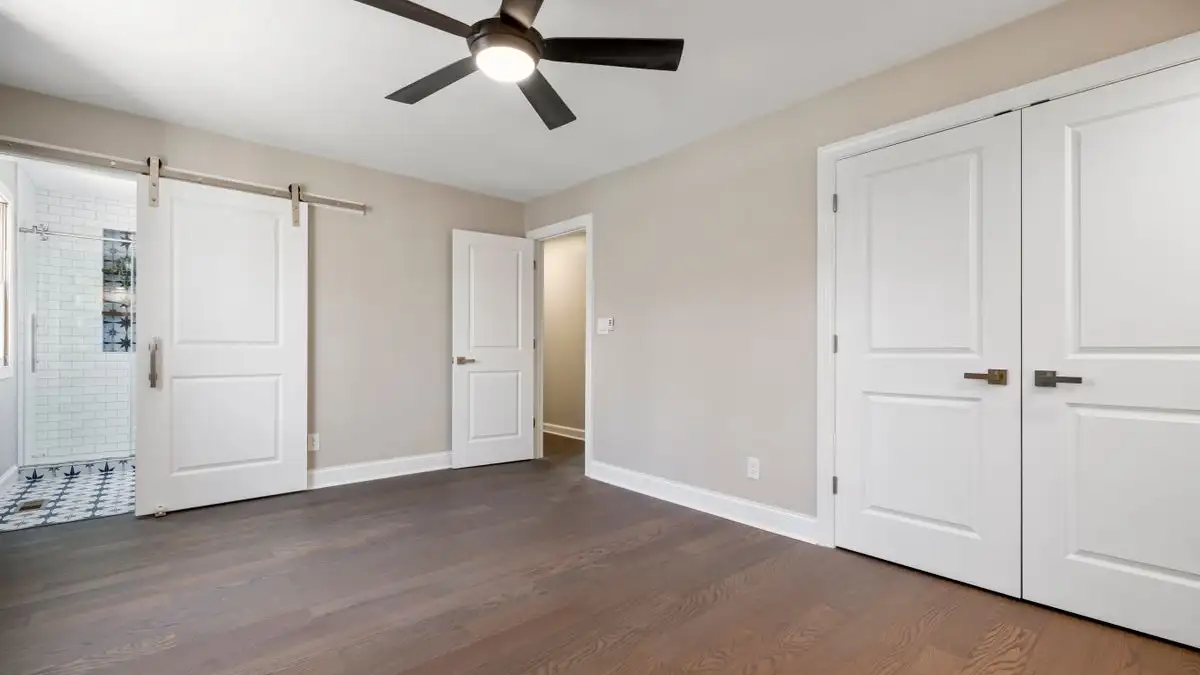
Your renovation does not start on demolition day. It starts the day the longest-lead order goes out, and by the time a crew is prying cabinets off the wall, that day is usually already behind you. In nearly every project I have worked through, the critical path ran through the order book rather than the installation crew. Custom cabinets, made-to-order windows, roman shades cut to a specific window — those are quoted in weeks, not days, so the ordering window for them closes before the first hammer swings. Once it closes, no amount of hustle on site reopens it.
I keep a legal pad on the kitchen island for exactly one purpose. Left column: the day something has to be standing on my driveway. Right column: the day I want it installed. Everything between the two columns is fabrication, finishing, freight, and the cushion I always underestimate. When the pad is full, I don't stare at the install date. I stare at the delivery date, because that's the number with leverage in it.
Working the calendar backward is the only version that survives contact with reality
I pick the anchor first — the day I want the last thing finished. Usually it's a date with a reason behind it, and the reason has nothing to do with construction. Then I walk left across the page.
- Install day.
- Minus the installation days themselves.
- Minus a cushion for the crew's previous job running long. There is always a previous job, and it always runs long.
- That number is the delivery deadline.
- Minus fabrication or transit time.
- That number is the order date.
The first time I did this, the number on the far left of the pad genuinely startled me. It landed weeks before demolition, sometimes before I'd even signed with anyone. That's the part people don't see coming. The renovation has a deadline you can miss long before the renovation has visibly begun.
Fixed points versus float
Here's how I sort a project in my head. Custom items are fixed points. Stock items are float.
A made-to-order window sits at the very front of the calendar because its lead time is measured in weeks and there is nothing you can do to compress it. A custom cabinet run is the same story. So are shades cut to a specific opening, or a countertop slab held for a particular job. Those dates are nailed down, and I arrange everything else around them rather than the reverse.
A standard faucet, a stock vanity, paint, a shelf bracket — those I can buy on short notice. They are the flexible part of the schedule, and treating them that way is what buys back the slack I need when something custom slips. If I've already committed the flexible items to hard dates, I've spent my only currency.
The overage decision only exists at order time
Tile and flooring get ordered with extra — a common allowance is around ten percent — and the reason isn't the cuts you can see on the layout drawing. It's the break you can't see, plus the repair two years out when a supply line lets go behind the dishwasher. You want matching material sitting in the garage at that moment.
That decision has to be made at order time, because dye lots and production batches change. Boxes from a later run don't match earlier boxes, no matter how good the sample looked under the showroom lights. I learned to look at the batch or dye-lot marking on the carton before it goes in the garage, and to keep those cartons together, because the day will come when I need four more square feet and the only thing standing between me and a visible patch is whether I bought the extra when I had the chance.
Materials land before the crew is booked
Booking installers is the easiest way to create a problem for yourself, because a booked crew that shows up to nothing is expensive in a way that doesn't show up as a line item. It shows up as a reschedule, a delay, and a colder relationship.
So I don't confirm an install date until the material is physically accounted for. Two things drive that:
Wood flooring needs to sit inside the house long enough to settle into the indoor conditions it will live in. That means it arrives before the install, not the morning of. If it lands the day the crew shows up, the crew either waits or installs it wrong, and one of those two outcomes is permanent.
Anything that can arrive damaged needs to arrive with time to spare, because a replacement is another lead time. A cracked vanity top found on install day isn't a hiccup. It's the whole schedule moving.
There's an honest trade-off here and I don't want to pretend there isn't. Ordering far ahead means storing things. My garage has held pallets for weeks. Return windows tick down while a box sits unopened, and if a plan changes after the order ships, the material doesn't care. Ordering early against a design that isn't frozen is how people end up with a beautiful, wrong, non-returnable pile.
So the rule I actually follow is: lock the design, then order. Not the other way around. A long timeline and an open design are a package deal. You can have a fast timeline, or you can keep your options open, but not both, and pretending otherwise is how the ordering window sneaks past you.
Somebody has to be standing there when it lands
Delivery day is a job, not an errand. I schedule freight for a day I'll be home, on the ground, with a box cutter and a phone.
What I'm doing in those first ten minutes: counting pieces against the packing slip, opening anything that could have been crushed, looking for cracks at corners, and writing exceptions on the signature line before the driver pulls away. Damage found after the truck leaves becomes the buyer's problem, and that shift happens the moment ink touches paper. Signed clean, then discovered cracked, is a very different phone call than signed with a note.
I also keep a tarp and a clear corner ready before the truck arrives. Freight dropped in the driveway in the rain while I'm hunting for somewhere to put it is its own kind of self-inflicted wound.
The part almost nobody says out loud
The ordering window doesn't close before your renovation starts because of logistics alone. It closes because it is your design deadline wearing a shipping date.
Every decision that has to be made before an order can be released — the finish, the size, the door style, the grout color, the placement of the outlet under the counter — has to be made by the date on the far left of that legal pad. Not by demo day, not by the day the crew shows up, not by the day you start panicking. By the order date.
That's why the pad works for me. It converts a vague feeling of "we have time" into a specific list of things I have to decide by a specific Tuesday. The calendar isn't really about the trucks. It's about protecting the decisions that make the trucks worth waiting for.