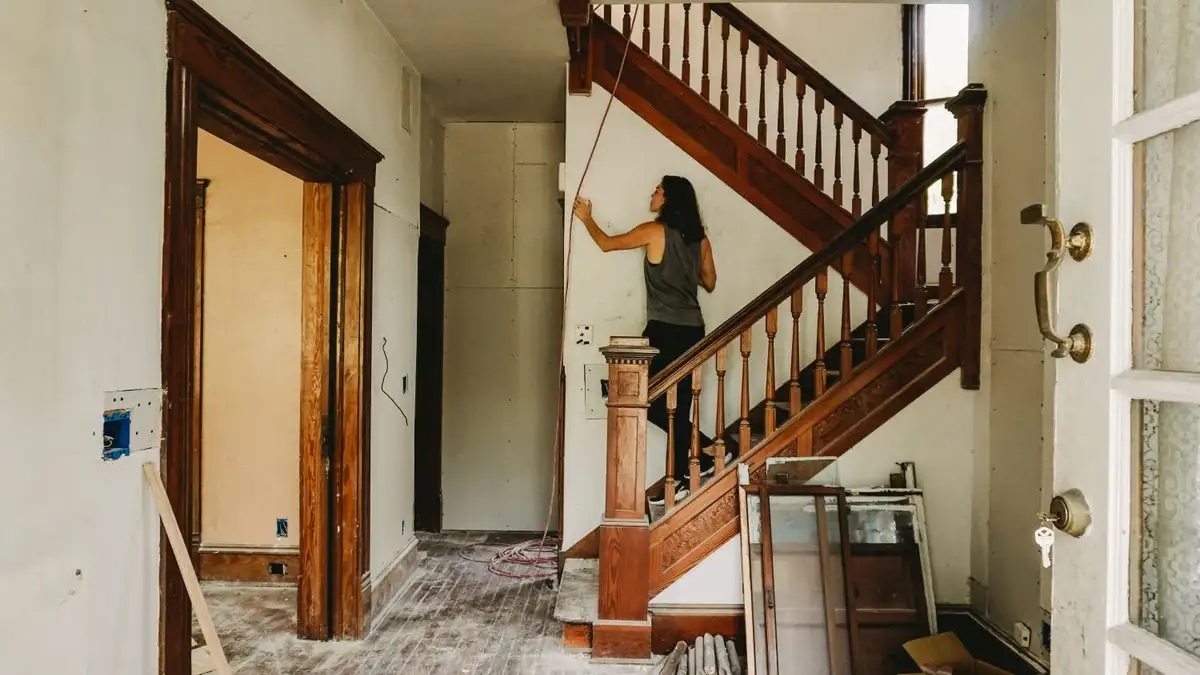
A newly finished renovation feels empty because the renovation stopped one phase early. Paint, flooring, tile, trim, doors, and hardware are construction finishes — they seal the house up and make it inspectable. Rugs, window treatments, and layered lighting are decorative finishes, and they are not the reward you buy once the tools are gone. They are the final phase of the same timeline, with their own measurements, lead times, and dependencies, and they cannot be sized or aimed until the construction finishes are installed, dry, and standing under real light. Until that phase runs, a room can be completely finished and still feel uninhabited, and that gap is the emptiness nobody can quite name.
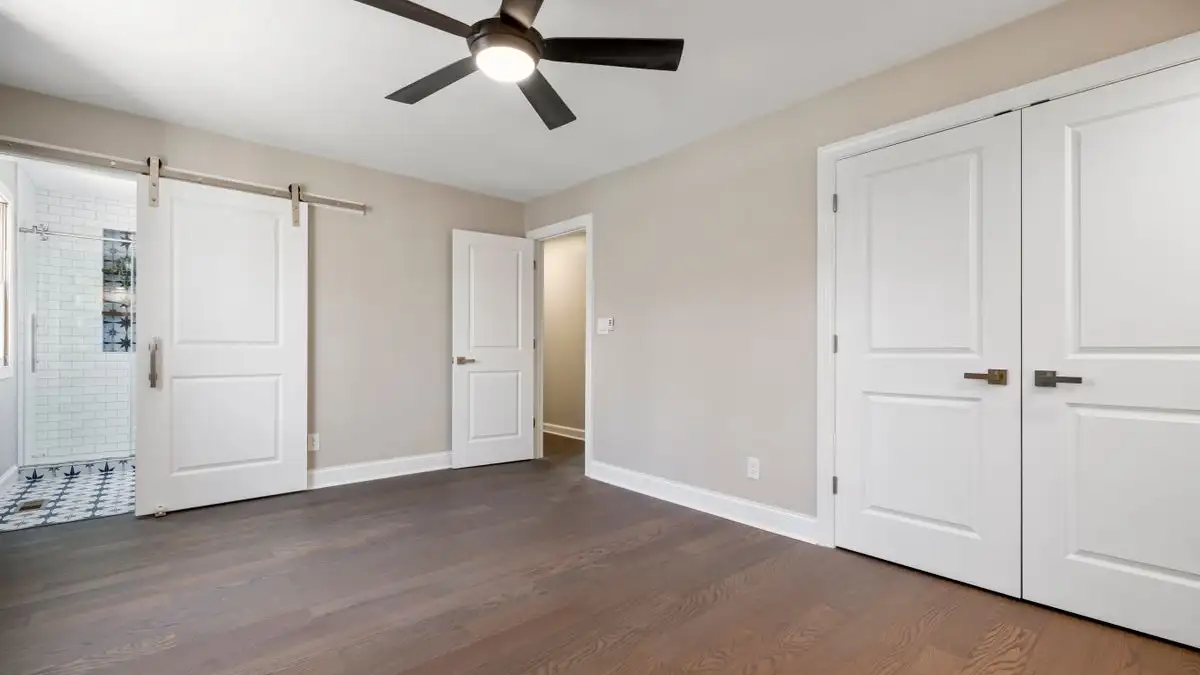
I heard it before I saw it. A finished living room in early spring, walls just painted, floors new white oak, baseboards crisp, every outlet plate screwed flat to the wall. It looked right. It sounded like a garage. My own footsteps came back off the window glass and the bare floor, and I set my coffee down on the floor because there was nothing in the room at the right height to put it on. Four months of work, and the room still announced that nobody lived there.
What I understood standing in that echo is that construction finishing and decorative finishing are two different trades running on two different clocks, and the renovation had only run one of them.
The echo is the tell
I notice sound first in a new room, and I think that instinct is correct, because it tells you what's missing before you've made a single decision. What reflects in a finished-but-unfurnished room is a short list: window glass, hard flooring, painted drywall, and trim. Those are exactly the four surfaces construction hands back to you. Everything that absorbs them arrives later — a rug with a pad under it, drapery with some body to the fold, upholstery, the soft goods on a bed.
That's why a room with bare windows and hard floors reads as unfinished no matter how good the paint and flooring are. It isn't a taste problem. It's a physics problem you haven't been given permission to solve yet, because the soft materials that would solve it can't be specified until the hard materials stop moving.
Window treatments are measured after the trim goes on
That single fact makes them a post-construction task by definition, not a purchase you can get ahead of. Inside-mount shades are cut to the finished reveal; a shade cut to the rough opening will hang proud of new casing or bind against it. Rod width and stack-back depend on where the casing actually ends. And how much light reaches the room depends on the finished house — the exterior overhang, which way the room faces, how much the finished floor bounces back up at you. You find that out at four in the afternoon with the furniture still unplaced, not during framing.
Long lead times are real, and I understand the urge to order early. If you have to, order against the finish schedule rather than the framing plan, and go in knowing you're accepting risk on the reveal depth and the light behavior. That's a tradeoff, not a mistake, as long as you've named it.
A rug is sized to a furniture footprint, not to a room
Rug size should be chosen against the furniture layout rather than the room dimensions. This is a hard dependency, not a rule of thumb. A rug gets sized to a footprint — front legs on, all legs on, or in a dining room, enough past the table that a pulled-out chair stays on it. You cannot know that footprint until the furniture is placed. And you shouldn't place the furniture until the finishes are chosen, because a sofa or a set of chairs bought before the floor and wall tones were locked tends to fight them, and the fight usually ends in repainting a room you just painted or reupholstering furniture you just bought. Neither correction is cheap, and both undo work you already paid for.
What I do instead is tape the footprint out on the floor with painter's tape once the furniture is where it belongs, then measure the tape. It sounds fussy. It stops you from buying a rug that looks generous in the store and lands as a postage stamp in the middle of a seating group.
Lighting is the clearest place the two phases split
Rough-in is construction. Layering is furnishing. At rough-in you're deciding where power goes, how the room switches, whether the cans wash a wall or pool light on the floor. Code and framing set those deadlines, so those decisions get forced early whether you're ready or not. What actually makes a room feel finished — table lamps at the right height, dimmers on the lights people genuinely dim, a floor lamp washing a dark corner, a picture light — gets added in the furnishing phase, after you know where the furniture landed and which corners go black at night. Layered lighting is the difference between a room you sit in and a room you walk through.
What the rough-in phase should decide, and what it shouldn't
Put more circuits and more switch legs in before drywall than the plan calls for. A dimmer can be swapped later in ten minutes; a switch leg cannot be added without cutting into fresh paint. That asymmetry is why the rough-in deserves overbuilding and the furnishing phase deserves restraint. The other thing I watch: recessed trims sometimes get picked during construction while bulbs and lamps get bought months later, and mixing color temperatures across those two moments is the most common reason a brand-new house looks subtly wrong after dark. Standardize the temperature, and buy those two purchases close together rather than six months apart.
The sequence, and where it bends
The order I work in: punch list and touch-up paint first, then furniture placement, then the rug, then window treatments, then the lighting layers, then everything decorative that comes after. Each step depends on the one before it, which is the whole point.
It bends in a few places. If the anchor piece of furniture has a twelve-week lead time, you may have to order it before the finishes are down — in that case, carry a floor plank and a paint chip to the decision instead of a mood board, and pick the piece against the physical sample. Small rooms are the other exception, where the layout is more or less forced by the walls and you can sometimes settle the rug earlier than usual. And if you're renovating room by room over a year, that's a legitimate choice. Just make it on purpose, so you're not surprised by how long a room keeps ringing.
The moment the last textile lands, the echo goes. That's the signal the renovation is actually finished, not just inspected.