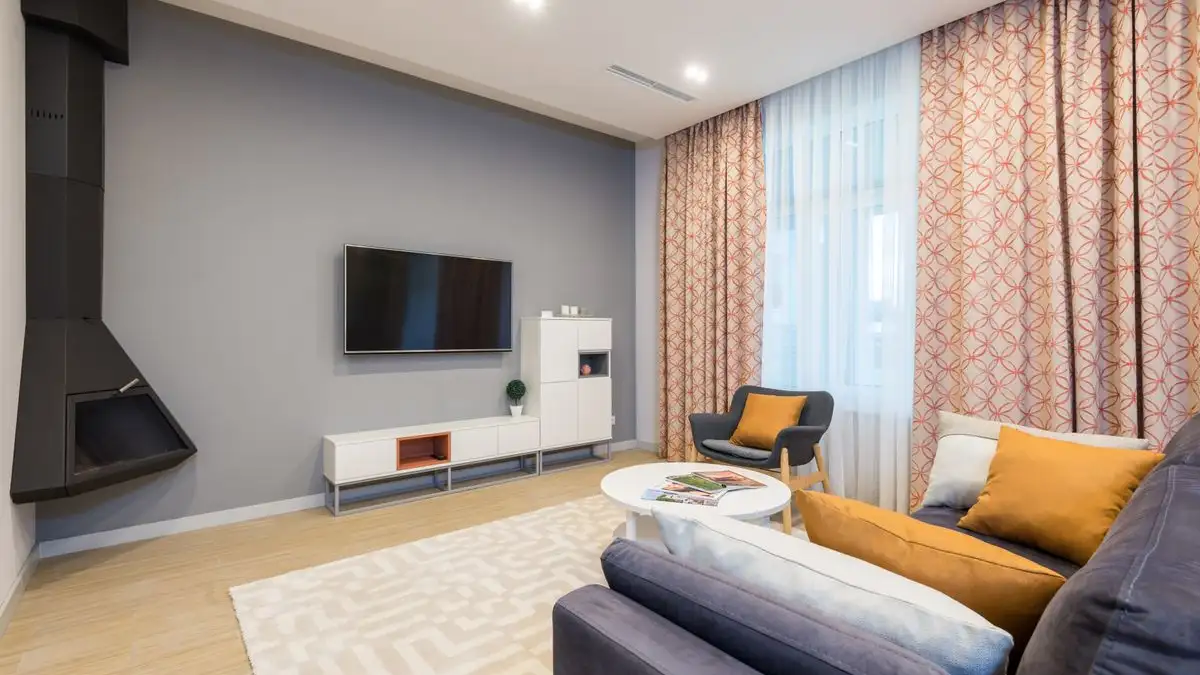
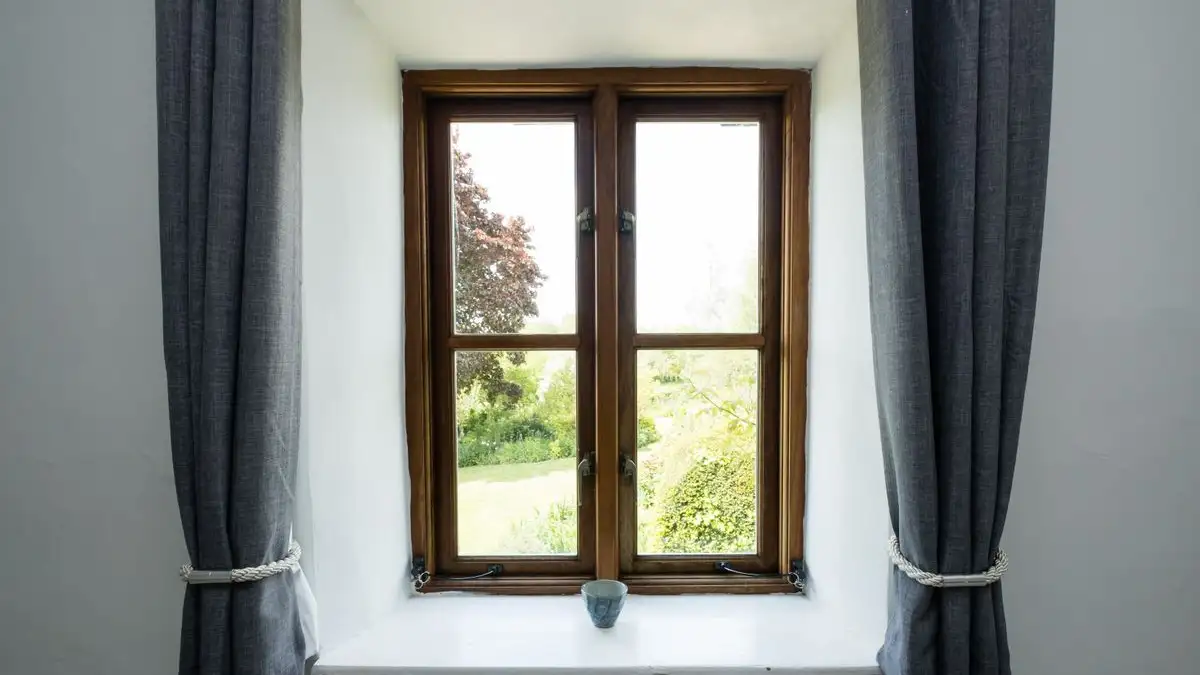
The two panels are almost always the same length. The rod is level. The floor is not, and neither is the ceiling above it. On a floor that falls half an inch across the width of a window, two panels cut to the same finished drop will put one hem flat on the carpet and leave the other one hanging in air, and the gap will get blamed on the panels, the rod, or whoever did the measuring. It is none of those. It is a measurement taken against the room instead of against a level line. Strike a horizontal line at the height the rod hangs, read the drop at the left edge, the center, and the right edge of the window, and order every panel to the shortest of those three numbers. The hem will then run parallel to the rod, clear the floor everywhere, and float the most at the low corner of the room, which is the only outcome an uneven floor permits.
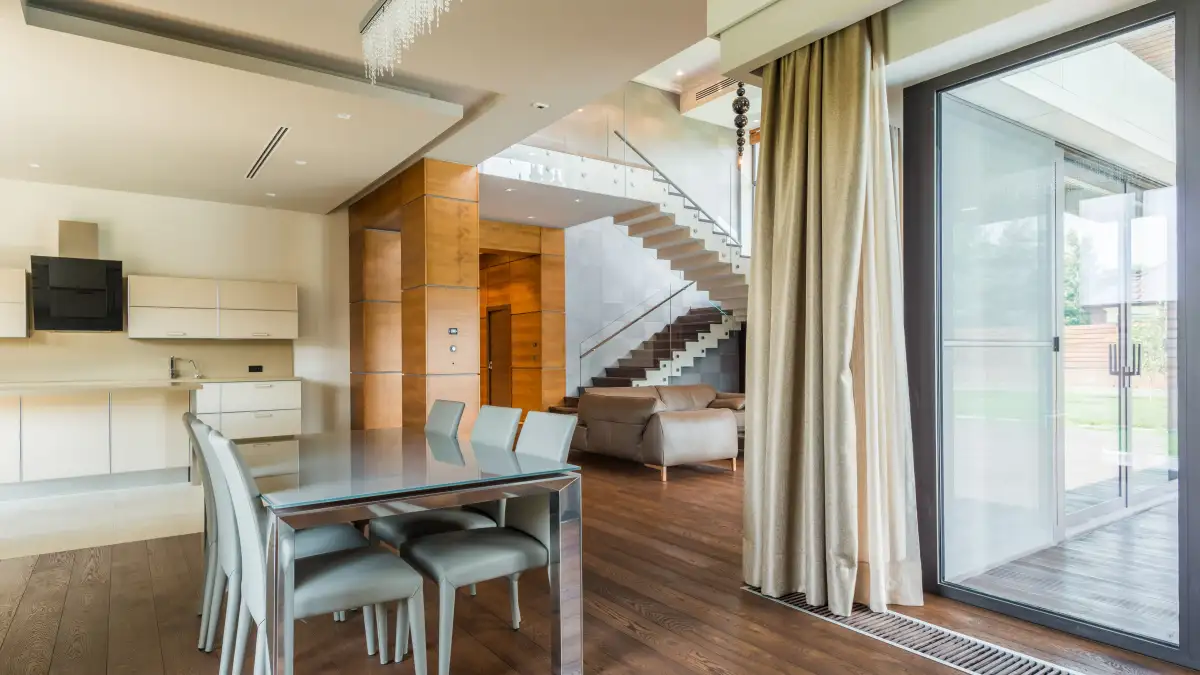
I have stopped measuring panels against each other. Same package, same tag, near enough the same length, and the difference you are seeing is not in the fabric. So before the tape comes out, I check the one thing everything below it depends on.
Check the rod before you check anything else
Put a four-foot level along the underside of the rod, or hold it against the rod itself if the rod is thin enough to accept it. Look at the bubble from the left end of the window, then walk to the right end and look again. A rod that sags a quarter inch in the middle or tips down toward one bracket will do exactly what you are staring at: same-length panels, hems at two heights, the low end of the rod resting on the carpet. If the bubble reads differently from the two ends, the rod is the variable and nothing you measure underneath it will save the install.
If the rod is true, the floor is the variable. That is the more common case by a wide margin.
A panel hangs from the rod. It has no opinion about the ceiling.
This is the part I had to feel rather than learn. A curtain panel is a straight piece of fabric hanging from a straight horizontal line. It does not know about crown molding, or a dropped soffit over the kitchen window that is not over the dining window, or the ceiling line that dips two inches across the room because something structural moved long before you bought the place.
Every time you hook a tape at the ceiling and run it down to the floor, you have added the ceiling's slope to your number. Ceiling-mounted hardware over a sagging ceiling makes it worse, because the rod leaves the factory level and the ceiling drags it off. Measuring from the rod line removes all of it, since the rod line is the only line the panel will ever actually touch.
Floors are less honest than they look, too. Houses settle. A floor that has been standing for decades has found its own shape, usually soft in the middle of a span and high near load-bearing walls, sometimes with a noticeable fall at the outside wall of an upper floor. Two windows in the same hallway can measure an inch apart in finished drop. A panel that lands perfectly in the front bedroom will pool on the carpet in the back one, and both numbers were correct for the window they came from.
So the room hands you two different answers and only one of them can survive. You need a reference the room does not have yet.
Strike a line the panel will actually agree with
Pick the height the underside of the rod sits at, or the height the top edge of the finished panel will sit at, which is not always the same thing. Mark that height at one end of the window and again at the other, using a self-leveling laser if you have one, or a four-foot level turned on its side if you do not. Tick the wall every foot or so between the two marks, then snap a chalk line through the ticks.
That line is horizontal. It exists nowhere in the room except on the wall you just marked, and that is the entire point. The ceiling can keep sloping. The floor can keep falling away. The panel only has to line up with the chalk line, and the chalk line is the one thing that agrees with the rod.
Now hook the tape on the line and read down to the floor. If the rod is already up and you have confirmed it is level, you can read from the underside of the rod instead and skip the marking. Either way, the number comes off a horizontal reference, not off the ceiling and not off some averaged impression of where the floor sits.
Three readings per window, and the shortest one wins
Left edge. Center. Right edge. Read all three at every window, even the narrow ones. The drop is shortest where the floor is highest. Ordering to the shortest reading means the panel clears the floor along its whole width and shows its largest gap over the dip, which reads to the eye as a panel hanging straight. Ordering to the longest reading means it touches at the high side and pools at the low side, which is the exact problem you started with, just relocated.
One more thing belongs in that number. The panel does not hang from the rod; it hangs from whatever attaches it. On rings and hooks, the top edge of the finished panel sits below the rod, sometimes an inch or two, and that distance comes out of the total. On grommet tops and rod pockets, the top edge is essentially at the rod. Measure from where the top edge will actually sit, not from the part of the hardware you can see from the couch.
The floor is not always the floor
Carpet is pile sitting on a pad, and pile compresses. A plush with a thick pad can sit three-quarters of an inch higher than the hardwood it replaced, which is enough to turn a panel that just kisses the floor into one that breaks and puddles. Area rugs do the same thing in a smaller footprint, and they often sit under only one of the two windows. A wood transition strip at a doorway under the outside edge of a window raises the surface by an eighth of an inch and does nothing to the rest of the hem.
Measure to the surface the panel will actually end above, in the position that surface will actually live in. Rug down, pad in place, furniture already where it is going to stay. If you are the kind of person who rolls the rug up twice a year, measure to the bare floor and accept that the hem will sit a little higher over the rug for the part of the year the rug is out.
Two windows on one rod
When a single rod spans two windows, the two hems share a line whether you planned it that way or not. Every panel on that rod gets built to the shortest reading taken anywhere along the rod, so the stagger does not show up across the mullion or the strip of wall between the windows. A slightly higher hem across an entire wall is invisible. Two hems stepping up and down next to each other is the first thing anyone notices when they walk in.
Separate rods, separate numbers. Two rods in the same room on opposite walls get to disagree, but only if they are far enough apart that the eye cannot compare them at once. Same wall, same number.
Write the numbers down, per window
I keep a strip of painter's tape on the wall beside each window and write the number on it with a Sharpie, plus a word or two about which window it is: front left, side, above the landing. In a whole-house project that list is what stops you from installing a 91-inch panel on the 93-inch window, a mistake you get to look at every single day. Check each panel against the list before it goes on the rod, not after.
Where it depends
Ready-made panels come in set lengths, and 63, 84, 96, and 108 inches cover most of what is on a shelf. If your shortest reading lands between two of those, you order the next length down and accept a slightly higher float, or you buy long and have them hemmed. Both are legitimate. What does not work is ordering the longer one and hoping the difference disappears in the folds, because it does not. It shows up as a puddle.
If you want a deliberate puddle on a sloped floor, use the longest reading and know that the puddle will be deeper at the high corner and barely there at the low one. On an uneven floor you can have an even hem or an even break, never both. Pick the one your eye will notice.
And if you want the hem to follow a sloping ceiling line instead of sitting level over the floor, a real choice in some rooms, the whole calculation flips. Say that out loud before you order, because fabric cut for one look will not deliver the other.
Every panel in every room is a straight line hanging inside a crooked box. Measure to the straight line.