The Hidden Cost of Skipping Layered Lighting in Your Home
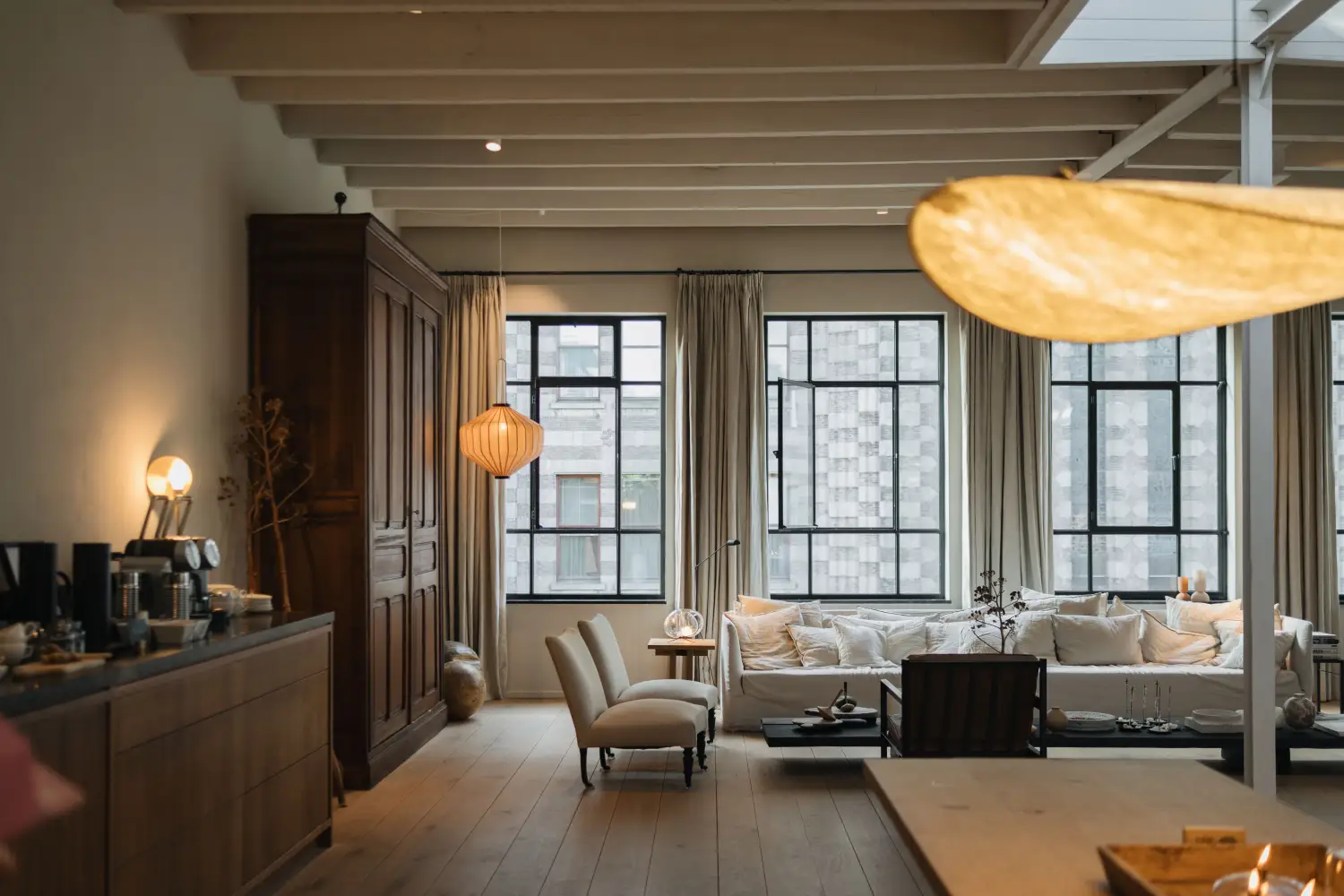
Living with a single ceiling light feels fine until the moment you notice it's not. The book you're reading every night strains your eyes, and you chalk it up to a long day. The new couch looks dull, and you assume the color was off online. The kitchen counter is always shadowed where you chop vegetables, and you just keep squinting. That is the hidden cost of skipping layered lighting—not a repair bill or a renovation, but a quiet daily tax on how comfortable and inviting a room actually is.
What makes this sting is how avoidable it is. The usual fix seems to require holes in the ceiling, an electrician's invoice, and a budget that hurts. That's the assumption. The reality is that three plug-in items—a floor torchiere, a clamp light, and a battery puck—can put three layers of light into a room in under two hours for less than $150. This kit doesn't need permission from a landlord or a building permit. It works because depth comes from placement, not from price.
Three Reasons Your Rooms Stay Flat (Even When You Know They Shouldn’t)
- The price barrier: Recessed cans, track lighting, hardwired sconces—those set the expectation that decent lighting costs hundreds per fixture before anyone picks up a tool.
- Renting with no options: A lease forbidding painted walls or swapped fixtures makes a plugged-in planet of limitations feel like the only world.
- Design paralysis: Worrying about beam angles, color temperature, and whether the result will look worse than a bare bulb stops people before they buy a single lamp.
If Cost Is What Stops You, a $90 Torchiere Does the Heavy Lifting
A torchiere floor lamp looks like it belongs in a dorm, but that upward-facing bowl turns a plain ceiling into a giant soft reflector. Stick one in a corner and the whole room gets wrapped in diffused light, no drywall dust involved. It's the fastest way to add an ambient layer without spending anywhere near what a hardwired fixture costs.
Why it solves the price pain: A solid dimmable LED torchiere runs $75–$100. Compare that to the $125–$250 per fixture a single recessed light averages once cutting and patching is added. The torchiere covers about 150 square feet of even, reflected light, and it plugs into the nearest outlet in minutes.
Trade-off: It eats a 12–14 inch circle of floor space, which in a tiny room matters. And the upward bowl catches dust and dead insects—wiping it out every few months keeps the brightness up.
Runner-up: A $35–$50 plug-in wall sconce with a swing arm and a warm LED bulb. It hangs with a single screw or a heavy-duty adhesive hook, adds a second layer, but doesn't bounce light the way a ceiling kiss does.
If You’re Renting and Can’t Touch the Wiring, a Battery Puck Light Beats a Hardwired Sconce Every Time
The simplest way to slip in accent or task light without a lease violation is a battery puck light. It sticks under a kitchen cabinet, inside a bookcase, or above a picture with its included adhesive or magnetic pad. The circle of light is small but focused—enough to highlight a shelf, brighten a counter corner, or wash a wall behind a monitor.
Why it solves the rental pain: No wires, no screws into anything if the adhesive holds, no need for an outlet directly behind. A three-pack costs $20–$35 and runs 30–60 hours on AA or AAA batteries, usually with a remote for brightness and timer settings.
Trade-offs: Batteries need swapping, and adhesive can eventually let go on some surfaces (a small magnetic plate and screw, if allowed, gives a stronger hold). Each puck puts out 80–150 lumens—ample for accent, not enough to replace a work light.
Runner-up: A plug-in pendant hung from a ceiling hook with a cord sleeve. It creates a stronger downlight for $40–$60, but the dangling cord isn't sleek without a canopy, and it needs a nearby outlet.
If It Sounds Too Complex to Pull Off, a Clamp Light Cuts Through the Overthinking
Clamp lights have been studio workhorses forever, but in a living room they're the antidote to analysis paralysis. A simple black or white reflector with a medium-base socket attaches to a window sill, a bookshelf, a curtain rod bracket, or the back of a chair. Spin it to point at a reading spot, a cutting board, or a plant cluster—no layout grid required.
Why it solves the complexity pain: There's no plan to draft. Pick an edge, clamp it on, thread in a warm 800-lumen LED, tilt the head. It's fully set up in under five minutes for $15–$25 all in.
Trade-offs: The industrial look won't charm every room. A bare bulb can glare if not aimed properly. Some clamp jaws are too narrow for extra-thick ledges—check clearance before buying.
Runner-up: A $30–$50 desk lamp with a weighted base and a flex neck. It's as simple but takes up table or counter area that the clamp light leaves free.
The Three-Item Kit: A Side-by-Side Look
| Item | Price Range | Key Feature | Installation Effort | Best For |
|---|---|---|---|---|
| Torchiere floor lamp | $75–$100 | Uplight bounces off ceiling for soft ambient layer | Plug in, place in corner (under 5 min) | Living rooms, bedrooms needing general light |
| Battery puck light (3-pack) | $20–$35 | Adhesive/magnet mount, remote control, dimming | Peel and stick (under 5 min for all three) | Accent lighting, under-cabinet, bookcases, art |
| Clamp light | $15–$25 | Adjustable reflector, clamps to edges | Clamp on, screw in bulb (under 5 min) | Task lighting: reading nook, prep area, desk |
Total kit cost: $110–$160. Total deployment time for all three: under 30 minutes (excluding a trip to the store).
Moving from One Overhead Fixture to Three Layers—What’s Straightforward and What’s Not
Dropping a torchiere into a corner is instant. The room stops swallowing its ceiling. The clamp light and puck light need a little more thought about where they go, but zero thought about construction.
What moves over without a fight:
- Ambient light: The torchiere does the whole job. No switch added, no wall opened—just an outlet.
- Task light: Clamp it wherever the ceiling light abandons the work—a dark chair, a dull counter edge. It can follow furniture around.
- Accent light: Pucks slip into spots wires can't reach: glass-front cabinets, above an unlit bathroom mirror, the top shelf of a pantry.
What puts up some resistance:
- Coverage in open plans: A single torchiere handles about 150 square feet. A 300-square-foot living-dining space may need a second torchiere or a shaded floor lamp nearby.
- Battery routine for pucks: If a puck runs six hours nightly, batteries die in a week or two. Rechargeable NiMH cells with a spare set keep the rhythm manageable, but it's still a chore.
- Cord wrangling: Both the torchiere and the clamp light trail cords. In outlet-sparse rooms, extension cords become part of the scene. Flat cord covers, a rug, or strategic furniture placement hides them—but it's a detail that can't be ignored.
When a Single Ceiling Light Might Actually Be Enough
Some rooms don't need layers. A laundry closet, a short hallway with doors at both ends, a powder room the size of a coat closet—these are pass-throughs that a single 3000K, 800-lumen ceiling fixture can handle fully. Adding more lights in those spaces adds clutter, not comfort. The hidden cost doesn't apply because the room never asked for depth in the first place.
Common Questions About a No-Wiring Lighting Kit
How long do battery puck lights actually last before the batteries die?
With alkaline batteries and 2–3 hours of daily use, most pucks run 20–40 days. Rechargeable NiMH batteries roughly double the interval between changes, and lithiums can stretch it to 60 days. The remote’s timer feature prevents accidental overnight burning, which saves a lot of battery life.
Can a torchiere work in a room with 8-foot ceilings, or does it need more height?
An 8-foot ceiling is ideal. The bowl usually sits at about 6 feet, throwing light evenly across the surface. With lower ceilings, the glow can feel too concentrated near the lamp—a dimmable bulb or lower-lumen option helps. Higher ceilings (9 feet and up) soften the bounce; picking a torchiere with 1500 lumens or more keeps the room from feeling underlit.
Do these lights work with smart plugs for voice or app control?
Yes. All three plug into standard outlets, so a smart plug or power strip can schedule on/off times. Dimmable functions usually aren't controllable by the smart plug unless the light has its own remote dimming; pucks typically handle that through their remote, and scheduling the on/off is simple.
What if my room has no outlet near the spot where I need the clamp light?
An 8–10 foot flat-plug extension cord, run along a baseboard with adhesive cord clips and covered by a small cord channel, solves the problem cleanly. If even that's too visible, a battery-powered LED bar with a clamp bracket works, though it will need battery swaps more often than a puck because of its higher output.
The Bottom Line on the Kit
- If price blocked you, the torchiere alone flips the feel of a room for less than a dinner out—and it needs no contractor.
- If renting kept you stuck, battery pucks add exactly the accent a fixed ceiling fixture can't, and they vanish without a trace when you move.
- If complexity froze you, the clamp light is the undo button: clamp it on, aim, and suddenly the dark spot is gone.
Depth in a room’s lighting comes from spreading sources across different surfaces—floor, wall, furniture—not from chasing expensive hardware or rewiring the house. A $150 kit and an afternoon is all it takes to undo the hidden cost that’s been draining the room day after day.

Clara Bennett
After five years of transforming my 1920s bungalow room by room, I’ve refinished floors, hung blinds in bay windows, and spent more time choosing light bulbs than I’d like to admit. I learned paint sheens by painting my kitchen ceiling three times, and I found out the hard way that a rug too small makes a room feel unfinished. I believe every home can be both functional and beautiful, no matter the budget.
Related posts
Why More Accent Lights Won’t Make Your Room Look Better
Over-illuminating with accent fixtures creates visual chaos. Use a smartphone light meter and the 5:3:1 luminance ratio to curate focal points instead.
The Task Lighting Mistake That’s Straining Your Eyes Right Now
Misaligned task lighting creates shadows and glare that strain your eyes. Use the floating hand test and 30-inch rule to fix it in minutes.
How to Get Even, Cozy Ambient Light in Every Room
Learn a simple three‑step lumen calculation using room size and purpose to create warm, even ambient light. Includes a fixture checklist for light spread—stop guessing.