The Hardwood Species Guide for Homes With Dogs and Kids
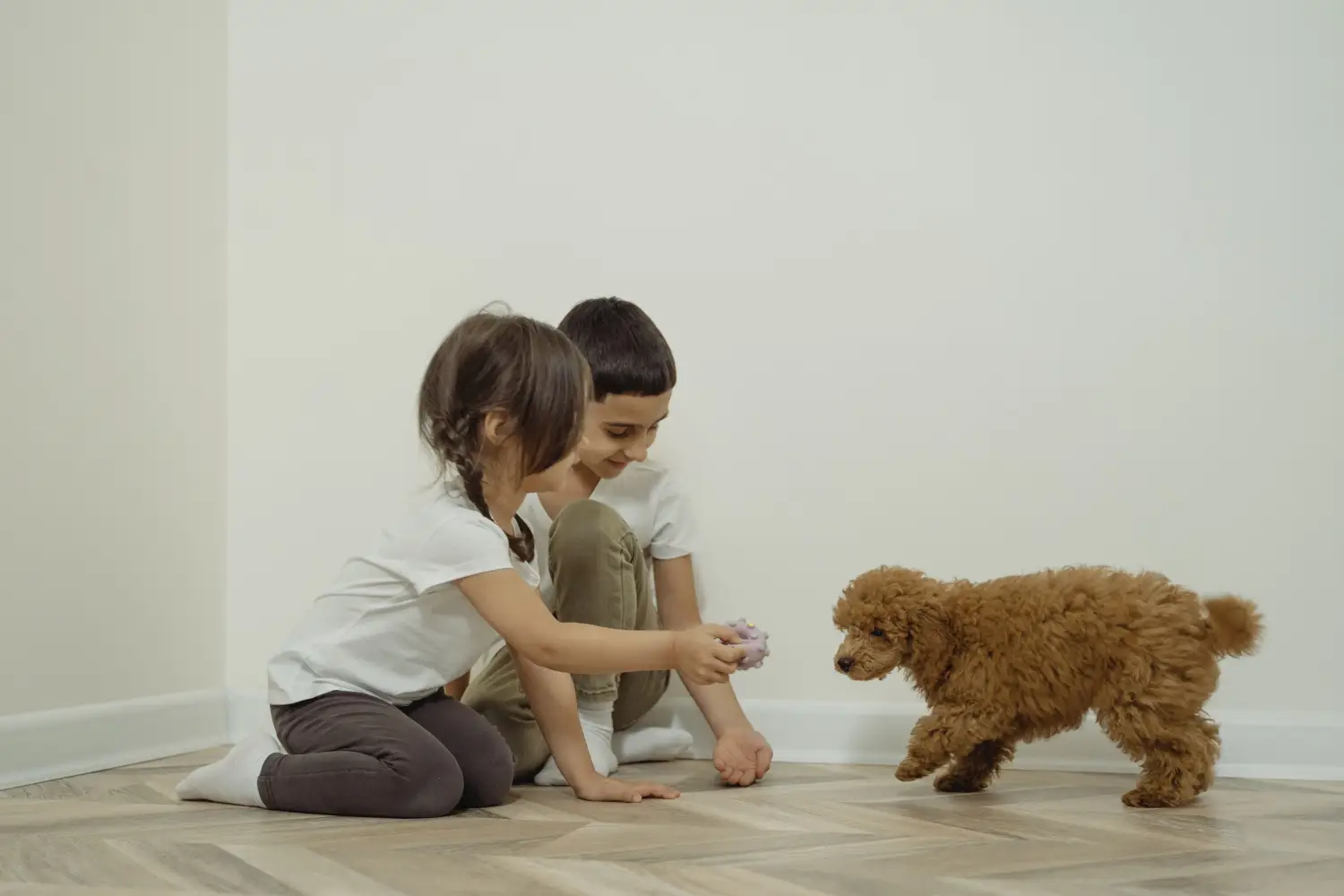
A hardwood floor in a home with dogs and children endures more than footsteps. It absorbs the concentrated pressure of claw tips during a sprint, the sudden impact of a dropped block, and the scrape of a chair being dragged back from the dinner table. The Janka hardness test gives that daily abuse a measurable figure. A rating above 1,500 generally avoids casual denting from moderate activity; above 2,000 resists even a large dog’s repeated landings. The number matters less in isolation than when you map it to the specific forces your household creates.
Which Floor-Wear Scenario Fits Your Home?
The Big-Dog Household. A 70-pound or heavier dog whose nails leave a staccato rhythm across the floor. This path concentrates on species above 2,000 Janka and on how grain pattern hides what hardness alone does not stop.
The Toddler Zone. Hard plastic toys, tipped cups, and a small person learning to walk—which means frequent, short drops and localized moisture. The route runs through the 1,200 to 1,800 Janka range, where dent resistance and budget intersect, then checks whether a matte finish and varied grain make the daily marks recede.
The Frequent Host. Dinner parties with chairs rearranged, a dropped corkscrew, and occasional high heels. The key insight here: concentrated point loads defeat steady foot traffic, so you need both a high Janka rating and a visual texture that scatters scratches.
Decoding the Janka Hardness Number (So You Know What It Actually Measures)
The Janka test measures the force required to embed a steel ball to half its diameter into a plank. A higher number means the wood resists denting under a focused load. What the test does not capture: scratch resistance, water tolerance, or how a finish layer fails over time. Those are governed by the finish film itself and by the grain’s topography.
A useful exercise is to pull up a chart and note the spread among red oak (1,290), hard maple (1,450), and hickory (1,820). The jump from red oak to hickory represents roughly a 40 percent increase in dent resistance. That difference becomes the baseline for matching a species to predictable impacts.
You are ready to proceed when you can read a raw Janka number and translate it into the kind of daily event it will or will not resist. A rating of 1,000 means a firm thumbnail press leaves a trace. A rating of 2,000 means most dropped toys and medium-dog claws register little to nothing.
From Lab Test to Living Room: What Everyday Abuse Looks Like in Janka Terms
Consider a 50-pound Labrador accelerating across the floor. The claw contact area is minute, so the momentary pressure can exceed several thousand psi. Wood at 1,300 Janka accepts shallow indentations over months; wood at 2,200 Janka resists them altogether. Increase the dog to 90 pounds, and a species below 1,800 develops a visible texture within a year.
Children introduce a different failure mode. A toddler dropping a wooden block from waist height produces an impact roughly analogous to the 900-to-1,200-pound range of the Janka scale. Red oak at 1,290 sits on the threshold—it dents occasionally. Hard maple at 1,450 moves that threshold enough that the same drop rarely records.
A party scenario layers scratching onto denting. Metal chair legs dragged across the surface create linear damage that no Janka rating alone prevents. The grain must absorb what the hardness does not block.
At this stage, list the five most common impact events in your home—large-dog zoomies, child’s toy drops, furniture dragged for gatherings—and assign each a rough Janka demand based on the described mechanics. You move on when you can state, “My floor needs to survive impacts up to X, therefore I need a species rated above Y.”
The Species Showdown: Matching Hardness to Your Home’s Chaos Level
Above 2,000 Janka—For Large Dogs and Heavy Impacts. Brazilian cherry (2,350), santos mahogany (2,200), and some variants of hickory (up to 2,000) sit in this tier. They take concentrated effort to dent. The tradeoff: they are harder to saw and nail, and they move more with seasonal humidity swings—something to flag for the installer, not a reason to avoid the wood.
1,400 to 2,000 Janka—The Sweet Spot for Most Families. Hard maple (1,450), white oak (1,360), beech (1,300), and certain ash cuts (1,320 to 1,480) fall here. White oak earns a special note: its open grain and natural color range hide small dents and scratches more effectively than a visually uniform wood like hard maple, even though maple is technically harder. For a household with a medium-sized dog and school-age children, white oak often reads as newer for longer.
Below 1,200 Janka—Accept Wear as a Planned Patina. Pine (870), black cherry (950), and walnut (1,010) dent easily. In a dog-and-kid home, they develop a pebbled surface quickly. One strategy is to select a wire-brushed or hand-scraped texture from the start, so new damage merges into the existing topography. Otherwise, restrict these to low-traffic zones.
Request physical planks of at least two candidates. Drag a house key across the surface with moderate pressure. A key simulates a dog’s claw or a chair leg more faithfully than the steel ball of the Janka test. You are ready to commit when you hold a shortlist of two species, you understand their grain and color variation, and you can say which family activities will still register after a year.
Why the Toughest Wood Can Still Look Terrible (And What to Watch Instead)
Pairing high Janka with a glossy, dark stain is a reliable way to broadcast wear. The finish itself scratches, and against a uniform dark field every blemish registers. A flat or satin sheen on a wood with strong figure—hickory’s wild swirls, white oak’s arching grain, the mineral streaks in hard maple—converts damage into visual texture. The eye reads the whole floor, not the isolated mark.
Board width also shifts perception. Narrow strips (2¼ inches) have more seams, which interrupt the sight line and scatter scratches. Wide planks (5 inches and up) present a larger uninterrupted surface; dents and scrapes become more legible, even on hard woods.
As a final check, place the sample in the light your room gets, drop a set of keys from counter height onto it, and drag a chair foot once. If the resulting marks dissolve into the grain’s movement, that combination of species, finish, and width works.
You’re Ready to Choose When…
- You can specify the Janka rating your floor requires based on your largest dog’s weight and your children’s activity patterns.
- You have narrowed to two or three species that meet that threshold.
- You have compared grain and sheen on physical samples in your own light.
- You accept that no floor is indestructible and can name the two or three events that will still leave traces.
Worries You Can Set Aside (For Now)
The exact stain color. Stain sits atop the species. Hardness does not change with color. Lock in the wood first, then match the stain to your trim and cabinetry.
Installation method. Nail-down, glue-down, and floating relate to subfloor compatibility, sound transmission, and transitions. They have no bearing on the surface durability you are evaluating now. Revisit them when the species is decided.
Solid versus engineered. Engineered wood with a thick wear layer performs on the surface identically to solid wood of the same species. The distinction matters for basements and humidity swings—a decision for later.
Refinishing timeline. The ability to sand and refinish a decade from now is a safety net, not a driver of today’s choice. A floor that holds up well simply pushes that project further out.
Each deferred concern has a natural trigger point—typically the contractor walkthrough—once the species shortlist is firm.
Shortcut Your Species List with These Two Moves
Start with a curated set: hickory, white oak, and hard maple are the three domestic species that most consistently survive homes with medium-to-large dogs and active families. Each offers a distinct visual, so the choice remains real.
Then test destructively. Obtain a spare plank of each candidate. At home, use a screwdriver tip, a keyring, and a chair leg to recreate your household’s worst hits for five minutes. The board that still looks cohesive after that deliberate abuse is the one worth installing.
The Questions You’ll Ask Once Samples Arrive
What is the best hardwood floor for dogs and kids?
Hickory, hard maple, white oak, and Brazilian cherry top the list. They combine high Janka ratings with grain patterns that obscure scratches and dents. White oak gets the nod when you want a mid-tone floor that ages gracefully with both dogs and children.
Is hickory better than oak for dogs?
Hickory scores about 500 Janka points higher than white oak, so it dents less from claw strikes. But white oak’s more active grain camouflages the wear that does occur. For a single large dog, the two perform similarly in everyday appearance; for multiple dogs, hickory’s extra hardness becomes more distinguishable.
Can I soften a hardwood floor for my toddler?
The wood itself cannot be softened. A matte finish reduces the visual hardness, and a dense area rug with a quality pad does more for comfort and safety than a softer species ever could. Keep the floor hard and manage the play zone with rugs.
Does Janka rating matter if I keep my dog’s nails trimmed?
Yes. Even short nails focus a dog’s weight onto a tiny contact area. Trimming reduces scratch depth, but the impact force from a running dog still dents softer woods. Combined—trimmed nails plus a Janka rating above 1,500—you get the best outcome.
A Floor That Takes Whatever Your Household Throws at It
Standing in a finished room and seeing a floor that absorbs the dogs, the spills, and the rearranged furniture without reading as beaten after a year is the endpoint this guide describes. For the big-dog household, the first action is to restrict the search to species rated above 2,000 Janka and order hickory and santos mahogany samples for a key-scratch comparison.

Clara Bennett
After five years of transforming my 1920s bungalow room by room, I’ve refinished floors, hung blinds in bay windows, and spent more time choosing light bulbs than I’d like to admit. I learned paint sheens by painting my kitchen ceiling three times, and I found out the hard way that a rug too small makes a room feel unfinished. I believe every home can be both functional and beautiful, no matter the budget.
Related posts
The Hardwood Flooring Checklist That Expert Builders Follow
Expert builders pick hardwood by climate, lifestyle, and budget—not looks. Use this checklist to make a long-term material investment that holds up.
Hardwood Floor Budget: What $8–$15 per Sq Ft Actually Costs
Waste, subfloor prep, and transitions add 25–35% to hardwood floor quotes. Use this all-in budget formula to see your true cost per square foot before signing.
The Drawback of Aluminum Oxide That Homeowners Overlook
Aluminum oxide hardwood finishes resist scratches and stains, but their repairability becomes a deal-breaker. Compare chemical resistance and refinish options before you buy.
The Hardwood Debate: Why Engineered Often Beats Solid
Engineered hardwood beats solid on stability and modern installation needs. See which flooring wins in concrete-slab, humid-climate, and wide-plank scenarios.