Why 'Floor-Length' Curtains Should Float, Not Puddle

If you're wondering whether floor-length curtains should touch the floor, the short answer is no — not unless you enjoy cleaning fabric lint out of your vacuum roller. The smart move is a half-inch gap, just enough to clear the ground without showing a gap. That tiny space prevents fraying, stops dust from turning your hem into a felted mess, and makes vacuuming a simple pass instead of a wrestling match.
The common belief that curtains must kiss or puddle on the floor is a decorating myth that's been quietly ruining fabric for decades. A floating hem looks deliberate, costs less to maintain, and doesn't punish you for forgetting to pick up the panels before running the Roomba. That said, there's a narrow case for puddling, but once you see the trade-offs clearly, you'll be trimming your hems with conviction.
The Half-Inch Float: Cleaner Lines, Easier Care
Unless you're staging a manor house that nobody actually lives in, floating curtains win every time. A consistent 1/2-inch clearance above the floor reads as custom and intentional — not as "we bought the wrong length." It keeps fabric away from the dirt that settles just above the baseboards, removes the friction that grinds hems to threads, and gives you one less thing to wrangle when you clean. For high-traffic rooms, allergy-prone households, and anyone who values a crisp vertical line over billowy decay, this is the only sensible call.
Floating vs. Puddling: At a Glance
| Criterion | Floating (½-inch gap) | Puddling (fabric rests on floor) |
|---|---|---|
| Price | Comparable; may require hemming if panels are too long | Slightly more fabric needed; hemming optional but can be left raw |
| Key Features | Uniform clearance, no floor contact | 2–3 inches of extra fabric pooling on the floor |
| Performance | Stays clean; hem resists fraying; curtain moves freely | Traps dust and pet hair; hem frays quickly; fabric drags when opening |
| Ease of Use | Opens and closes smoothly; vacuuming is straightforward | Requires constant rearrangement; vacuum snags are common |
| Best For | High-traffic rooms, allergy sufferers, modern and transitional styles | Formal living rooms, low-traffic spaces, vintage or opulent looks |
Floating Curtains (The Half-Inch Gap)
Strengths
Float the hem and you eliminate a surprising number of small, persistent annoyances. Without ground contact, the bottom edge never rubs against grit or snags on a passing shoe — it can look sharp for a decade while a puddled hem frays in two years. Because nothing sits on the floor, dust mites and pet dander lose a cozy landing spot. The vertical line stays unbroken, which does more for perceived ceiling height than most people realize.
Weaknesses
You'll need an accurate measurement and possibly a trip to the tailor. If your floor has old-house waves, the gap might vary slightly along the run, but it's the kind of imperfection nobody measures with a ruler. The only real downside is that floating curtains won't deliver that heavy, theatrical drape some formal styles demand.
Puddling Curtains (Fabric Spilling Onto the Floor)
Strengths
Puddling has one job — dramatic, old-world presence — and in a room that's meant for show rather than daily life, it does that job. With weighty fabric and careful arrangement, the spill of material can soften hard edges and lend a sense of permanence. If you accept that you'll fuss with it each time you open the drapes, it can work.
Weaknesses
The practical cost is steep. Pooled fabric acts like a dust mop, picking up everything and holding onto it. Friction from foot traffic and vacuum beaters destroys the hem quickly, and the constant need to fluff and rearrange eats into time you could spend on anything else. Even static light exposure discolors the top of the folds unevenly, so the puddle looks tired long before the rest of the curtain.
Five Real-World Factors That Decide the Winner
Dust and Allergen Accumulation
A floating hem hovers above the debris layer; a puddle collects it. If anyone in the house sneezes near the window, the half-inch gap is an easy, passive upgrade.
Fabric Wear and Tear
Mechanical contact grinds fibers. A suspended hem experiences essentially zero abrasion, while a floor-dragging one takes the brunt of every vacuum pass and shoe scuff.
Daily Vacuuming and Floor Cleaning
With a float, you run the vacuum straight under the curtain without a second thought. Puddling demands you lift, fold, or curse the fabric — and still miss spots.
Visual Presence and Room Style
Floating curtains signal a modern, attentive eye. Puddling can look rich, but only when pristine; when it's dusty, uneven, or chewed up, it reads as neglect, not luxury.
Cost of Getting the Right Length
Floating often means spending $10–$20 to hem store-bought panels. Puddling either requires buying longer, pricier panels or accepting the raw edge — free up front, expensive in aggravation.
When to Float and When to Puddle: A Use-Case Guide
- Daily life, kids, or pets? Float. Less dirt, less damage, less drama.
- Allergies or asthma in the household? Float — no contest. You're cutting off a dust reservoir.
- A formal parlor you use twice a year? Puddling can survive that limited contact.
- Renting and want your deposit back? Float. Hems that fray or stain from floor contact are harder to explain.
- Vacuum routinely snags fabric? Float. Problem gone.
Common Questions About Curtain Length and Floor Clearance
How much should curtains float above the floor?
Half an inch is the standard; go up to an inch if your floor is uneven or you prefer a more pronounced break. The goal is consistency, not a rigid number.
Can I achieve a floating look with curtains I already own?
Absolutely. Measure from the rod to just above the floor, then have the panels hemmed. It's one of the cheapest ways to instantly elevate a window treatment.
Do floating curtains make a room look larger?
Yes, because the eye follows an unbroken vertical line upward, which can add the illusion of height. Puddling tends to visually anchor the room at the base.
Do I need special hardware for floating curtains?
No. The same rods and brackets work. The change is all in the hem.
The half-inch float is a small detail that pays off in less wear, fewer allergens, and a lot less vacuum tug-of-war. Unless you're intentionally cultivating a baroque salon and accept the maintenance that goes with it, lift those hems off the floor. Your panels will stay sharper longer — and you'll wonder why anyone ever thought fabric trash-trailing was an upgrade.

Clara Bennett
After five years of transforming my 1920s bungalow room by room, I’ve refinished floors, hung blinds in bay windows, and spent more time choosing light bulbs than I’d like to admit. I learned paint sheens by painting my kitchen ceiling three times, and I found out the hard way that a rug too small makes a room feel unfinished. I believe every home can be both functional and beautiful, no matter the budget.
Related posts
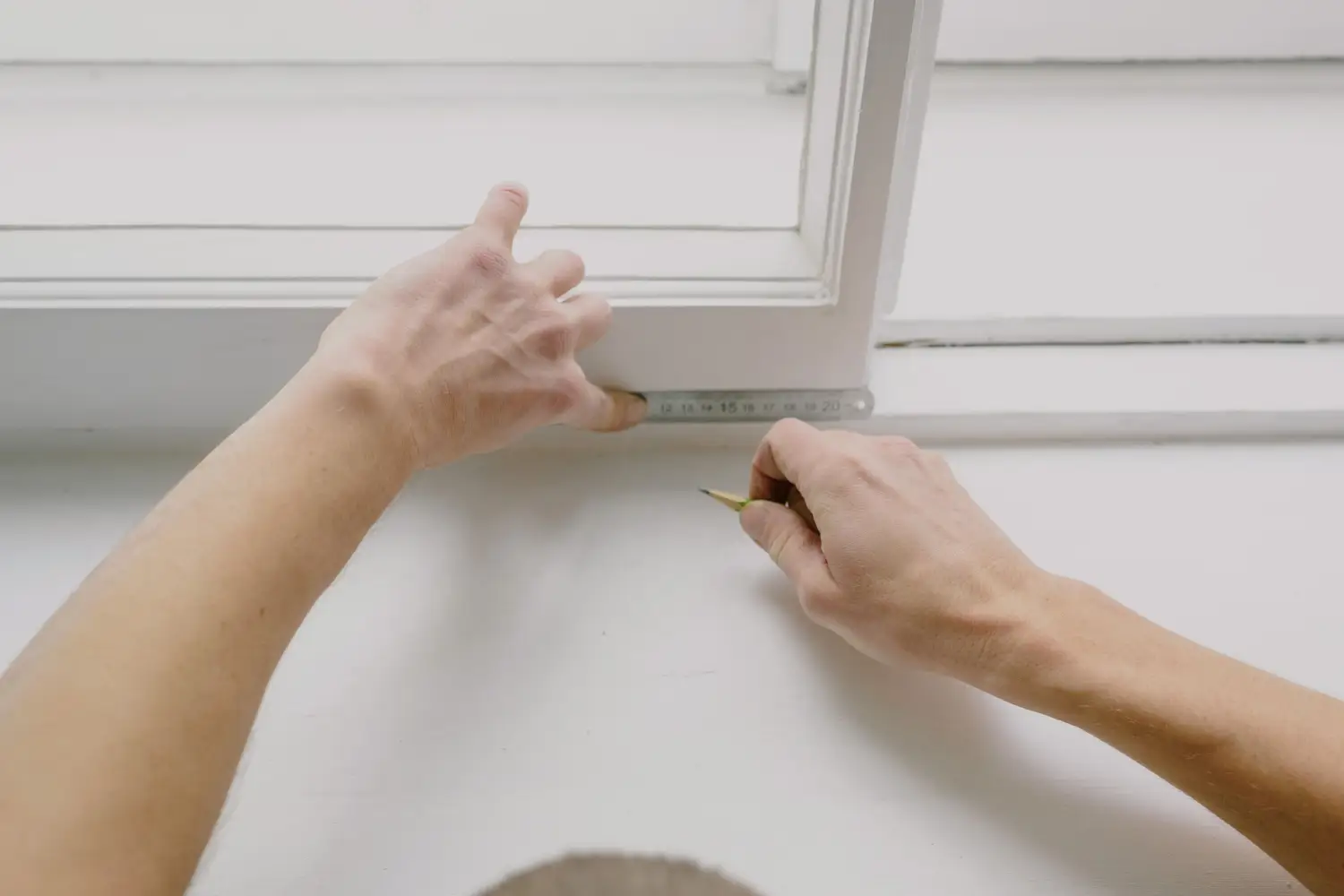
The Designer-Approved Method for Measuring Curtain Length
Stop guessing. This designer framework sequences mount type, rod height, and hem length for a polished result. Measure once and skip the too-short mistakes.

The Curtain Measuring Error That Shrinks Your Windows
Measuring from the window instead of the rod is why curtains float above the floor. Learn to fix it and make every window look taller.

Hanging Curtains Too Low Is Costing You Ceiling Height
Mounting a curtain rod too low costs you ceiling height. The fix is 4-6 inches above the window frame—here's how to make it work for any ceiling.

The One Detail Inside Mount Curtain Guides Never Mention
Most inside mount curtain guides skip the critical measurement that causes too-short curtains. Learn why you must measure from the bracket—not the window opening.