The Curtain Measuring Error That Shrinks Your Windows

If your curtains hang too short, there is one cause that shows up more than any other: you measured from the window instead of the rod. That single decision ignores the 4 to 6 inches between the rod and the top of the window, and it usually ignores the space from the sill to the floor. The result is a panel that stops well above the floor, leaving a strip of wall exposed and making the whole window look smaller.
Fix this first. Rehang the rod, then measure from the rod to the floor — not from the window. Until you do that, no hem adjustment or hardware change will close the gap.
Symptoms: Which Curtain Problem Do You Actually See?
Match your situation to one of these before you change anything.
- Curtains float above the floor with 2 to 6 inches of clearance. A strip of wall is visible between the hem and the floor.
- Curtains puddle deeply on the floor with 4 inches or more of pooling. The panels drag and look heavy.
- Curtains are uneven from left to right. One panel touches, the other doesn’t.
- Curtains stack too far into the window when open, blocking light. This is a width problem, but it often traces back to rod placement.
When Curtains Float Above the Floor
This symptom gets the most space because it’s the direct outcome of the window-measurement mistake. Each cause below starts from the rod, not the window.
You never measured from the rod to the floor
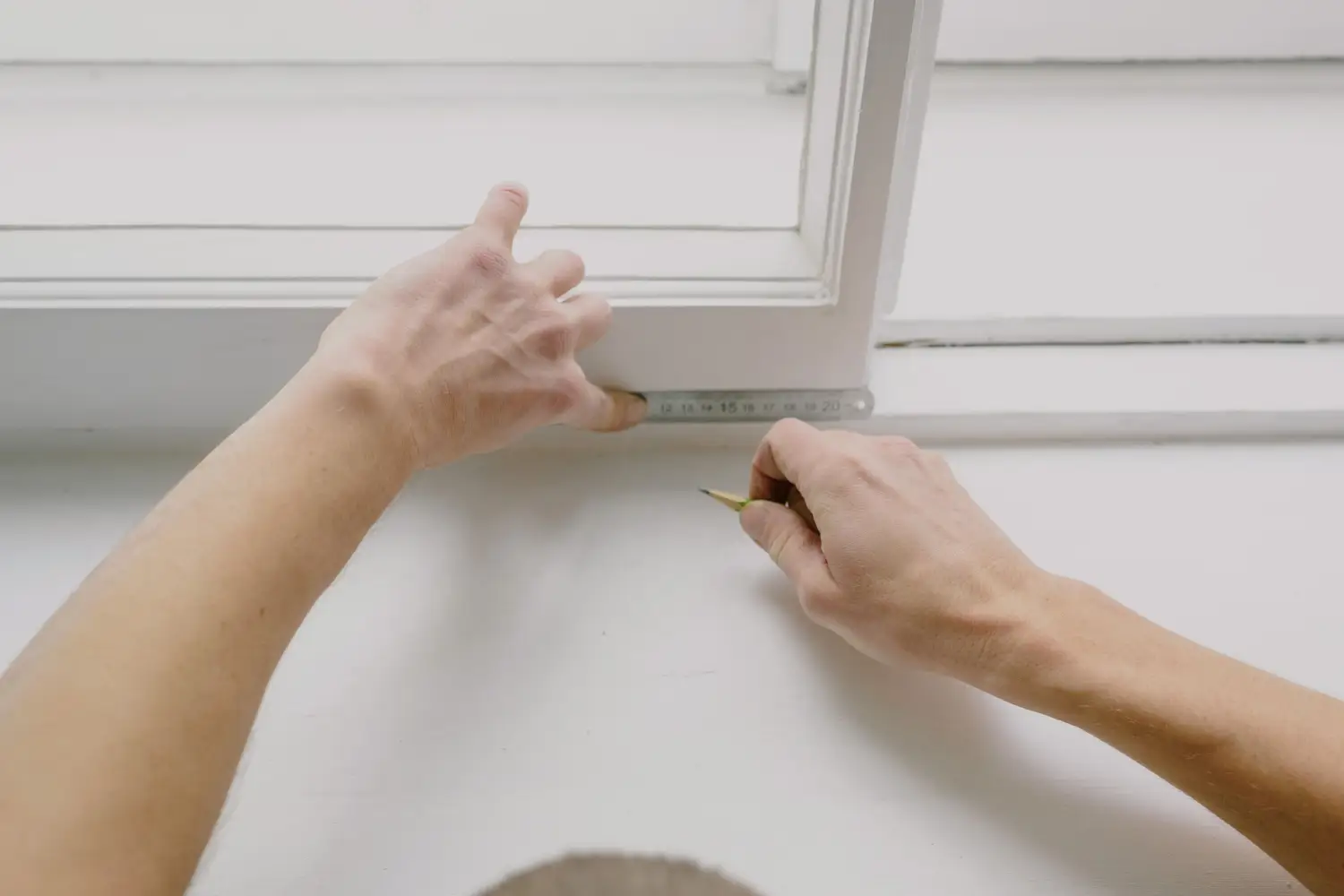
How to confirm it: Hook a metal tape measure onto the bottom of the installed rod — or onto the bottom of a ring or clip if you use them — and pull it to the floor. Read the number. Then measure the finished length of your curtain from the top of the heading to the hem. If the curtain is shorter than the rod-to-floor number by more than half an inch, you’ve found the error.
Exact fix: Hem new panels, or adjust existing ones, to match that rod-to-floor measurement minus any ring or clip length. A standard ring adds roughly 1 to 1.5 inches, so a 96-inch rod-to-floor height typically calls for a 94.5-inch panel. Do this per window; two windows that look identical often differ by a half inch or more because of floor settling.
Expected result: The hem lands ½ inch above the floor for a clean look, or ¼ inch for a floor-skimming effect. No wall shows.
The rod sits too low
How to confirm it: Measure the gap between the top of the window casing and the rod. If it’s under 4 inches, the rod is too close to the window. A rod mounted directly on the casing worsens the problem because it steals even more vertical space.
Exact fix: Move the rod higher. For an 8-foot ceiling, position the rod as close to the ceiling as the bracket allows. Even raising it 3 inches often closes a floating gap without replacing any fabric. Remeasure the rod-to-floor distance after the move.
Expected result: The same panels may now reach the floor. If they pool, a hem solves it. The floating gap is gone.
The hem was marked from the wrong reference point
How to confirm it: Measure the panel’s finished length. If it matches the sill-to-floor distance or the casing-bottom-to-floor distance, the hem was cut as if the curtain hangs from the window — not the rod.
Exact fix: If the bottom hem holds extra fabric, let it out as much as 2 to 3 inches. If not, add a fabric band at the bottom or switch to clip rings to steal back an inch or two. Then remeasure from the rod and mark the new hem with the panel hanging on the rod.
Expected result: The hem lands where you want it.
When Curtains Puddle Excessively
Too much extra length was added
How to confirm it: The curtain is 2 inches or more longer than the rod-to-floor distance. That’s a puddle that looks accidental.
Exact fix: Decide what you want. A brush-to-floor length adds 1 to 1.5 inches to the rod-to-floor number. A light puddle adds 2 to 3 inches. More than that requires a deliberate design choice. Measure the rod-to-floor distance, add your chosen number, and hem.
Expected result: The fabric pools lightly rather than dragging.
The fabric stretched after hanging
How to confirm it: Some linen and open-weave panels elongate under their own weight. Hang the panel, measure it, and compare it to its original length. If it’s longer, it has stretched.
Exact fix: Wash the panel per the care label to preshrink it, hang it for 24 hours, then mark and hem from the rod-to-floor measurement.
Expected result: The length holds.
When Curtains Hang Unevenly
The floor is not level
How to confirm it: Place a level at each end of the rod and at the center on the floor. A half-inch difference from left to right is common, especially in older homes.
Exact fix: Measure the rod-to-floor distance at the left, center, and right. Hem each panel to the longest measurement so both sides match. For a quick fix, hem each panel to its own side’s measurement, but that only works if the panels never swap places.
Expected result: Both hems align visually.
The rod is crooked
How to confirm it: Set a level on the rod. A tilt immediately creates a height gap from end to end.
Exact fix: Rehang the rod level. Remeasure the rod-to-floor distance on each side afterward and adjust the hem if needed.
Expected result: The panels hang even.
Quick Fixes That Work Across All Symptoms
These steps solve most length problems, no matter which symptom you started with.
- Rehang the rod at the right height. Raising it to a few inches below the ceiling often makes a too-short panel work without buying anything else.
- Measure from the rod, not the window. Use a metal tape measure hooked onto the rod or the clip ring. Mark the measurement at the floor.
- Follow a consistent process. For every window: install the rod at its final height, hang a test panel, mark the hem with the fabric hanging, then measure that marked length. Skip any of these and you risk another error.
When these fixes help: They work when the root cause is a measurement error — wrong starting point, misjudged rod placement, hem guessed instead of marked live. They also handle minor floor unevenness because the measurement is tied to the rod.
When they waste time: If the panel was hemmed with no seam allowance left, or if the fabric shrank beyond a usable margin, re-measuring won’t add length. You’ll need to replace the panel or add a creative extension.
How to Prevent the Window-Frame Mistake
- Install the rod before measuring any curtain. This rule eliminates the entire class of too-short errors. The rod’s position drives every number.
- Use a written list for each window: rod-to-floor distance, ring/clip adjustment, desired break, and side-to-floor measurements at both ends. Check all four.
- Let fabric rest before you hem. Hang unhemmed panels for at least 24 hours so the weave settles.
- Keep a usable hem allowance. 4 inches for drapery panels, 2 inches for café curtains. This gives you room to adjust if the floor surprises you.
- Anchor every measurement to the rod, not the window. Repeat this until it becomes automatic.
Frequently Asked Curtain Measuring Questions
How much space should be between the curtain and the floor?
For a tailored look, aim for ½ inch clearance. This hides the wall and lets the curtain move easily. A ¼-inch gap gives a formal, floor-skimming line. Add 1 to 1.5 inches if you want a light break.
What if I already bought curtains that are too short?
Raise the rod higher first. If that’s not enough, let out the existing hem, sew on a fabric band, or add clip rings to gain 1 to 2 inches. Always remeasure from the rod before cutting anything.
Do I measure with or without curtain rings?
Measure from the bottom of the rod for rod-pocket panels. For rings or clips, measure from the bottom of the ring where the panel attaches. The goal is to know how far the top of the panel sits from the floor.
Can I fix uneven floors without a professional?
Yes. Measure rod-to-floor at multiple points and hem each panel individually. Differences under 1 inch are easy to hem out. For larger differences, a shim under the floor on the low side can help visually level the space.
If Nothing Here Works
If you’ve remeasured from the rod, raised the rod, adjusted the hem, and the gap stays, collect three numbers: the rod-to-floor measurement at both ends and the center; the finished length of your panels; and the type of heading you’re using. Bring these to a local drapery workroom. They can add a contrast band, reconfigure the heading, or suggest an alternative. If the panels were custom-made, contact the maker with the same numbers. The rod remains the reference — don’t go back to measuring from the window.

Clara Bennett
After five years of transforming my 1920s bungalow room by room, I’ve refinished floors, hung blinds in bay windows, and spent more time choosing light bulbs than I’d like to admit. I learned paint sheens by painting my kitchen ceiling three times, and I found out the hard way that a rug too small makes a room feel unfinished. I believe every home can be both functional and beautiful, no matter the budget.
Related posts
The Designer-Approved Method for Measuring Curtain Length
Stop guessing. This designer framework sequences mount type, rod height, and hem length for a polished result. Measure once and skip the too-short mistakes.

Hanging Curtains Too Low Is Costing You Ceiling Height
Mounting a curtain rod too low costs you ceiling height. The fix is 4-6 inches above the window frame—here's how to make it work for any ceiling.

Why 'Floor-Length' Curtains Should Float, Not Puddle
Stop letting curtains drag. A half-inch gap above the floor prevents fraying, dust buildup, and vacuum snags — here’s when to float, and the rare case for puddling.

The One Detail Inside Mount Curtain Guides Never Mention
Most inside mount curtain guides skip the critical measurement that causes too-short curtains. Learn why you must measure from the bracket—not the window opening.