60-30-10: The Mix-and-Match Decorating Rule That Works
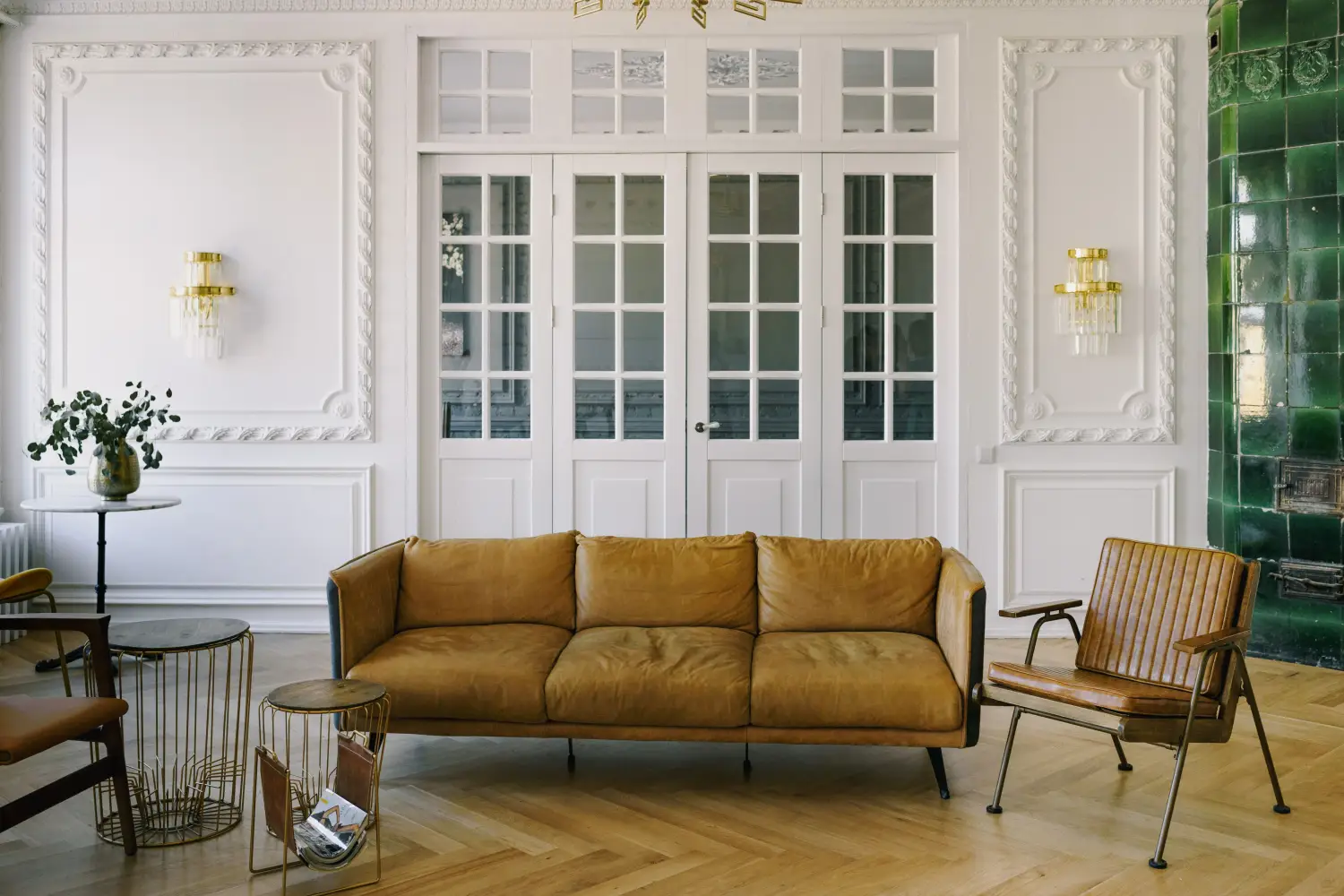
The 60-30-10 rule that interior designers use for color distribution applies to decorating styles with the same logic. Allocating 60 percent of a room's visual space to one anchor style, 30 percent to a secondary style, and 10 percent to an accent style removes guesswork and prevents the scattered look that happens when styles compete. If you're trying to mix, say, mid-century furniture with rustic textures and an art deco detail, sticking to these proportions keeps the room cohesive without sacrificing personality.
The 60-30-10 Style Proportion in Three Steps
- Choose one anchor style that will fill roughly 60% of the room’s visual space—large furniture, rugs, and major surfaces.
- Add a secondary style for about 30% of the room, using pieces like accent chairs, lighting, or feature walls that clearly contrast with the anchor.
- Sprinkle in a third accent style for the final 10%, limited to a few small items such as throw pillows, a vase, or a single sculptural object.
- Pause after each addition and count the items carrying each style; if you lose track, the proportion has likely drifted.
How to Apply the 60-30-10 Rule to Any Room
1. Settling on Your Anchor Style (60%)
The anchor style controls the room's first impression. It lives in the largest, most commanding items: the sofa, the dining table, the bed frame, floor-length curtains, and the biggest rug. Because these pieces consume the most visual weight, whatever style they project will read as the room's dominant character.
If you are decorating an empty room, let the architecture guide your choice. Crown molding and a fireplace mantel suit traditional or transitional anchors. A room with exposed brick and steel beams fits industrial or modern anchors better. If a major piece of furniture already sits in the room—a brown leather Chesterfield sofa, for instance—accept that piece as your anchor and build around it. Replacing it or fighting its style costs more than working with it, and the result is rarely seamless.
Once you name the anchor, make a hard count. Without including small accessories, list the major items that will carry that style. Aim for roughly six out of ten noticeable elements. A mid-century modern anchor might appear in a low-profile sofa, a teak credenza, a geometric rug, and simple linen drapes. Do not blur the boundary by including items that only vaguely align with the anchor; a piece must unmistakably belong, or the proportion collapses before you start.
2. Picking the Secondary Style (30%)
The secondary style is not a softer echo of the anchor. Its job is to create a deliberate contrast through texture, era, color saturation, or silhouette. A room without this contrast reads flat—like a showroom where everything matches too neatly.
If the anchor is mid-century modern (clean lines, warm wood, low profiles), a secondary of boho texture makes sense: woven rattan chairs, a chunky knit throw, a rough clay lamp base. The contrast is organic material against smooth wood. If the anchor is farmhouse (distressed wood, apron sink, neutral palette), the secondary should introduce something hard and precise—steel shelving, a metal-framed mirror, a factory pendant light in black iron.
The 30% share translates to roughly three large items or several moderate ones. In a living room, that could be two armchairs in the secondary style, a floor lamp, and a side table. In a bedroom, it might be a headboard wall painted a strong color, a bench at the foot of the bed, and a patterned duvet that breaks the anchor palette. If you find yourself wanting more than that, pause. The anchor may be too narrow, or the secondary is creeping into the majority. Scale back until the split is obvious.
3. Choosing the Accent Style (10%)
The accent style exists for one reason: a small, unexpected departure that reads as intention, not error. Because it claims so little space, you can take a risk here—pull in a style you admire but would never fill a room with.
Effective accent styles create a sharp shift in one quality: color, sheen, era, or cultural reference. For a transitional anchor with a coastal secondary, an accent of Hollywood Regency—a mirrored tray, a pair of crystal bookends—cuts through the casual mix with polish. For a Scandinavian anchor and Japanese wabi-sabi secondary, an accent of postmodern Memphis design (a squiggly vase, a graphic pillow) adds controlled tension.
Limit accent pieces to one to three items total. In a room with forty visible objects, the accent might be a single bowl on the coffee table, a small wall hanging, and the candleholders on the mantel. Adding more will fragment the room. The 10% is not a target you must fill; often one strong object is enough. If you feel the urge to add a fourth accent piece, remove something else instead.
4. Distributing Pieces Across the Room
Proportion fails when all secondary pieces cluster in one corner and the accent sits isolated. Spread the 60-30-10 distribution through the whole space. The secondary style should appear at least once on each horizontal plane—floor, seating height, eye level. The accent should appear in at least two separate locations so it registers as deliberate repetition.
Take a living room with a traditional anchor, modern secondary, and tribal accent. Place the modern leather lounge chair near the window; hang a modern abstract canvas above the traditional sofa; set a modern metal floor lamp beside the traditional console. The tribal accent can be a carved wooden bowl on the coffee table and a small textile framed on a side wall. Every angle of the room tells the same layered story, not three separate vignettes.
If one wall shows only anchor pieces, intervene. A secondary wall sconce or an accent object on a shelf corrects the balance without forcing you to buy new furniture. The goal is to make the mix feel solid from any vantage point.
How to Tell If Your Proportions Are Working
- Stand at the main entry point to the room. The first five things your eye lands on should include two or three anchor pieces, one secondary piece, and possibly one accent object.
- Walk around and count distinct items in each style. If you count more than eight secondary-style items in a medium-size room, the proportion has likely tipped past 30%.
- Flip the view: sit in the secondary seating area and look back at the anchor zone. The anchor should still be clearly visible and dominate, not be crowded out by the secondary.
- Check the accent items in isolation. If removing any one of them would noticeably flatten the room, it’s doing its job. If removing it makes no difference, you may have an accent piece that is too timid or too close to the other styles.
Troubleshooting Common Mixing Mistakes
The Room Feels Chaotic, with No Clear Identity
The most likely cause: more than three styles are competing, or the 60-30-10 split has drifted closer to 40-40-20. Reduce the number of distinct styles to three. Remove any piece that does not clearly belong to the anchor, secondary, or accent. Items in a vague middle category undermine the structure. Simplify until the anchor has an obvious majority again.
The Room Looks Too Safe and Predictable
This happens when the secondary style does not differ enough from the anchor. A room with modern farmhouse as the anchor and classic farmhouse as the secondary reads as one flat style, not two. Push the secondary further away in at least two attributes—swap wood for metal, light tones for saturated color, straight lines for curves. A single piece with dramatic contrast, such as a high-contrast fabric on an armchair, can fix the problem entirely.
The Accent Style Overpowers the Room
If a 10%-intended accent piece—a bright orange settee, for example—demands attention every time you walk in, it has stopped being an accent. Relocate it or replace it with something smaller. A copper pendant light works as an accent in a room with brass and matte black; a copper sofa would not. The accent should catch the eye briefly, not dominate it.
Common Questions About Mixing Styles with 60-30-10
Can I use a fourth style if I keep it minimal?
Adding a fourth style weakens the clarity of the mix, even at a small percentage. If you must, treat a fourth as part of the accent’s 10% share—allowing two very different accent styles to each appear once. Most rooms benefit from the clean framework of three styles, and a fourth often adds clutter instead of depth.
What if my existing furniture is all one style?
That style is your anchor by default. Start by introducing pieces from a secondary style one at a time: swap out an accent chair or add a contrasting light fixture. A single well-chosen secondary piece changes the room’s feel, and you can work toward the 30% proportion gradually as your budget permits.
How do I figure out what 60% looks like?
Visual weight, not arithmetic, determines the proportion. A dark, large sofa carries more weight than a small, pale side table. Walk into the room and mentally remove all secondary and accent pieces. If what remains still reads as a coherent, functional room, your anchor is holding up properly.
Does the accent style have to coordinate with the other two?
No—deliberate clash is often the point. The accent works because it breaks the pattern, not because it matches. The only requirement is that its pieces are few and clearly in the minority, so the break reads as punctuation rather than a mistake.
Can I use the 60-30-10 rule in a small room?
Yes. In smaller spaces, the rule is even more important because every object competes for attention. Stick to three styles and be strict about the accent: a single bold vase on a console or a patterned cushion on a dining chair keeps the room from feeling overstuffed.
Moving Forward After the Proportions Settle
Once the 60-30-10 style distribution feels correct, the logical next task is to adjust lighting and textiles so they reinforce—not recategorize—the three-style hierarchy. Shift table lamps, move throw blankets, and realign wall art placements within the framework you have already built, then step away and let the room prove the formula.

Clara Bennett
After five years of transforming my 1920s bungalow room by room, I’ve refinished floors, hung blinds in bay windows, and spent more time choosing light bulbs than I’d like to admit. I learned paint sheens by painting my kitchen ceiling three times, and I found out the hard way that a rug too small makes a room feel unfinished. I believe every home can be both functional and beautiful, no matter the budget.
Related posts
How Designers Mix Styles: The Anchor-and-Contrast Method
Learn the anchor-and-contrast method for mixing decor styles. Set a dominant anchor, layer contrast in 3 levels, and avoid the muddled look.
Stop Over-Mixing: The Editing Rule for Blending Decor Styles
Learn why over-mixing decor styles leads to visual chaos and discover the subtractive editing rule that creates a cohesive, intentional blend of design eras.
The One Element That Makes Mixed Styles Look Intentional
Mixed styles feel curated when one repeated element—wood tone, motif, or neutral palette—bridges the gap. Learn the framework to make clashing decor deliberate.