A single ceiling fixture can't cover ambient, task, and accent lighting, because those three layers are defined by where the light lands rather than by how much of it a room receives. One fixture at the center of a ceiling fills exactly one role — ambient — and it misses the other two by geometry: task light has to originate close to the work and off to one side so it doesn't drop the user's own shadow onto what they're doing, and accent light has to be aimed at something specific. The useful translation is a count per room, made before style enters the conversation: one controllable ambient source, at least one task source per activity station, and at least one accent source aimed at a focal point. In a typical living room, bedroom, or kitchen that lands at roughly four to six fixtures across three controllable paths. Count the paths first. The fixtures are the easy part.
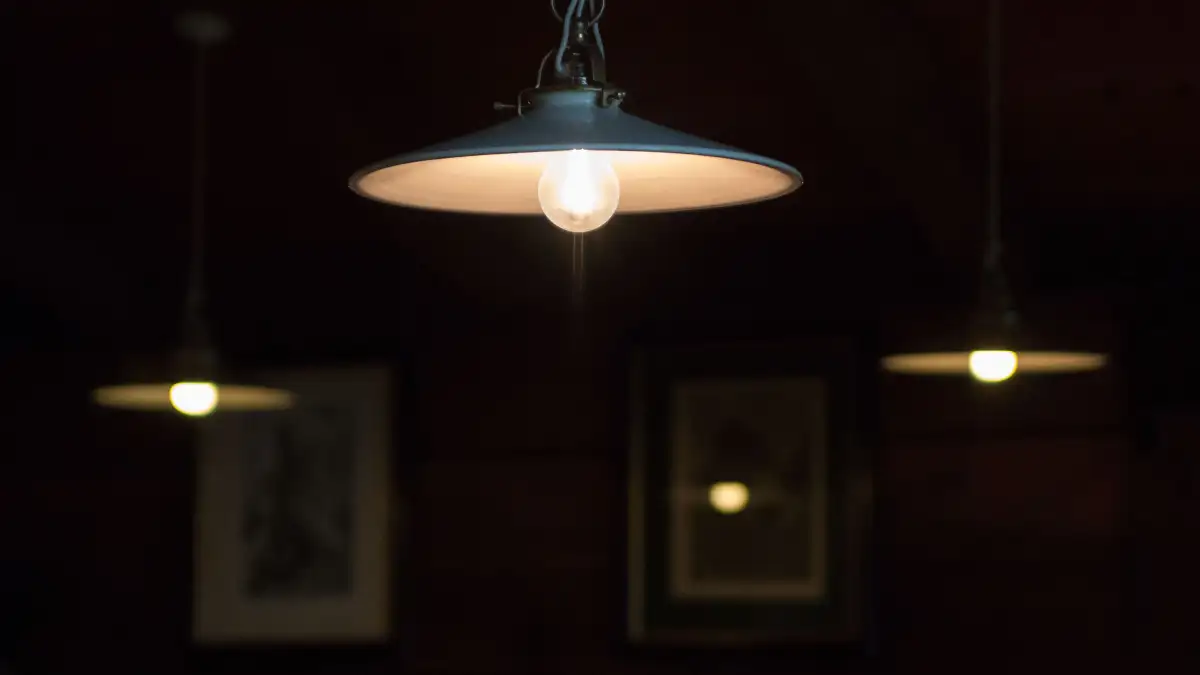
I run that count from the doorway now, before I buy anything, and it takes about ninety seconds. Stand in the doorway of your living room tonight with the ceiling light off and one floor lamp on. Leave the overhead off. What you notice first is how much of the room you can still navigate — the shape of the sofa, the edge of the rug, the opening to the hall. Everything above knee height reads fine. What you can't do is read the page of the book on the side table, see the grain in the coffee table, or catch the one spot on the wall where the paint sample actually matches the finished color. Then flip the ceiling light back on with the lamp still burning and watch the room flatten out. The lamp was doing something the ceiling fixture can't: it was lighting a place, not a volume.
That's the whole argument in one switch flip, and it's why I stopped shopping for fixture styles before I knew which layer each fixture was supposed to serve.
The problem isn't brightness, it's height and direction
A ceiling fixture sits eight or nine feet above the floor and points down. Everything that matters in a room — a book, a cutting board, a face at a mirror — happens three to four feet below it. From that angle the light arrives from above and behind, which is the worst direction for anything you're looking at, because your head and hands cast a shadow straight onto the work. It also spills outward in a cone, so the middle of the room is bright and the edges fall off, which is why corners look grey and dead under a single overhead light even when the bulb is technically plenty.
This is why adding a second ceiling fixture rarely fixes the feeling. Two downlights from the same height are just more of the same layer. The room doesn't get better; it gets brighter and flatter, and now you've spent money to make the problem more obvious.
Room by room, before you pick a finish
The counts below are minimums, not wish lists. They're the number of fixtures it takes for each layer to exist as something you can actually use. Style, shape, and finish come after, because a fixture's look should follow the layer it serves. A task light needs a shade that keeps glare out of your eyes. An accent light has to be aimable. The ambient fixture is the only one of the three allowed to be purely decorative for its own sake.
Living room
Ambient: one controllable source. That can be a single ceiling fixture or a run of recessed cans on one dimmer — either way it's one layer, and it should be dimmable, because ambient is the layer you'll want to pull down to almost nothing in the evening.
Task: one per seat where somebody actually does something. In most living rooms that's two — the reading chair and the end of the sofa someone works from. Task light should land on the task, not on the room, so a floor lamp whose shade sits near shoulder height when you're seated beats a taller one that throws light up across the ceiling.
Accent: one or two, aimed. The art over the sofa, the shelves, a plant, a textured wall. Accent means the object reads brighter than the surface around it — an even wash across the wall is ambient, not accent.
Four to five fixtures, three control paths. That's the count before you've thought about brass versus black.
Bedroom
Ambient: one, dimmable, and it's honestly the layer people use least in here.
Task: one per sleeper, one on each side, and the control matters more than the fixture — independent switching, so one person can read while the other sleeps. This is the room where "each layer needs its own control" stops being an abstraction.
Accent: one. Art over the dresser, a corner plant, a soft wash on the headboard wall. Often it lives on a smart plug or a small dimmer and runs for twenty minutes before sleep.
Four fixtures, and the room behaves completely differently at seven in the morning and eleven at night using the same hardware.
Kitchen
Kitchens break the rule of thumb because task stations multiply. This is the room where the fixture count climbs fastest and the layer count stays the same.
Ambient: one path — the ceiling, ideally on a dimmer so it can step out of the way after dinner.
Task: this is where the count balloons. Under-cabinet lighting over each prep run is one layer but several physical fixtures on a single switch. The sink is its own station. The island or peninsula is its own station. Six to eight fixtures is normal here, and none of them are there for looks.
Accent: above the island, inside glass-front cabinets, along a toe kick. A pendant over an island is a hybrid — task while you're chopping, accent when you're not — and that's fine. One fixture can serve two layers as long as it's dimmable and the two layers are used at different times of day.
Bathroom
Ambient: one.
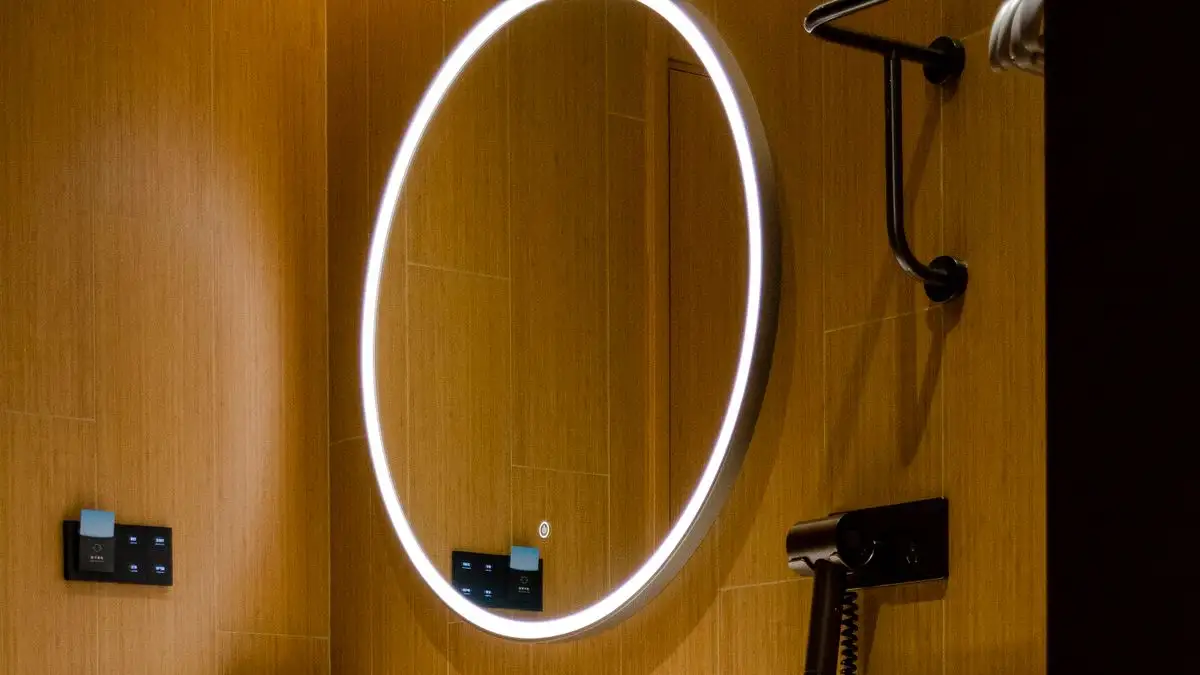
Task: at the mirror, and this is the one room where a single fixture is a genuine functional failure rather than a preference. A light directly above a mirror pushes light down onto the top of your head, and your face ends up in its own shadow — the reason so many bathroom mirrors make people look tired. Task light here has to reach the face from the front rather than from overhead, which usually means light that arrives at cheek height instead of from the ceiling.
Accent: one, if the room has anything worth looking at — a niche, a piece of art, a plant with real light. Skip it if it doesn't.
Rooms that only need two layers
Hallways, laundry rooms, closets, powder rooms, garages. Forcing three layers into a four-by-eight hallway is fussiness, and it clutters the switch plate with controls nobody will remember. One ambient source, plus a task light if there's a closet or a landing where you actually need to see detail. That's the honest answer, and it's fine.
Three layers on one switch is just a bright room
This is the part that gets left out of most layering advice. Six fixtures controlled by one wall switch is not a layered room. It's a bright room with more fixtures in it, and you'll use it exactly the way you used the single ceiling light — all on, or all off.
What you're really counting is control paths. Each layer needs at least one source you can turn on, dim, or shut off without dragging the others along. A dimmer counts. A separate switch counts. A lamp on a switched outlet counts. A smart plug under the accent light counts. I care about that number more than the fixture number, because a room with three fixtures and three control paths feels better than a room with eight fixtures and one — the first gives you bright for cooking and cleaning and low for a movie, the second gives you one mood.
If you're doing this in stages, and most people are, buy in this order: put a dimmer on the ambient layer first, then add one task light at the spot where you most often can't see what you're doing, then add one accent aimed at the thing you like looking at. Adding a second fixture to a layer you already have is the one purchase that almost never improves anything.
Two things come up every time I help someone work through this. Keep color temperature consistent across the layers, or the room will look mismatched the moment you dim one layer and not the other — a warm lamp beside a cool ceiling fixture is the most common version of that mistake. And check the room at night with the ceiling light off before you commit to anything. Most lighting decisions get made in daylight in a showroom, which is the one condition where layers barely matter, because the sun is already doing all three jobs at once.