The Focal Point Mistake That Makes Your Room Feel Unstable
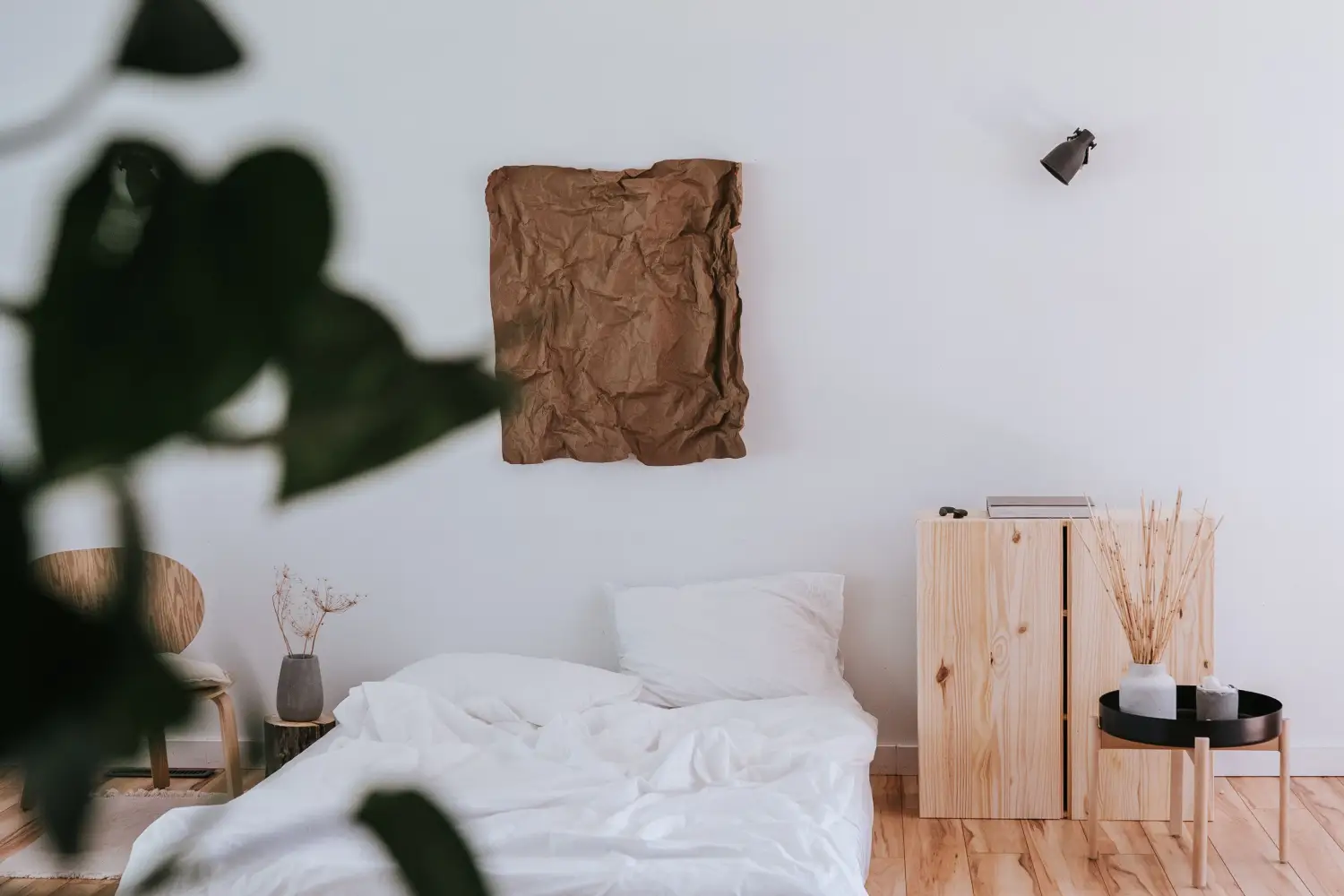
A room that never feels settled is usually sending one clear signal: two focal points are competing for attention. The eye darts between them, and no amount of rearranging pillows fixes that instability. The root cause is a split in visual hierarchy—the room has two things shouting at the same volume, so your brain can’t find a place to rest. The solution is not to remove one, but to demote it into a supportive accent so the room regains a single anchor. That’s the single most direct fix for this error, and it works faster than repainting or starting over.
Every decision that follows is built on that principle. Identify the two culprits, choose which one leads, and actively reduce the presence of the other. This keeps the room from bouncing your eye back and forth, and it lets the rest of your furniture do its job.
Three Straightforward Steps to Stop the Visual Tug-of-War
- Stand at the entrance, squint, and note the two things that still demand your eye. Those are the ones fighting for dominance.
- Decide which element the room itself favors—the fireplace centered on a wall, the window with the best natural light, a built-in unit that already has mass and scale. That element takes top billing.
- Downgrade the runner-up. Shrink its scale, lower its contrast against the wall, or move it off the main sightline. For instance, swap a bold 4-foot canvas opposite the window for a smaller, muted piece that pulls the eye toward the view instead of fighting it.
Common Causes of Dual Focal Points—and How to Fix Them Fast
Two Oversized Elements Have Equal Visual Weight
A massive stone fireplace and a floor-to-ceiling window with a view, a large TV and an equally large abstract painting—these pairs both scream for attention. Squint: if both elements still stand out as heavy dark or light blocks, they’re the problem.
Lower the secondary element’s authority. Paint a dark TV console the same shade as the wall so it melts in. Downsize the artwork. Move that secondary piece to a side wall where it’s seen but not confronted head-on. The aim is not to hide it, but to push it into the background where it supports the primary focal point instead of battling it.
A Mirror Directly Reflects the Main Focal Point
A large mirror opposite a window or fireplace acts like a copy, creating two identical anchor points. The eye flips between the original and the reflection, and the room never feels calm.
Check what the mirror shows. If it frames the primary focal point perfectly, angle it so the reflection lands on a quieter wall or a subtle piece of furniture. If that’s not possible, swap it for a smaller mirror or one with a heavily textured frame that breaks up the image. Adding sheer curtains to the window also softens the reflection enough to let the real focal point take charge.
A Long Room Has Two Equally Furnished Ends
In a rectangular space, placing a sofa facing a TV at one end and a second seating group facing a fireplace at the other splits the room in half. From the middle, your eye is pulled left and right with equal force.
Choose one end to dominate. If the fireplace is the architectural hero, point the main seating at it. Put the TV in a closed cabinet or on a side wall where it’s less assertive. Anchor the main zone with a rug that stops before the far end, leaving the opposite end as a quiet side area—one chair, a lamp, no visual shout. This way, the room reads as a single focused space with a subordinate corner, not a tug-of-war.
Matching Light Fixtures Create Two Bright Hot Spots
Two identical pendant lights over a table or a pair of floor lamps flanking a sofa can each become focal points when they’re equally bright. The room gets two lit centers, and the eye jumps between them.
Introduce a lighting hierarchy. Put one fixture on a dimmer or use a lower-wattage bulb. Swap one floor lamp for a table lamp that casts light lower. Make one fixture the main light source and the other an accent. That quick shift moves the second “focal” light into a supporting role without darkening the room.
Less Common Problems That Still Splinter the Room’s Focus
An Open-Concept Zone Has Its Own Anchor
When a dining area’s large pendant hangs in the same sightline as the living room’s feature wall, two separate focal points sit side by side. Create a visual divider—a console table behind the sofa, a low shelving unit, or even a paint color change—that separates the areas without blocking the flow. Each zone then operates its own focal point without invading the other.
A Dramatic View Competes with a Feature Wall
A room with both a stunning picture window and a textured stone wall forces a choice. Here, let them take turns. Use sheer drapery to soften the window’s dominance during the day and draw the eye to the stone wall with focused lighting at night. This seasonal or time-of-day shift prevents both from being active at once.
Before You Redesign, Name the Focal Point First
The fastest way to avoid a stability problem is to decide what the room’s anchor will be before you move anything. Walk through the space and answer: what should someone see first? Once that’s settled, every furniture placement, artwork size, and light fixture must support it. When buying new pieces, reject anything that could accidentally set up a second anchor. Test your decision: snap a black-and-white photo of the room. If two dark masses are still fighting for control, pick one to lighten or relocate.
When the Room Still Feels Off: Next Steps
If the room remains unsettled after you’ve demoted the runner-up, get an outside perspective. Show a photo to someone and ask what hits their eye first—don’t coach them. Use a free room-layout app to digitally remove elements and check if the balance improves. And if nothing works, a one-time consultation with an interior designer can spot the visual conflict in minutes and give you a clear, affordable plan to fix it.
Your Most Common Questions About Competing Focal Points
How do I choose which focal point to keep?
The one that sits on the room’s natural architectural axis wins. Check what the built-ins, window placement, or structural openings already point toward. If neither has a clear advantage, pick the one that best supports how you actually use the room. Then commit fully.
What if my room has no natural focal point?
Create one with a large piece of art, a statement mirror, or a bold piece of furniture. Don’t splinter the room with several “maybe” centers. Pick one and let everything else be background. A blank canvas is only a problem if you refuse to choose.
Can a TV and a fireplace coexist without causing this problem?
Yes, if one is visually subordinated. Mount the TV on a wall adjacent to the fireplace, not above it, or hide it in a cabinet that closes. When they share the same wall, make the fireplace surround larger and more textured, and recess the TV so it reads as a dark rectangle within the mass, not as a separate focal point.
How do I fix a room where the front door opens directly facing a large window?
That straight shot forces the eye from door to window. Break the line with a console table against the window, a piece of furniture placed slightly off the direct path, or sheer curtains that soften the view. The goal is to intercept the eye before it reaches the window and give it a softer landing inside the room.

Clara Bennett
After five years of transforming my 1920s bungalow room by room, I’ve refinished floors, hung blinds in bay windows, and spent more time choosing light bulbs than I’d like to admit. I learned paint sheens by painting my kitchen ceiling three times, and I found out the hard way that a rug too small makes a room feel unfinished. I believe every home can be both functional and beautiful, no matter the budget.
Related posts

The Design Rule That Decides Where Your Eyes Go First
Discover how the focal-point principle rooted in cognitive psychology simplifies room navigation and cuts decision overwhelm for new homeowners planning whole interiors.
3 Size Rules Every Focal Point Must Follow to Look Right
Nail focal point scale with three measured ratios. Learn how 30-40% wall width, 50-75% height, and depth limits prevent visual discomfort.
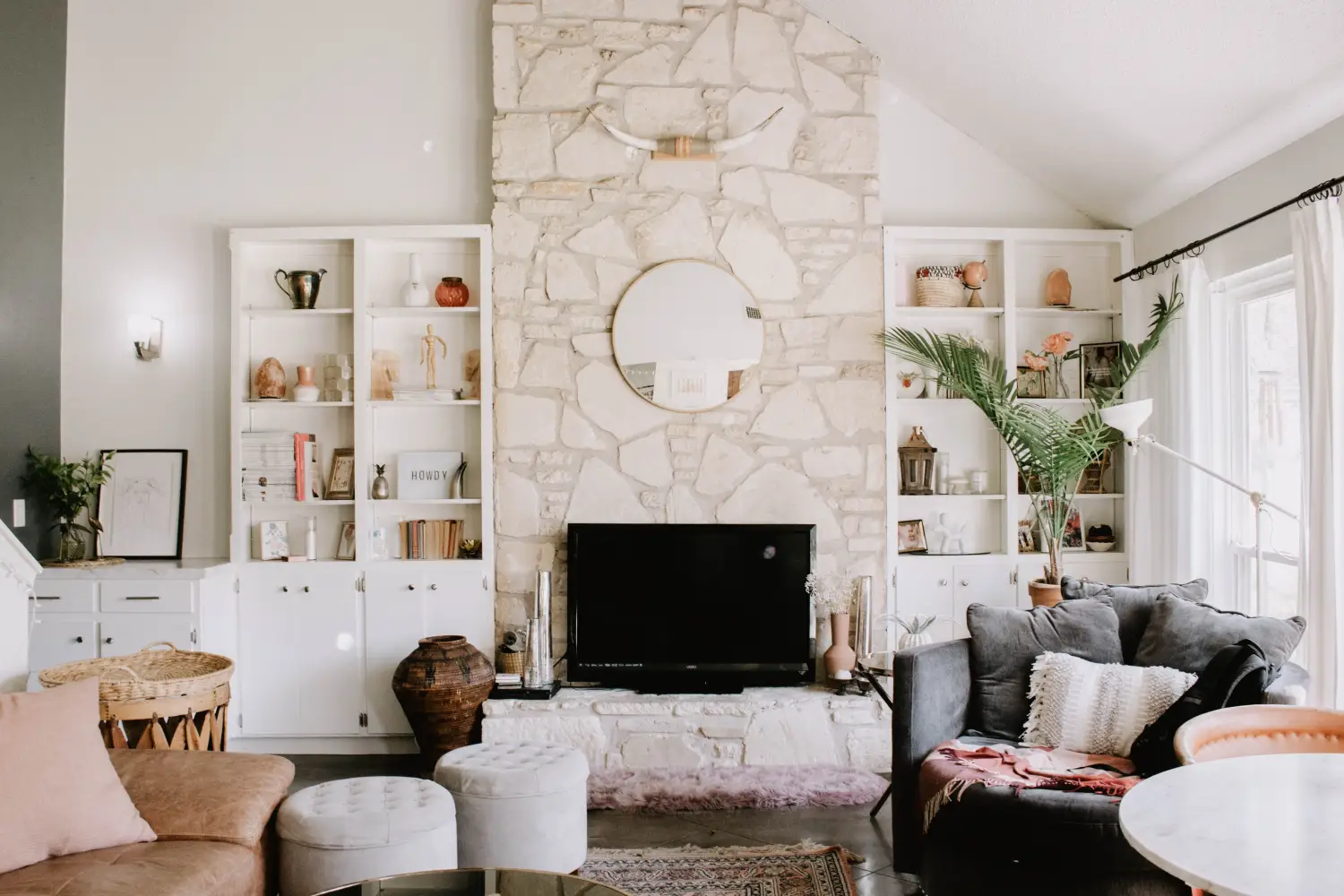
No Natural Focal Point? Here's How to Build One That Looks Right
No fireplace or picture window? Use a statement art piece, accent wall, or furniture grouping to anchor any blank room — step-by-step framework that keeps it natural.