Finally Nail Color Balance: The 60-30-10 Rule Made Simple
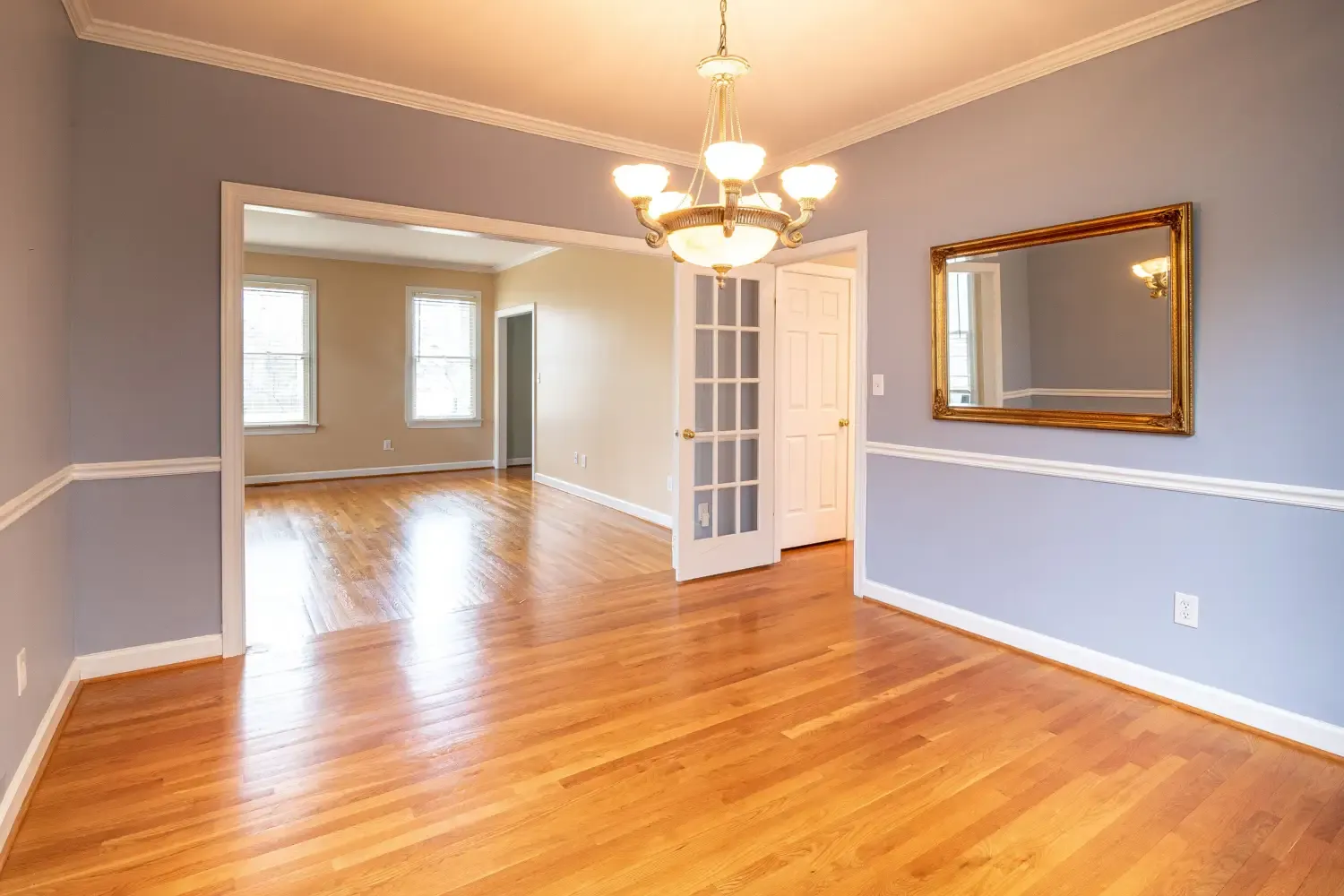
The 60-30-10 rule gives a room instant balance—60% dominant color, 30% secondary, 10% accent. This guide cuts past the ratio and delivers a room-by-room breakdown of where the balance actually falls apart, and exactly how to fix it. You’ll learn why a rug that’s too small wrecks the proportion, why the floor nearly always counts toward your 60%, and how to rescale the rule when built-in cabinets demand most of the visual weight.
Before You Start: What to Have on Hand
- A color wheel or paint deck matched to the room’s natural and artificial light
- Room measurements: walls, floor, and major furniture footprints
- Samples of fixed finishes that cannot change—floor tiles, countertops, bath tile, cabinetry
- Three to five paint or fabric swatches each for the dominant, secondary, and accent roles
No design experience is required. Testing swatches in the actual light at different times of day matters far more than any page of color theory.
Step-by-Step: Room-by-Room Application
1. Living Room: Let the Sofa and Walls Carry the 60%
What to do: Identify the largest surface—walls or the biggest upholstered piece, usually the sofa. That element (or the pair of them) is the 60% dominant color. If the walls are a soft greige and the sofa is deep navy, navy becomes the dominant; the walls function as a quiet backdrop. The secondary color (30%) goes to draperies, a large area rug, or accent chairs. The 10% accent is limited to throw pillows, one piece of art, or a single vase.
Why it matters: The dominant color sets the anchor. Spread across the main sofa and the wall behind it, the eye reads the whole room as unified, not scattered.
Watch out for:
- Flooring you didn’t count as part of the 60%. Hardwood, broadloom, or large-scale tile already claims a huge visual percentage. If your rug sits in the 30% but the exposed floor matches the walls, the floor pushes the 60% higher than intended. Fix it by choosing a rug that contrasts enough with the floor, or by painting the walls a shade that works with the floor as a neutral base.
- A bold accent chair can elbow its way into the 30% or even 60% when it sits too close to the sofa. Keep strong chair colors in check so they stay secondary.
2. Bedroom: Let the Bedding Define the 30%
What to do: The bed is the visual anchor in most bedrooms. The dominant 60% comes from the wall color (including any headboard wall) and the floor. The secondary 30% is the bedding—duvet, quilt, or coverlet, the largest textile in the room. Even a patterned duvet with several colors functions as one 30% when the overall read is harmonious. The accent 10% lives in throw pillows, a bed runner, a small bench, or a lamp.
Why it matters: The bed occupies a quarter or more of the room’s footprint. Putting the 30% there prevents the room from feeling top-heavy with wall color and bare in the center.
Watch out for:
- Dark wall color as the 60% in a small bedroom shrinks the space and disconnects the bedding. If the walls go dramatic, the bedding’s secondary color needs enough depth to bridge the gap.
- Too many competing accent pillows. Three or four small pillows in different bright patterns dilute the 10% into noise. Stick to one clear accent color in two or three pillows maximum; let the rest read as part of the 30% through neutral shams.
3. Kitchen: Work Around Fixed Cabinets and Countertops
What to do: Cabinets eat the 60% by sheer surface area. Treat the cabinet color—wood tone, painted finish, or laminate—as the dominant. The 30% is the countertop, backsplash, or floor, whichever has the next largest presence. White cabinets with a dark quartz countertop make the countertop the secondary. The 10% accent enters through bar stools, a small appliance, a fruit bowl, or window treatments.
Why it matters: A kitchen is full of fixed finishes that cannot be easily swapped. The rule must adapt to what already exists rather than start from a blank slate. Misreading the dominant leads to cabinets and counters fighting for control.
Watch out for:
- A backsplash meant as the 10% that reads like a 30%. A tiny mosaic backsplash covering the entire wall behind the stove acts as a secondary element, no matter the original plan. Keep the 10% for genuinely small, replaceable items.
- Ignoring the floor. A patterned tile floor in a small kitchen overwhelms the room when the cabinet color is too quiet to balance it. A runner or mat in the accent color pulls the eye up and restores proportion.
4. Bathroom: Scale the Ratio to the Smallest Space
What to do: A bathroom’s 60% is the wall tile or paint color—especially where tile wraps the whole room. In a half-bath, the wall color alone is enough. The 30% can come from the vanity, a large mirror frame, or the shower curtain. The 10% accent arrives through soap dispensers, a small piece of art, or towels.
Why it matters: In a small space, even a tiny accent reads louder. The rule prevents a single bold towel from taking over and keeps the room from feeling cluttered.
Watch out for:
- A dark vanity in a white-tiled bath becomes the unintended 60% when the tile runs floor to ceiling and the vanity is the only break. If that dark cabinet feels too heavy, lighten it with a runner or a lighter wall color that extends behind it.
- A highly patterned shower curtain that is the 30% can swallow the 10% accent entirely. When the curtain is busy, make the accent a solid, bright color in only one or two objects.
Room-by-Room Pitfalls That Throw Off Balance
Letting the Floor Take Over Without Counting It
The floor covers 20–30% of visible surfaces in any room. Ignore it when planning the 60%, and an extra unplanned color skews the whole ratio. Always factor the floor color into your dominant or secondary calculation. In a living room, a warm wood floor against cool gray walls can easily become the dominant. A large area rug reclaims that percentage and moves it into the secondary slot.
Misjudging an Accent Wall’s Real Estate
A vibrant accent wall looks like a 10% move, but a full wall from floor to ceiling can occupy 15–25% of the room’s wall area. That pushes it squarely into the secondary role. If the room already carries a strong 30% color in draperies, the accent wall competes and creates imbalance. Treat accent walls as the 30% and pull the 10% back to accessories.
Treating Every Room as a Blank Slate
People often choose three colors from a Pinterest board and forget the floor, cabinets, or trim that cannot change. The result: fixed elements fight the scheme. Always photograph the room as it is, circle the permanent colors, and build the ratio around them. In a rental where floor and wall paint are out of your control, pick a dominant color that harmonizes with them—even if it’s not the one you’d choose first.
Overloading the 10% with Too Many Tiny Things
One red vase, two red candleholders, a red book spine—suddenly the accent is everywhere and no longer special. The 10% works only when it’s precise. Choose one or two statement accent pieces per zone and keep everything else neutral. In a bedroom, a single textured throw and one framed print are enough.
FAQs
Do I have to stick to exactly 60-30-10? What if my room is 55-35-10?
The numbers are a guide, not a law. When the floor, walls, and sofa add up to roughly 60% and the rest falls into 30% and 10%, the room feels balanced. The critical part is that one color dominates, one supports, and one punctuates. Small deviations do not ruin the effect.
Can I use the 60-30-10 rule with all neutrals?
Yes, but you need three distinct roles. Beige walls (60%), a cream sofa and oatmeal rug (30%), and a charcoal throw pillow or lamp (10%). Without that final contrasting neutral, the room falls flat—nothing pulls the eye.
My living room is open-plan. How does the rule work across zones?
Treat each distinct zone—seating area, dining nook—as its own room for the ratio, but keep a consistent 60% color throughout the whole space to unify it. Vary the 30% and 10% per zone to give each area its own identity.
Do dark floors automatically become the dominant color?
Not automatically. If dark hardwood is mostly covered by a large, light-colored rug, the rug’s color becomes part of the 60% or 30% depending on its area. If the floor stays highly visible, it claims a chunk of the 60%. Use that fact to either accept it or break it up with floor coverings.
What if I love color and want more than three hues?
Multiple hues still fit the ratio when you group similar hues into one percentage. A range of blues—navy, sky, slate—can all count as the 60% if they read as a single family. Choose the secondary and accent to contrast with that family, not blend into it.
Next Steps: Making the Rule Work in Your Home
You now have a room-by-room method for applying the 60-30-10 rule that sidesteps the mistakes that make a space feel off. Take unedited photos of each room, circle the colors already present—flooring, large furniture, built-ins—and assign the three percentages around those fixed elements, not against them. Choose new paint colors, textiles, or accessories on that foundation, and test swatches in the actual light before committing. Start with the living room—the room where you spend the most waking hours. Once it feels anchored, carry the same dominant color into adjoining areas to create flow without losing the individual character you’ve built.

Clara Bennett
After five years of transforming my 1920s bungalow room by room, I’ve refinished floors, hung blinds in bay windows, and spent more time choosing light bulbs than I’d like to admit. I learned paint sheens by painting my kitchen ceiling three times, and I found out the hard way that a rug too small makes a room feel unfinished. I believe every home can be both functional and beautiful, no matter the budget.
Comments
I always forgot about the floor color, and my living room never felt quite right. Counting the floor into the 60% finally made sense. I just swapped my rug for one that contrasts with the wood floor, and it’s like the whole room snapped into place. Thanks!