Why the 15% Home Value Decorating Rule Is Wrong
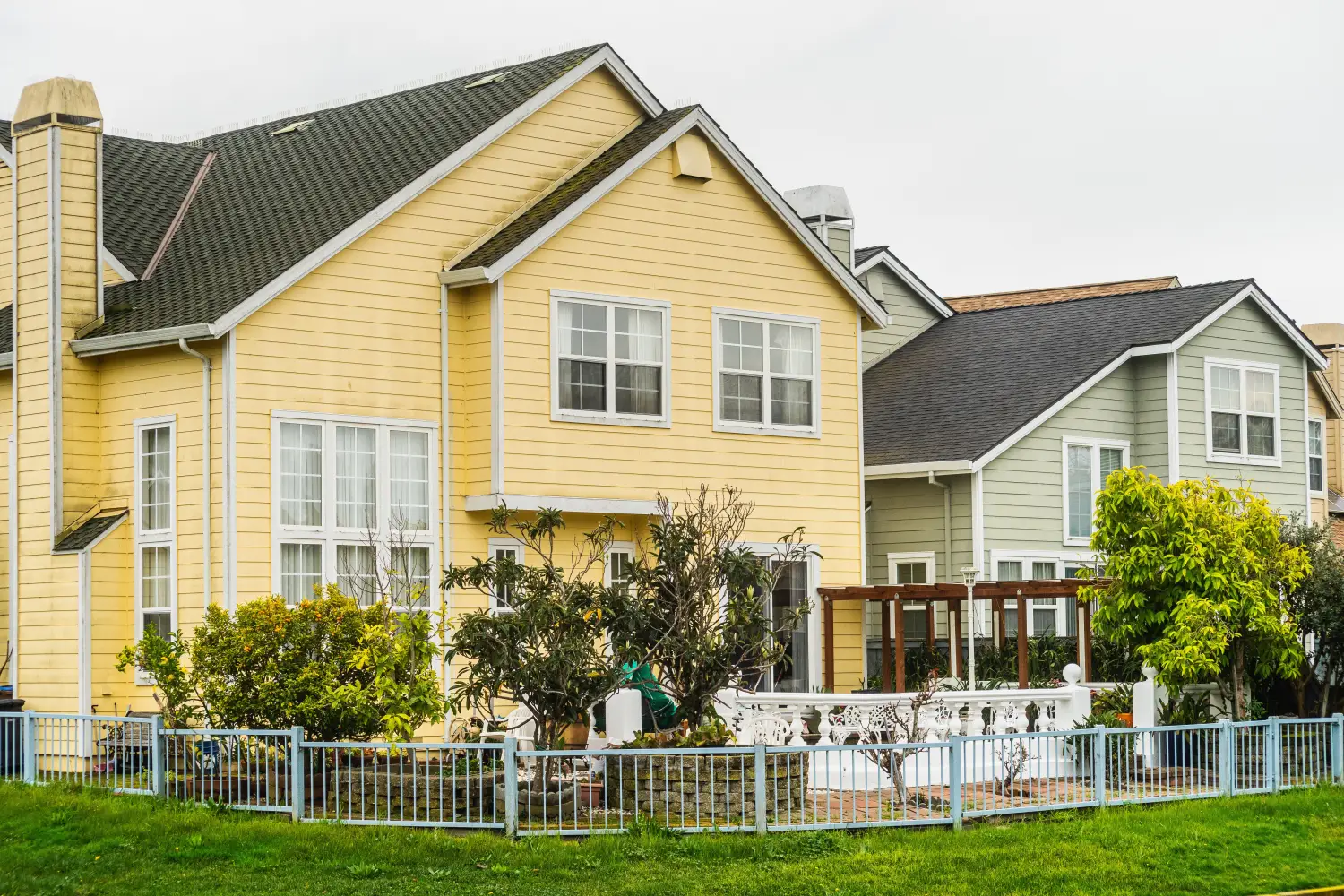
The 15% home value decorating rule claims you should spend roughly 15% of a home’s market price on decorating and renovations to safeguard resale value. That premise collapses when you compare a fixer-upper to a move-in-ready house at the same price — condition, not market value, dictates the actual investment required. This article walks through the rule using three real price points, identifies exactly where it misleads, and provides a condition-based framework that replaces the blanket percentage with something you can actually apply.
Why a Single Percentage Can’t Handle Two Opposite Conditions
The 15% figure has origins in annual maintenance guidelines — something like 1%–4% of home value per year — accumulated into a decorating budget over several years. On paper, a $350,000 house gets about $52,500 for paint, flooring, furnishings, and light updates. The flaw is built into the assumption that every house occupies the same starting point: adequate condition, nothing seriously broken, only cosmetic need. That assumption silently erases the difference between a property that needs a new roof and one that only needs new cabinet knobs. Apply the same percentage to both, and one project is undercapitalized while the other is overfunded.
The Circular Logic of Anchoring a Budget to Price
The rule ties spending directly to the home’s market price, but that price already reflects condition. A fixer-upper trades at a discount precisely because it needs extensive work, yet 15% of that lower number yields a smaller absolute budget just when the need for cash is greatest. Conversely, a move-in-ready home commands a premium because all major work is done — and then the 15% calculation generates an unnecessarily large decorating pool. The approach essentially multiplies a number that was never designed to represent required investment. It’s mathematically tidy but functionally disconnected from a property’s actual list of needs.
Testing the Rule with $200K, $350K, and $500K Homes
To see how badly the 15% rule can miscue, consider three homes of comparable size and neighborhood but vastly different condition.
- $200,000 fixer-upper: A 1950s ranch with original galvanized plumbing, a 25-year-old HVAC system, a kitchen that hasn’t been touched since the 1980s, and worn flooring throughout. 15% equals $30,000. That sum might handle the HVAC replacement and some basic plumbing repairs — nothing left for the kitchen, flooring, or even a coat of paint. The homeowner who tries to squeeze decorating into that number will either ignore the systems that make the house functional or accept half-finished cosmetic updates that won’t add marketable value.
- $350,000 dated but functional home: A well-built 1990s colonial. Systems are solid, but the walls are still in builder-grade flat paint, the carpets hold decades of wear, and the countertops are original laminate. 15% is $52,500. Here, the money is more than enough: new flooring, a kitchen refresh with quartz countertops and tile backsplash, updated bathroom vanities, fresh paint, and modern light fixtures — all without strain. In fact, this budget may overshoot what it takes to bring the home to a competitive, sale-ready state. It can tempt spending on upgrades that the neighborhood won’t support dollar-for-dollar.
- $500,000 move-in-ready home: The kitchen was remodeled three years ago, bathrooms are current, hardwood floors are in excellent condition, and the layout is desirable. 15% allocates $75,000. Spending that on custom window treatments, high-end furnishings, and cosmetic embellishments would push the home past what comparable sales support. The house actually needs minor touch-ups — repainting a few accent walls, swapping a couple of dated ceiling fans, and thoughtful staging — tasks that total well under 10% of its value. The 15% rule would steer this owner straight into over-improvement.
The Baseline Problem: Fixer-Uppers Need More, Move-In-Ready Homes Need Less
A rule built on percentages can’t serve two opposite starting points. The fixer-upper requires a larger investment before decorating is even relevant; the move-in-ready home needs only a lightweight cosmetic lift. Trying to make one number work for both creates a mismatch that costs money or leaves a house unsellable.
When the Home Needs Structural or System Work
The sequence matters. For a property with deferred maintenance — a failing roof, outdated electrical panels, foundation settling — the first dollars must stabilize the envelope and systems. These repairs aren’t decorating, but they come from the same financial pool. A $200,000 house that needs $40,000 in must-do repairs can’t reserve anything meaningful for decor if it clings to a $30,000 total. In practice, a fixer-upper may require 25% or more of its as-is price just to become safe, insurable, and financeable. Only after that can decorating dollars have any effect on livability or resale.
When the Home Is Already Fully Functional
A move-in-ready house doesn’t need systems work or full-room renovations. It needs selective updates that make it feel current and well-kept: fresh paint in a neutral tone, updated hardware, consistent lighting, and perhaps refinished floors. The actual spend might land around 2%–5% of the home’s value, concentrated entirely on style and presentation. Spending more won’t yield a proportional increase in sale price; the market already valued the modern condition when the house was appraised. Over-improvement only narrows the pool of buyers who can afford it without extracting value.
A Framework Based on Condition, Not Price
Instead of a percentage, assess a home’s position on a condition spectrum. Determine what must be done to reach a well-maintained, market-acceptable state across systems, finishes, and furnishings. Then price each project — not the home — and let those quotes shape the budget.
Condition Tier 1: Fixer-Upper (Major Deficiencies)
At least two major systems near end-of-life, damaged flooring or drywall, and kitchens or baths that need full replacement. The starting point is a professional inspection and contractor bids for the must-fix items. Cosmetic decorating can be estimated only after structural and system repairs are scoped. The combined repair-plus-decorating total often falls between 20% and 30% of the purchase price — a range that reflects the real work load, not an arbitrary percentage.
Condition Tier 2: Dated but Functional
Systems work, but surfaces are tired: brass fixtures, popcorn ceilings, worn carpet, old countertops. The decorating budget can focus on cosmetic projects that improve daily use and market appeal. Gather quotes for the three to five highest-impact upgrades — flooring, paint, kitchen refresh, bathroom updates — and use that sum, not the home price, as the budget. On a $300,000 house, this might naturally land at $25,000–$40,000 (8%–13%), but the number originated from the projects themselves.
Condition Tier 3: Well-Maintained with Minor Outdatedness
The home has been cared for but reflects the taste of an earlier decade. No full renovations — only selective updates to signal “current and maintained.” Paint walls and trim, replace outdated ceiling fans, update bathroom mirrors and light fixtures, refinish hardwood floors. The spend is modest — often $8,000–$15,000 for a mid-range house — and its benefit is faster marketability and fewer buyer objections, not a direct bump in appraisal value.
Condition Tier 4: Move-In Ready
Everything modern and functional. Decorating means styling: window treatments, rugs, art, possibly a backsplash change if the current one is divisive. The goal is curation, not repair. Budgets run in the low thousands. Exceeding neighborhood finish levels won’t raise the home’s appraised value and may make it overpriced for its segment.
Adjusted Spending Ranges by Condition and Starting Price
The table below represents typical total spending (repairs plus decorating) across condition tiers and price points. These are illustrative, not prescriptive — each home will vary.
| Condition Tier | $200,000 Home | $350,000 Home | $500,000 Home |
|---|---|---|---|
| Fixer-Upper | $50,000–$80,000 | $70,000–$120,000 | $80,000–$150,000 |
| Dated but Functional | $25,000–$40,000 | $35,000–$55,000 | $45,000–$70,000 |
| Well-Maintained | $10,000–$20,000 | $15,000–$25,000 | $20,000–$35,000 |
| Move-In Ready | $3,000–$8,000 | $5,000–$12,000 | $7,000–$18,000 |
Key Takeaways
- The 15% rule breaks because it doesn’t account for condition — a fixer-upper and a move-in-ready house at the same price cannot share a single spending target.
- Spending 15% on a low-priced fixer-upper falls short of covering essential system and structural repairs.
- Spending 15% on a high-priced move-in-ready home leads to over-improvement that rarely returns its cost at resale.
- A useful decorating budget starts with a condition assessment and project-level pricing, not a home-value percentage.
- Always address safety hazards, water intrusion, and major system failures before allocating money to cosmetic decorating.
Frequently Asked Questions
When, if ever, does the 15% rule make sense?
It can work for a home in the middle — well-maintained but with several rooms that need cosmetic updating — if the percentage is treated as an upper boundary, not a spending goal. Even then, itemized quotes give a far more accurate picture than multiplying the home price.
What’s a better method to budget for decorating and repairs?
Start with a detailed walkthrough or a home inspection with a qualified contractor. List every item, classify it as essential or optional, and get written estimates for the highest-priority projects. The sum of those estimates becomes your real budget.
How much should I spend on a fixer-upper before moving in?
The minimum is whatever eliminates immediate safety risks, stops active water intrusion, and brings electrical, plumbing, HVAC, and roof to functional condition. Cosmetic upgrades can wait. Total early spending often ranges from 20% to 30% of the purchase price, but the only reliable number comes from contractor bids — not a percentage rule.
Does more decorating always increase a home’s value?
Not proportionally. Decorating that matches neighborhood norms can help a home sell faster, but spending beyond the local market ceiling rarely increases the appraisal. System upgrades and energy-efficiency improvements tend to offer clearer value returns than high-end decorative finishes.
A decorating budget that works is one built on the home’s actual condition, not a multiplier of its price. Walk through the property with a critical eye — or bring in an inspector — and produce a ranked list of what must be repaired versus what would just be nice to change. Let that list, not the 15% figure, guide every dollar you spend.

Clara Bennett
After five years of transforming my 1920s bungalow room by room, I’ve refinished floors, hung blinds in bay windows, and spent more time choosing light bulbs than I’d like to admit. I learned paint sheens by painting my kitchen ceiling three times, and I found out the hard way that a rug too small makes a room feel unfinished. I believe every home can be both functional and beautiful, no matter the budget.
Related posts

The Overlooked Percentage Every New Homeowner Needs for Decorating
Stop budgeting blindly with the 15% rule. Learn the overlooked flex fund percentage that prevents overspending and gives you control after move-in.

The Budget Percentage You're Overlooking Is Costing You
A 15-20% flex fund stops decorating cost overruns. Calculate the right percentage based on home age and scope to avoid surprise repairs and design changes.